T-80 Tank Explained: Russia’s Gas Turbine “Flying Tank”, T-80BVM Upgrade and Ukraine War Record
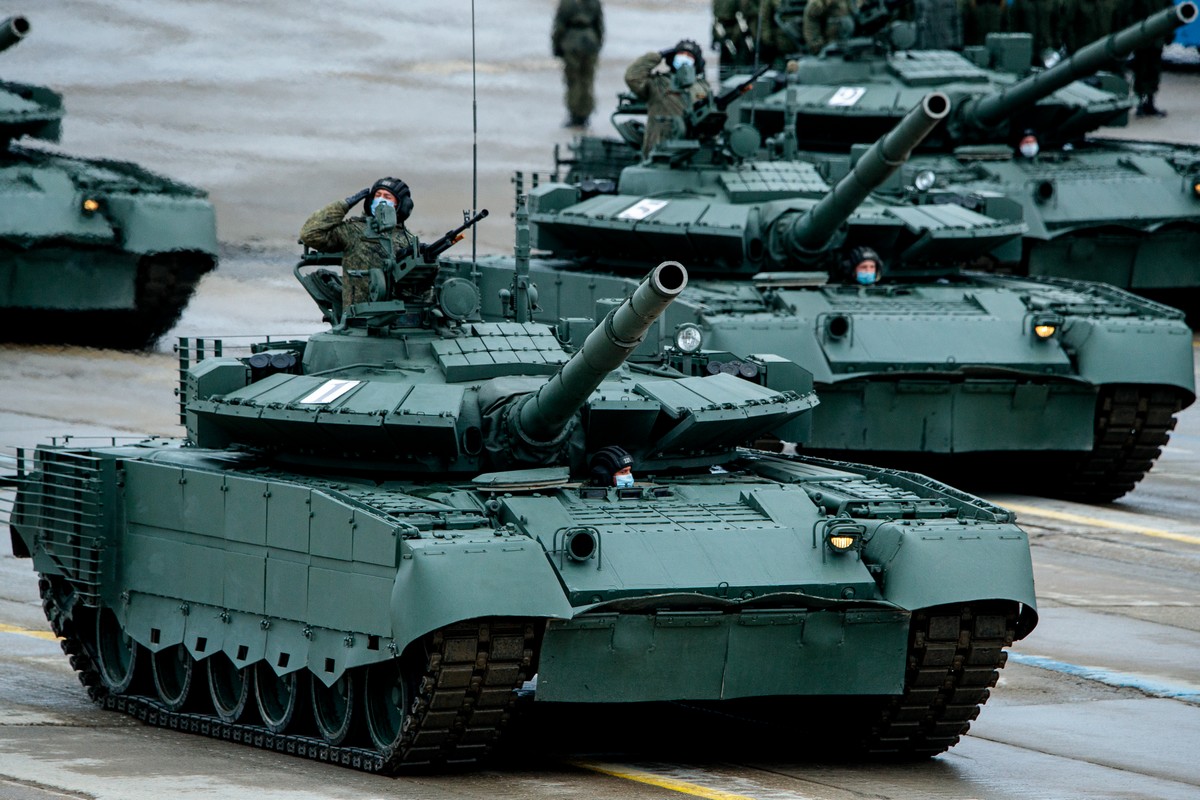
The T-80 was the Soviet Union’s most advanced tank of the late Cold War, and the first production main battle tank powered by a gas turbine engine. Fast, expensive and thirsty, it earned the nickname “flying tank”. Decades later, upgraded T-80BVMs are fighting in Ukraine and Russia is building more of them. Here is the story.
- Soviet main battle tank, in production from 1976
- Gas turbine engine of up to 1,250 hp in later versions
- 125mm smoothbore gun with autoloader and gun-launched missiles
- T-80BVM is the main modernised version in Russian service
- Used by Russia, Ukraine, Kazakhstan, South Korea, Pakistan and others
What is the T-80?
The T-80 was designed in Leningrad in the 1970s as a premium tank for Soviet forces facing NATO in Europe. It shares the 125mm gun and carousel autoloader of the T-64 and T-72 but uses a gas turbine instead of a diesel engine. That gave it remarkable acceleration and cold-weather starting, valuable for the Northern regions and for a rapid offensive into Western Europe.
Strengths and weaknesses
The gas turbine makes the T-80 quick and relatively quiet, but it burns much more fuel than a diesel, especially when idling. The tank was also expensive to build and maintain. Its combat debut in Chechnya in 1994-95 was a disaster, with many T-80s lost in the streets of Grozny, largely due to poor tactics and untrained crews, which damaged its reputation for years.
Main versions
Key variants include the T-80B, the improved T-80BV with explosive reactive armour, the T-80U with Kontakt-5 armour and a more powerful 1,250 hp engine, and the diesel-powered T-80UD, built in Ukraine and later developed into the T-84. Pakistan operates T-80UDs, while South Korea received T-80Us from Russia in the 1990s as debt repayment.
The T-80BVM upgrade
Since 2017 Russia has modernised older T-80BVs to T-80BVM standard. Upgrades include Relikt reactive armour, the Sosna-U thermal sight, a more powerful engine and an improved gun able to fire Refleks laser-guided missiles. Many tanks received slat armour and anti-drone cages during the Ukraine war.
T-80 in Ukraine
Both sides use the T-80 in Ukraine, and losses have been heavy on the Russian side, as open-source counts show hundreds destroyed or captured. The high cost of the war led Russia to announce a revival of T-80 production at Omsk, including new hulls and gas turbine engines, rather than relying only on refurbishing stored tanks.
Verdict
The T-80 is a remarkable piece of Cold War engineering whose speed still makes it useful, especially in Russia’s northern and airborne-supported formations. But drones and anti-tank missiles have shown that no tank can survive without protection, training and support, and the T-80’s future depends on how quickly Russia can build and upgrade them.
Featured image: Ministry of Defence of the Russian Federation / CC BY 4.0, via Wikimedia Commons