C-130J Super Hercules Specs, Variants, Cost and Operators
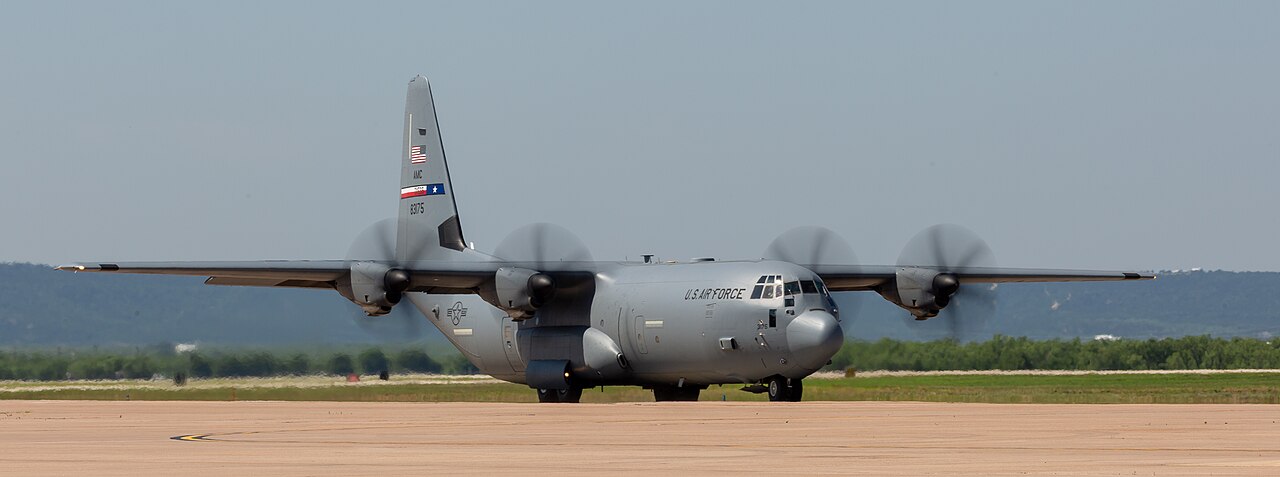
The Lockheed Martin C-130J Super Hercules is a four-engine turboprop transport that carries about 19 tonnes and has been ordered by more than 20 air forces. A deep redesign of the 1950s Hercules, it remains the world’s most widely used tactical airlifter and the base for gunships, tankers and rescue aircraft.
What is the C-130J Super Hercules
The C-130J is the latest production version of the Hercules family, which first flew in 1954. Built by Lockheed Martin, it first flew in April 1996 and entered service with the Royal Air Force and US Air Force at the end of that decade. Outwardly it looks like its predecessors, but it has new engines, six-blade composite propellers, a digital glass cockpit and a two-person flight deck, where older models needed a flight engineer and navigator.
The appeal is versatility. The aircraft can take off from short, rough fields, carry vehicles, pallets, troops or paratroopers, and be adapted for refueling, special operations and search and rescue. That breadth, plus a global support network, is why it keeps winning orders against newer rivals such as the Embraer C-390.
C-130J specifications
| Specification | C-130J | C-130J-30 |
|---|---|---|
| Length | About 29.8 m | About 34.4 m |
| Wingspan | About 40.4 m | About 40.4 m |
| Engines | Four Rolls-Royce AE 2100D3, about 4,600 shp each | Same |
| Maximum takeoff weight | About 79,000 kg | About 79,000 kg |
| Maximum payload | About 19,000 kg | About 19,000 kg |
| Maximum speed | About 670 km/h | About 670 km/h |
| Troops | Up to about 92 to 128 depending on configuration | Up to about 128 or more |
| Crew | Two pilots plus loadmaster | Same |
| Approximate unit cost | Roughly $80 to $100 million, press estimates | Slightly higher |
The selling point is how it handles rough conditions. The cargo compartment is about 12 m long on the standard model, with a rear ramp that allows roll-on, roll-off loading of light vehicles, and a high-flotation landing gear that lets it use gravel, dirt and packed-snow strips. Its turboprop engines also burn less fuel per hour than a jet of similar size at typical tactical altitudes, which matters on short legs that make up most of the flying.
The J-30 version is stretched by about 4.6 m and is now the most popular variant for export and for new US orders. Its longer cargo floor takes more pallets, at the price of a slightly lower range with a heavy load.
The trade-off is speed and altitude. A turboprop cruises well below the pace of a jet transport, and it carries far less than a strategic airlifter like the C-17, so the C-130J sits in the tactical middle: it moves cargo within a theater and to forward bases rather than across oceans. Upgrades in recent years include improved mission computers, better defensive systems and a new propeller and engine support package aimed at keeping the fleet flying for decades.
C-130J variants
| Variant | Role |
|---|---|
| C-130J and C-130J-30 | Standard tactical transport, baseline and stretched |
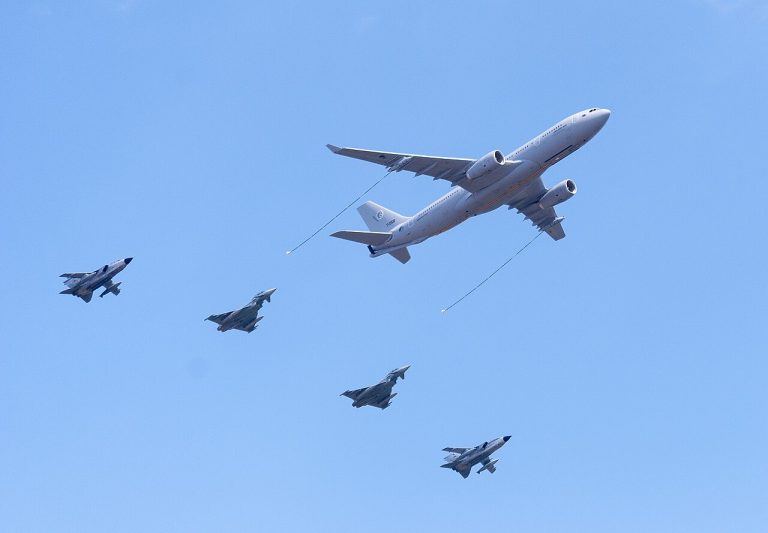
| KC-130J | Aerial refueling tanker and transport, used by the US Marine Corps and others |
| HC-130J Combat King II | Combat search and rescue, with refueling capability for helicopters |
| MC-130J Commando II | Special operations infiltration, exfiltration and tanking |
| AC-130J Ghostrider | Gunship with a precision-guided munitions and a 30 mm cannon |
| LC-130J, WC-130J and EC-130J | Ski-equipped, weather reconnaissance and communications variants |
Who operates the C-130J
The United States Air Force, Marine Corps and Air National Guard are the largest users. Export customers include the United Kingdom, Italy, Australia, Canada, India, France, Norway, Denmark, Qatar, Oman, Iraq, Egypt and Kuwait, among others. More than 500 aircraft have been delivered, according to reported figures, and more orders are in the pipeline, including from new customers in Europe and Asia.
For comparison against large and small rivals across the class, see our ranking of military transport aircraft.
C-130J combat record and cost
The C-130J has flown in Iraq, Afghanistan and other operations, carrying troops and supplies and, in the AC-130J configuration, providing close air support. Its broader record includes humanitarian work after natural disasters and medical evacuations. It has lost aircraft in accidents and, like any transport, is vulnerable near air defenses, which is why low-level flying and self-protection equipment matter.
Price depends on configuration: press estimates typically put a base C-130J between $80 million and $100 million. Lifetime cost includes spares, training and fleet support, which is a major reason many operators stay with the Hercules family. Operators with existing C-130 fleets can reuse tooling, crews and maintenance experience.
C-130J frequently asked questions
What engines does the C-130J use?
Four Rolls-Royce AE 2100D3 turboprops with six-blade propellers.
How much can a C-130J carry?
About 19 tonnes, according to Lockheed Martin.
What is the difference between C-130J and C-130J-30?
The J-30 is about 4.6 meters longer and has more cargo space.
Which countries fly the C-130J?
The US, UK, Italy, Australia, Canada, India, France, Norway and Denmark, among others.
How much does a C-130J cost?
Press estimates put it roughly between $80 million and $100 million, depending on configuration.
- Lockheed Martin C-130J product literature
- US Air Force C-130J fact sheet
- Wikipedia – Lockheed Martin C-130J Super Hercules (accessed October 2026)
- Defence & Tech reporting