Kronshtadt Group, the Russian Drone Maker Behind the Orion
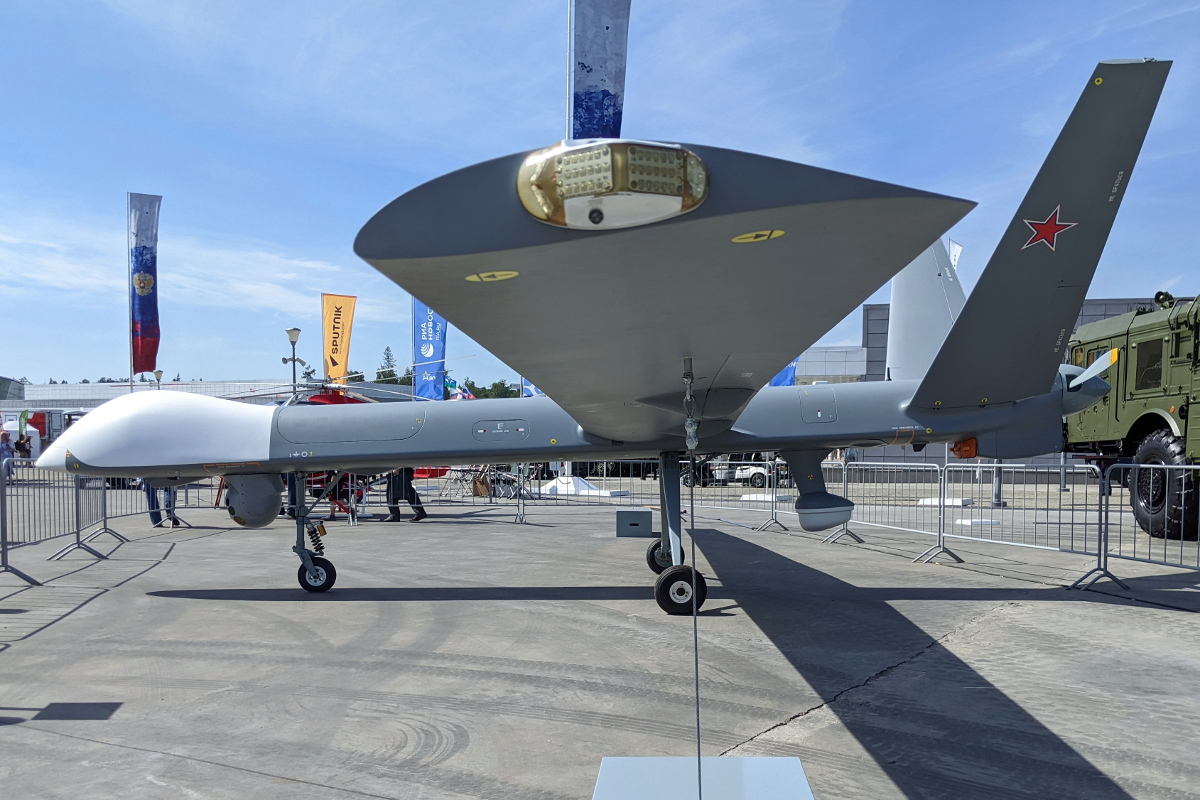
Kronshtadt Group is the Moscow-based drone maker behind the Orion, Russia’s first operational armed medium-altitude long-endurance drone, which the company says can stay aloft for about 24 hours. Founded in 2009 and closely tied to the Russian defense ministry, it has become the country’s best known producer of large unmanned aircraft, though its record in Ukraine is mixed and contested.
What is Kronshtadt Group
Kronshtadt Group, often written Kronstadt, is a Russian unmanned aircraft developer based in Moscow. It began in 2009 as a private venture focused on medium-altitude long-endurance drones and won early government work with the Dozor-600, a reconnaissance drone that served as the basis for later designs. The firm also builds smaller reconnaissance drones, simulation systems and ground control equipment.
For years, Russia trailed Türkiye, China and the United States in armed drones, and Kronshtadt was the domestic attempt to close that gap. Its main product, the Orion, is often compared with the Bayraktar Akinci and the MQ-9 Reaper, though its production numbers are much smaller.
| Item | Detail |
|---|---|
| Headquarters | Moscow, Russia |
| Founded | 2009 |
| Business | Unmanned aircraft, control systems and simulators |
| Key products | Orion MALE drone, Orion-E export version, Dozor-600, Grom combat drone concept |
| Customers | Russian defense ministry; export interest reported but little confirmed |
| Status | Sanctioned by several Western governments |
Who owns Kronshtadt Group
Kronshtadt is a privately held company, but its ownership and finances are not fully transparent, and it depends heavily on state orders. Sergey Bogatikov has been publicly identified as its chief executive. Its close ties to the Russian defense ministry mean it is treated as part of Russia’s military industrial base, even though it is not part of a state holding such as Rostec.
The company has used Russian defense fairs, such as the Army forum, to show new models, including a large drone called Grom that was presented as a potential partner for crewed fighters. Many of those designs remain concepts or early prototypes, and Russian sources have not produced independent evidence of series production.
Kronshtadt Orion specifications
| Specification | Claimed value |
|---|---|
| Type | Medium-altitude long-endurance (MALE) armed and reconnaissance drone |
| Maximum takeoff weight | About 1,200 kg |
| Payload | Up to about 200 kg, per the company |
| Endurance | Up to about 24 hours, per the company |
| Operating altitude | Roughly 7,500 m, claimed |
| Cruise speed | Around 120 to 200 km/h, claimed |
| Armament | Guided bombs and air-to-ground missiles in the 20 to 50 kg class, claimed |
| Control | Line of sight datalink with relay and satellite options, per Russian sources |
The Orion was first flown in the mid-2010s and entered Russian service after a long development and testing period. The company has also marketed an export model, the Orion-E. Its design is a conventional, pusher-propeller drone with a long wing, similar in concept to Western MALE drones, but with a lower payload and a far lower output than Turkish or American drones.
Kronshtadt drones in Ukraine
Russian forces deployed the Orion in Syria in limited numbers and began using it in Ukraine in the course of the 2022 invasion. Russian state media have shown footage of Orion strikes, and Russian officials have said the aircraft has hit armored vehicles and air defense systems; these are manufacturer and state-media claims. Ukrainian officials, for their part, have reported shooting down Orions and other Russian medium-size drones, which is operator-reported and often includes limited visual evidence.
The wider lesson is how vulnerable slow MALE drones are in a contested environment, a point that also applies to Turkish and US designs. The Orion has not proven decisive, and Russia has leaned more on cheap loitering munitions and Iranian-derived designs than on large drones. For that shift, see our top 10 military drone manufacturers ranking.
Kronshtadt sanctions and outlook
Several Western governments have sanctioned Kronshtadt Group, which restricts access to Western electronics, engines and financial services. Russian drone makers have long relied on imported components, from cameras and navigation modules to engines, and sanctions have pushed them toward domestic substitutes and intermediaries. Western officials have said Russia still sources some parts through third countries.
The outlook depends on whether Kronshtadt can turn prototypes into a steady production line. Russian officials have repeatedly promised more large drones, but open sources show only small numbers in the field. Its future likely rests on government orders rather than on exports, since buyers can choose among lower-risk suppliers. A reader looking for context on how large drones compare should also see our Akinci vs MQ-9 Reaper comparison.
Kronshtadt frequently asked questions
What does Kronshtadt Group make?
Unmanned aircraft such as the Orion and Dozor-600, along with ground control systems and simulators.
What is the Kronshtadt Orion?
A Russian armed medium-altitude long-endurance drone, claimed by its maker to fly about 24 hours with a payload of around 200 kg.
Who owns Kronshtadt?
It is privately held, with close ties to the Russian defense ministry. Details of its ownership are not fully public.
Has the Orion been used in Ukraine?
Yes, according to both sides. Russia claims successful strikes, while Ukraine reports shooting some down; both accounts are unverified.
Is Kronshtadt sanctioned?
Yes, by several Western governments.
- Kronshtadt Group public information and Russian state media (claims labeled in text)
- Western government sanctions notices
- Wikipedia – Kronstadt Orion and Kronshtadt Group (accessed October 2026)
- Defence & Tech reporting on Russian drone programs