KC-46 Pegasus vs A330 MRTT, Which Tanker Wins
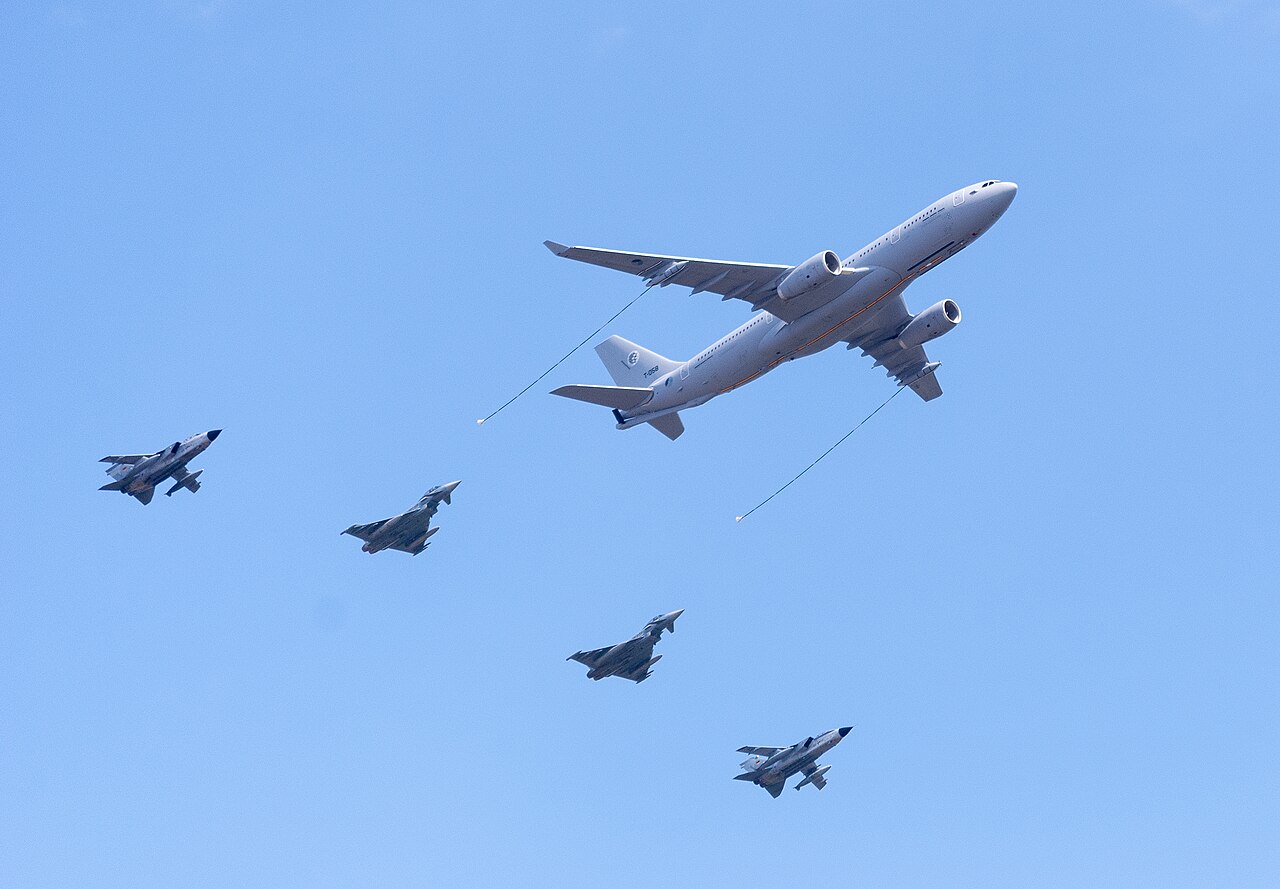
In the KC-46 vs A330 MRTT contest, the Airbus tanker carries roughly 111 tonnes of fuel against the Boeing’s 96, and has years more operational history, while the KC-46 remains the USAF’s choice. Both are twin-engine airliner conversions. They differ most in size, maturity and how they have fared with customers.
KC-46 vs A330 MRTT overview
The two tankers go back to the same competition. The US Air Force’s KC-X program pitted a Boeing 767-based design against an Airbus A330-based one, and after a long series of protests and rebids, Boeing won in 2011 with a lower fixed-price bid. Airbus went on to sell its tanker to a steadily growing list of other air forces.
The result is a clear split in the market. The A330 Multi Role Tanker Transport, known as MRTT, is the main tanker outside the United States. The KC-46 Pegasus is the main new tanker inside it.
KC-46 vs A330 MRTT specifications
| Specification | KC-46A Pegasus | A330 MRTT |
|---|---|---|
| Base aircraft | Boeing 767-2C | Airbus A330-200 |
| Engines | Two PW4062 | Two Rolls-Royce Trent 700, GE CF6 or PW4000 depending on customer |
| Length | About 50.5 m | About 59 m |
| Wingspan | About 48 m | About 60 m |
| Maximum takeoff weight | About 188 t | About 233 to 247 t depending on variant |
| Fuel capacity | About 96 t | About 111 t, plus optional extra tanks |
| Maximum cargo | About 29 t | About 45 t, per Airbus |
| Passengers | Up to about 114 | Up to about 300 |
| Boom offload | Roughly 1,200 US gal/min (about 4,500 l/min) claimed | Comparable boom offload, per Airbus |
| Hose systems | Wing pods and centerline drogue | Wing pods and centerline fuselage unit |
| Approximate unit cost | $150 to $200 million, press estimates | Often $150 million or more, varies by buyer and fit |
Refueling systems compared
Both tankers use a flying boom and probe-and-drogue hoses, but the operator experience differs. The A330 MRTT’s Air Refueling Boom System uses cameras and a three-dimensional display from the operator’s console, and Airbus also provides an automatic boom mode in some installations. The KC-46’s Remote Vision System has the same basic idea, but its early versions suffered problems with depth perception and glare, which we cover in our transport and tanker coverage.
The Airbus tanker has a broader set of fuel delivery choices. It can carry a fuselage refueling unit that supports large receivers with hoses in addition to wing pods, while the KC-46 uses a centerline drogue and wing pods. Both can also receive fuel themselves, and both can carry cargo in the lower deck or on the main deck.
Who operates each tanker
| Tanker | Operators |
|---|---|
| KC-46A | US Air Force, Japan Air Self-Defense Force; more export customers are limited |
| A330 MRTT | Royal Air Force (Voyager), Australia, France, Spain, Saudi Arabia, UAE, Singapore, South Korea, Canada, the NATO multinational fleet and others |
Airbus has sold the MRTT to air forces across Europe, the Middle East and Asia, and a multinational fleet run through NATO pools aircraft for several European countries. The Air Force has also looked at adding an A330-based tanker proposed by Lockheed Martin, called the LMXT, to fill a gap before its next-generation tanker arrives. Timelines and commitments have shifted with the budget, so check current announcements.
Which tanker is better
Range and fuel offload
The A330 MRTT wins on raw numbers: more fuel, more cargo and more passengers. On long Pacific or transoceanic routes, a bigger tanker can support more receivers per sortie.
Maturity and support
The MRTT has been in service for longer with fewer widely reported issues, and its operator base provides a reliable body of experience. The KC-46 is catching up, but still has the Remote Vision System fix to complete.
Politics and basing
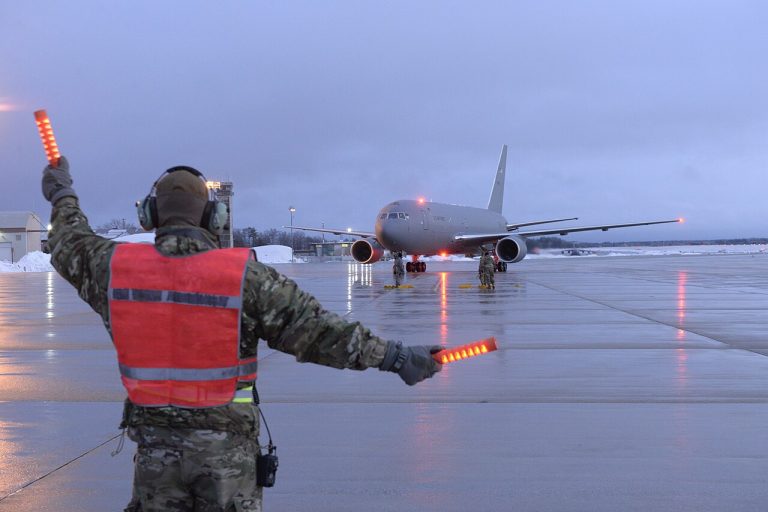
The KC-46 is built in the United States, is integrated with US systems and benefits from US domestic preferences. It is also smaller, which can help at airfields with weight or ramp limits. The USAF’s existing KC-46 fleet, with more than 100 delivered, makes it the baseline for the service.
KC-46 vs A330 MRTT frequently asked questions
Which tanker carries more fuel, KC-46 or A330 MRTT?
The A330 MRTT, at about 111 tonnes versus about 96 for the KC-46.
Why did the US choose the KC-46?
Boeing won the KC-X competition in 2011 with a lower fixed-price bid after several rounds of protests and revisions.
Is the A330 MRTT better than the KC-46?
On size and operational maturity, largely yes. The KC-46 benefits from US production and integration.
Which countries use the A330 MRTT?
The UK, Australia, France, Spain, Saudi Arabia, UAE, Singapore, South Korea, Canada and several European states through a shared NATO fleet.
Can both tankers carry cargo?
Yes. Both can carry cargo and passengers, with the A330 MRTT offering more capacity.
- Airbus Defence and Space A330 MRTT product literature
- Boeing and US Air Force KC-46A fact sheets
- US Government Accountability Office reports on tanker acquisition
- Wikipedia – Airbus A330 MRTT and Boeing KC-46 Pegasus (accessed October 2026)