
Amnesty Says Mali Drone Strikes Killed 23 Civilians in 2025
Amnesty International says Malian armed forces carried out two drone strikes in 2025 that killed at least 23 civilians, including five children, as part of a wider pattern of killings, torture and disappearances it attributes to Mali’s army and allied Russian personnel operating along the border with Mauritania.
What Happened
Amnesty International published a 36-page report, “No One Is Spared,” on September 29, 2026, documenting abuses committed by Mali’s armed forces (FAMa) and foreign allied fighters — first Wagner Group mercenaries, later the Russian state-run Africa Corps, which absorbed Wagner’s Mali operations around mid-2025 — between June 2023 and December 2025. The investigation, based on interviews with more than 80 witnesses and survivors along with satellite imagery and other remote evidence, documents the killing of at least 34 civilians across seven locations in the Ségou, Mopti and Timbuktu regions, in addition to torture, enforced disappearances and looting.
Two incidents involved air power rather than ground operations. On March 16, 2025, a drone strike hit a crowded livestock market in Ejdeir, in the Timbuktu region, killing 16 people and wounding several others. Amnesty says seven witnesses, including survivors and relatives of the dead, told researchers there were no fighters present and no military target at the site; Mali’s army said at the time that it had “neutralized” suspected militants there. A second strike, in November 2025, hit a family home in Tangata, also in the Timbuktu region, killing civilians among roughly seven dead attributed to that attack and bringing the combined drone-strike toll to at least 23, including five children.
“Even if there may have been a few armed combatants present at the time of the strike, it was disproportionate,” said Ousmane Diallo, Amnesty International’s Sahel researcher, referring to the Ejdeir attack. Amnesty says it shared its findings with Mali’s transitional authorities on August 3, 2026, and had received no response by the time the report was published.
Mali’s government has not issued a detailed rebuttal of the report as of this writing. Moscow has not commented on the specific incidents; Russian officials have previously dismissed similar Western and rights-group allegations against Wagner and Africa Corps personnel in the Sahel as unsubstantiated.
The System: Mali’s Expanding Armed Drone Fleet
Amnesty’s report does not identify the aircraft type used in either the Ejdeir or Tangata strikes, and Defense & Tech was unable to independently verify which platform carried them out. But the incidents land against the backdrop of a rapid, well-documented buildup of Malian airpower built almost entirely around Turkish unmanned systems.
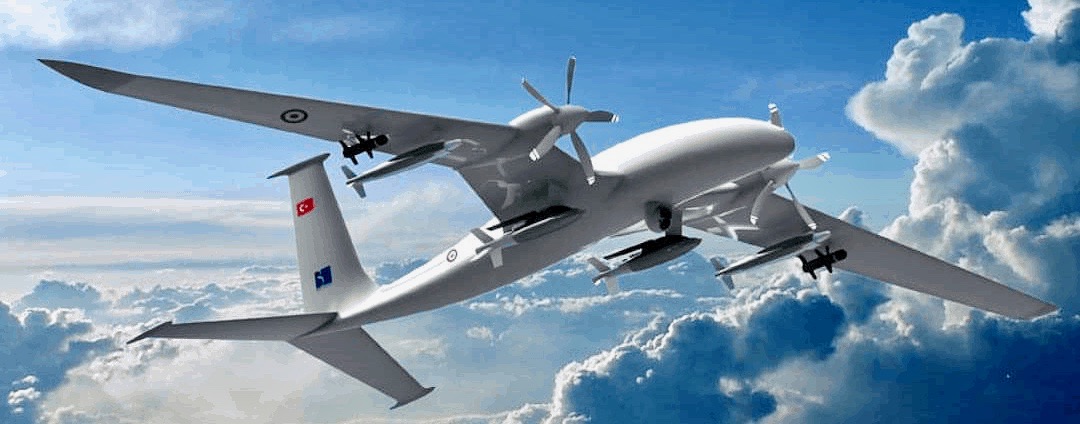
Mali began fielding Baykar’s Bayraktar TB2, a medium-altitude long-endurance UCAV carrying MAM-L/MAM-C smart munitions, in early 2023, with deliveries continuing into 2024; open-source trackers put Mali’s TB2 inventory at upwards of 17 airframes, among the largest TB2 fleets in Africa. Starting in November 2024, Mali added the heavier Bayraktar Akıncı, a twin-turboprop UCAV with a roughly six-ton maximum takeoff weight, a claimed payload above one tonne, and the ability to carry Roketsan’s MAM-T stand-off smart munition as well as satellite-guided bombs. A further batch of Akıncı aircraft was handed over at Sévaré Air Base in the Mopti region in mid-2026. The Akıncı’s operational combat use in Mali was confirmed independently in April 2025, when Algeria said it shot down a Malian Akıncı near the border town of Tinzaouaten; wreckage photos showed intact MAM-T munitions and TEBER laser/GPS guidance kits, confirming the aircraft was armed at the time.
Who Uses It
The Bayraktar TB2 and Akıncı in Mali’s inventory are operated by the Malian Air Force (Force Aérienne du Mali) under the direction of the ruling military junta led by transitional president Gen. Assimi Goïta, who took power in coups in 2020 and 2021. Ground and strike operations in the areas covered by Amnesty’s report were conducted jointly by FAMa and Russian personnel: Wagner Group mercenaries through the first two years of the reporting period, and the Africa Corps — a Russian Ministry of Defence formation that formally absorbed Wagner’s Mali deployment around June 2025 — for the remainder, including the November 2025 Tangata strike.
Export and Procurement History
Mali turned to Turkey for armed drones starting in 2022–2023 as Western and French support wound down following the juntas’ 2020–2021 coups and France’s 2022 troop withdrawal. Ankara has since become one of the main arms suppliers to Mali and its Alliance of Sahel States partners, Burkina Faso and Niger, alongside growing deliveries of Russian equipment and the parallel presence of Russian military contractors. Turkey’s Baykar has not publicly commented on the end-use of its aircraft in the incidents documented by Amnesty.
Global Competitors
Mali’s reliance on Turkish UCAVs mirrors a broader pattern across the Sahel and wider Africa, where Bayraktar TB2s and Akıncıs now operate alongside Chinese systems such as the CH-4 and Wing Loong II in the arsenals of Burkina Faso, Chad, Niger, Nigeria and Ethiopia. Rights groups, the United Nations and independent researchers have documented civilian casualties from armed drone strikes in several of these countries in the past two years — including reported TB2 use in Rwanda-backed strikes in eastern DR Congo — and a previously reported Amnesty investigation into a Malian drone strike near Inadiatafane in November 2024 that killed at least eight civilians, six of them children.
Why It Matters
The Ejdeir and Tangata strikes add to a growing body of evidence that lightly regulated armed-drone proliferation, combined with Russian paramilitary and state-military support, is reshaping counterinsurgency warfare across the Sahel with limited external oversight. Western governments and international monitors have far less visibility into Malian and Africa Corps operations than they did when French forces were present, and Mali’s junta has restricted independent and UN reporting on the conflict. Amnesty’s call for the strikes to be investigated as potential war crimes also tests whether Mali’s partners — Turkey as supplier of the aircraft, Russia as a military partner — face any practical pressure to influence how the weapons are used.
What Happens Next
Amnesty has urged Mali’s authorities to open independent investigations into the Ejdeir and Tangata strikes and the broader pattern of alleged abuses, and has called on Mali’s international partners, including Turkey and Russia, to press for accountability and, where relevant, to apply end-use scrutiny to future arms transfers. Given Mali’s limited cooperation with past international inquiries — including the earlier Inadiatafane case — rights monitors are not expecting a swift government response, and any formal accountability process is more likely to emerge, if at all, through UN human rights mechanisms than through domestic Malian courts.
FAQ
What drones does Mali’s air force operate?
Mali operates Baykar’s Bayraktar TB2 (since 2023) and the larger Bayraktar Akıncı (since late 2024), both Turkish-made. Reports put Mali’s TB2 fleet at 17 or more aircraft, with additional Akıncı deliveries confirmed as recently as mid-2026.
Did Amnesty identify which drone carried out the strikes?
No. Amnesty’s report documents the strikes and their casualties but does not name the aircraft type used in either the Ejdeir or Tangata incidents.
Who is responsible for the strikes, according to Amnesty?
Amnesty attributes the pattern of abuses, including the drone strikes, to Mali’s armed forces operating jointly with Russian personnel — Wagner Group mercenaries through mid-2025, and the Africa Corps afterward.
Has Mali’s government responded to the report?
Mali’s army has previously said it “neutralized” suspected militants in the Ejdeir strike. Amnesty says it shared its full findings with Mali’s transitional authorities on August 3, 2026, and had received no formal response by publication.
Is this the first time Mali’s drones have been linked to civilian deaths?
No. Amnesty previously documented a November 2024 drone strike near Inadiatafane that killed at least eight civilians, including six children, indicating a recurring pattern rather than an isolated incident.
Sources
- Amnesty International, “No One Is Spared: War Crimes Committed by the Malian Army and Foreign Allied Forces Along the Mauritanian Border,” September 29, 2026 — primary report with full incident documentation.
- AllAfrica/agency wire, “Mali Army and Russian Fighters Accused of Killing Dozens of Civilians,” September 30, 2026 — casualty and incident summary.
- U.S. News & World Report, “Soldiers and Mercenaries Killed at Least 34 Civilians in Mali, Amnesty Report Says,” September 29, 2026 — wire coverage of report release.
- Amnesty International, “Mali: Authorities must investigate deaths of at least eight civilians, including six children, after drone strikes in Inadiatafane,” November 2024 — prior drone-strike case cited for pattern context.
- Military Africa / The Defense Post, reporting on Mali’s Bayraktar TB2 and Akıncı deliveries, 2023–2026 — fleet size and delivery timeline.
- Multi-outlet reporting on the April 2025 Tinzaouaten incident (Algeria’s shootdown of a Malian Akıncı) — independent confirmation of armed Akıncı operations in Mali.
- Arab News and wire reporting on the Wagner-to-Africa Corps handover in Mali, June 2025 — context on Russian force posture during the reporting period.