GE Aerospace Company Profile, Military Engines and Revenue
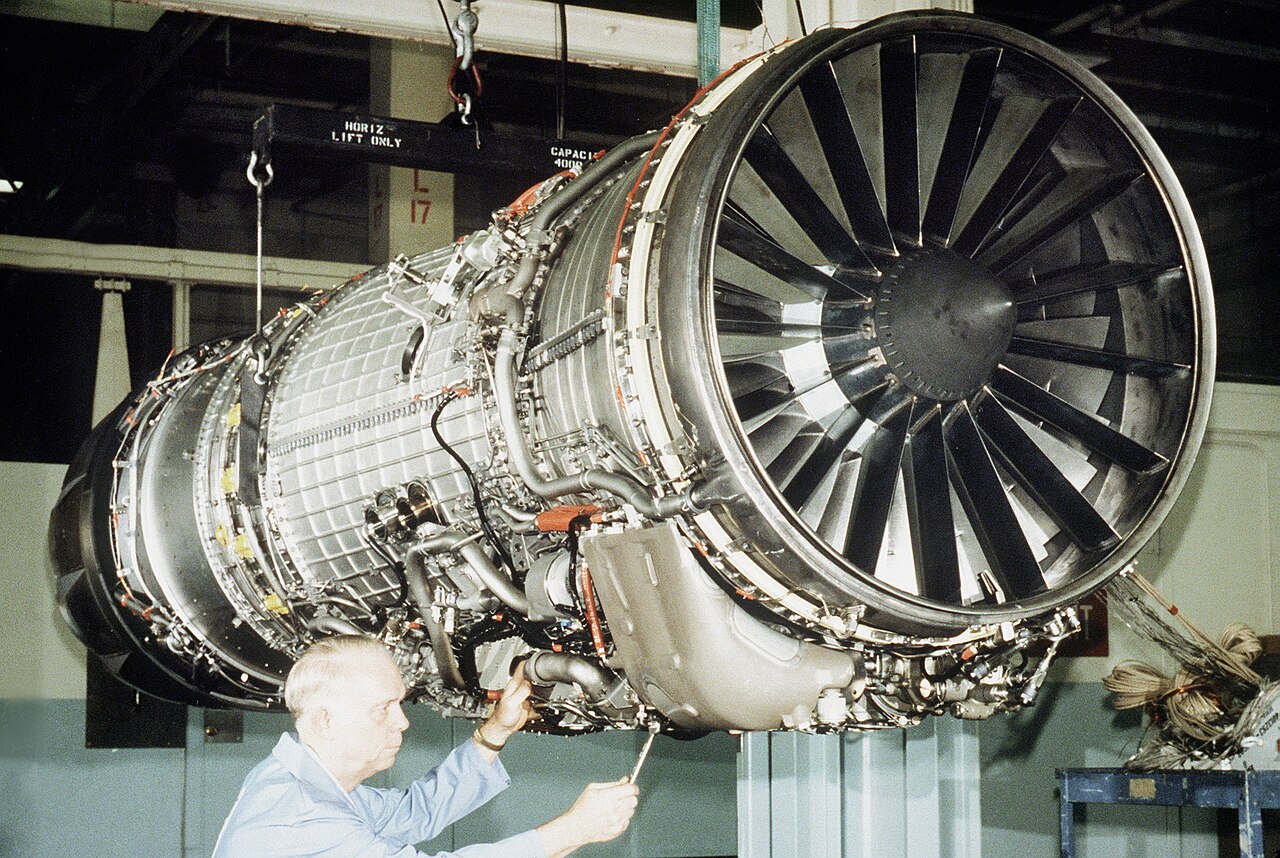
GE Aerospace is the world’s largest aircraft engine maker, a company that booked roughly $38.7 billion in 2024 revenue and powers two-thirds of US military fixed-wing combat aircraft through engine families like the F110 and F404. Independent since the April 2024 breakup of General Electric, the Ohio-based firm pairs a dominant commercial franchise with one of the deepest military propulsion portfolios anywhere.
GE Aerospace at a glance
| Item | Detail |
|---|---|
| Full name | GE Aerospace (General Electric Company, renamed) |
| Headquarters | Evendale, Ohio, USA (greater Cincinnati) |
| Standalone since | April 2024, after GE split into GE Aerospace, GE Vernova and GE HealthCare |
| Chief executive | H. Lawrence Culp Jr. |
| Employees | Roughly 53,000 worldwide |
| Revenue | About $38.7 billion (2024); defense segment roughly $9.5 billion |
| Main fields | Commercial and military turbofans and turboshafts, engine services, avionics and propulsion systems |
What military engines does GE Aerospace make
| Engine | Type | Powers |
|---|---|---|
| F110 | Afterburning turbofan, ~29,000 lbf class | F-15EX, most F-16 variants |
| F404 / F414 | Afterburning turbofans | F/A-18 Super Hornet, T-7A Red Hawk, South Korea’s KF-21, India’s Tejas |
| T700 / CT7 | Turboshaft | UH-60 Black Hawk, AH-64 Apache and many other helicopters |
| T408 | Turboshaft, ~7,500 shp | CH-53K King Stallion heavy-lift helicopter |
| T901 | Turboshaft, ITEP winner | Planned repowering of Black Hawk and Apache fleets |
| XA102 | Adaptive-cycle demonstrator | Candidate for the US Air Force’s next-generation fighter propulsion |
The breadth matters as much as any single engine. GE turbines sit in fighters, trainers, helicopters, maritime patrol aircraft and warship gas turbines (the ubiquitous LM2500), and the company reports roughly 25,000 military engines in service. When air forces in the global fighter rankings fly F-16s, F-15s or Super Hornets, GE propulsion is underneath nearly all of them.
How GE Aerospace became a standalone company
GE Aerospace is what remained of General Electric after the most consequential corporate breakup of the decade. Larry Culp, brought in to rescue a debt-laden conglomerate in 2018, spun off GE HealthCare in early 2023 and GE Vernova, the energy business, in April 2024. The aviation division, long GE’s crown jewel, kept the stock ticker and legal identity and renamed itself GE Aerospace. The engine maker that once shared a balance sheet with power turbines and insurance now stands alone, and investors rewarded the clarity with a dramatic re-rating.
The company’s heritage runs to the very start of the jet age, it built America’s first jet engine in 1942 and the J47, J79 and F404 lineages that powered Cold War airpower.
GE Aerospace next-generation engine programs
The defense unit’s biggest bets are adaptive-cycle engines, which reshape their airflow in flight to combine fighter thrust with cruise efficiency. GE’s XA100 demonstrated the concept for a potential F-35 re-engining that the Pentagon ultimately declined to fund, and the follow-on XA102 is now in development for the Air Force’s next-generation fighter propulsion program, competing against Pratt & Whitney. The T901 turboshaft, winner of the Army’s Improved Turbine Engine Program, is set to repower thousands of Black Hawks and Apaches, and GE propulsion is also a natural contender for the collaborative combat aircraft fleets now taking shape.
GE Aerospace revenue and commercial business
Commercial engines and services generate the large majority of revenue and profit, led by the CFM joint venture with France’s Safran, whose CFM56 and LEAP families are the best-selling jet engines in history. The economics are razor-and-blades, engines sell near cost and decades of spare parts and shop visits carry the margin, a model rival Rolls-Royce runs on the widebody side. That services annuity funds the military technology pipeline, and it is why GE Aerospace entered independence with margins and cash flow most pure defense primes cannot match.
GE Aerospace frequently asked questions
Is GE Aerospace the same company as General Electric?
It is the legal continuation of GE. After spinning off its healthcare and energy businesses, GE renamed itself GE Aerospace in April 2024.
What fighter jets use GE engines?
The F-15EX and most F-16s fly on the F110, the F/A-18 Super Hornet on the F414, and the T-7A, KF-21 and Tejas on F404/F414-family engines.
Does GE Aerospace make the F-35 engine?
No, the F-35 flies on Pratt & Whitney’s F135. GE built the rival XA100 demonstrator, but a re-engining was not funded.
How big is GE Aerospace’s defense business?
The Defense & Propulsion Technologies segment reported revenue of roughly $9.5 billion in 2024, inside total company revenue of about $38.7 billion.
Who leads GE Aerospace?
Larry Culp, the executive who led GE’s turnaround and breakup, continues as chairman and CEO of the standalone company.
- Public company data and 2024 annual disclosures
- Wikipedia – GE Aerospace (accessed October 2026)
- US Air Force and Army propulsion program statements
- Defence & Tech reporting on fighter propulsion competition