What Smart Bombs Does Turkey Have? MAM-L, SOM, Gazap and NEB-2
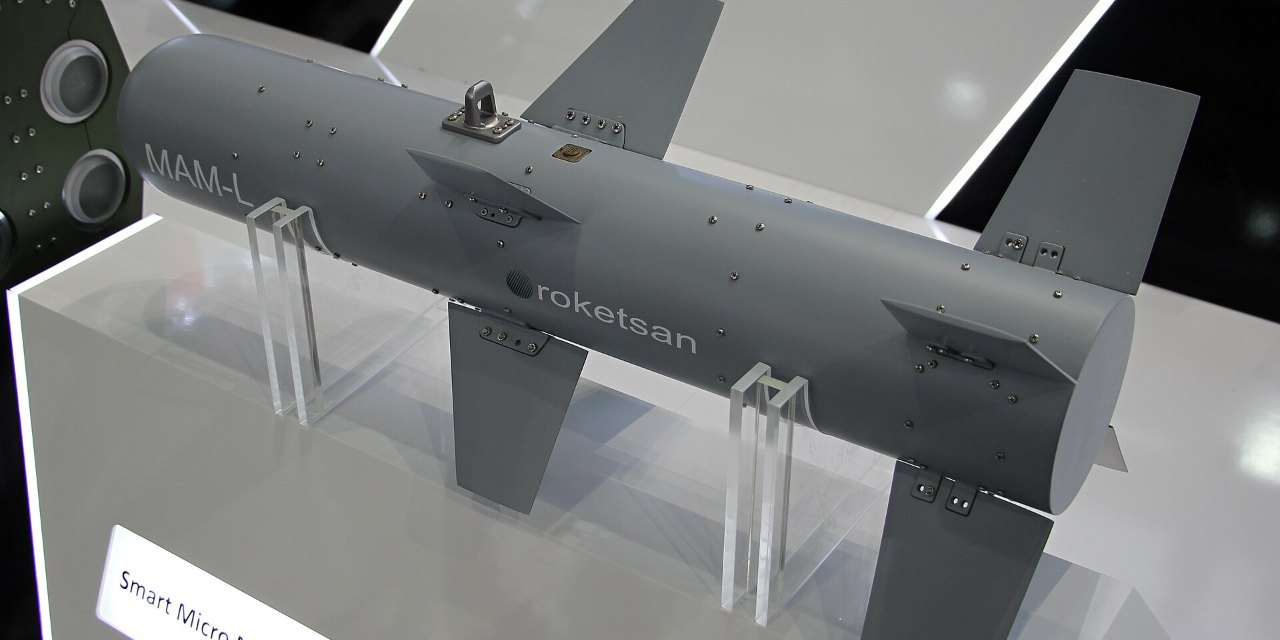
Turkey makes a full range of guided air weapons, from a 6.5 kg munition light enough for a small drone to a 970 kg bomb built to reach bunkers under seven metres of concrete. Twenty years ago it bought all of them from the United States and Israel. The change matters beyond Turkey, because one of the smallest of these weapons, the MAM-L, is what turned the Bayraktar TB2 from a camera into a weapon that armies in Syria, Libya, the Caucasus and Ukraine had to plan around.
This guide lists the Turkish munitions by size, gives the published range of each, and says which aircraft carry them.
What guided bombs does Turkey make?
Ten families cover everything from a parked vehicle to a hardened command post.
| Weapon | Type | Weight | Range | Carried by |
|---|---|---|---|---|
| MAM-C | Laser-guided micro-munition | 6.5 kg | 8 km | Drones |
| MAM-L | Laser-guided micro-munition | 22 kg | 15 km | Drones, light aircraft |
| MAM-T | Glide munition | 95 kg | Over 30 km from a drone; 80 km from a fighter | Akıncı, fighters |
| Tolun | Small glide bomb, four to a weapon station | 250-pound class | Not published | F-16, drones |
| Teber | Laser and satellite kit for Mk 81 and Mk 82 bombs | 113–227 kg bombs | Depends on release height | F-16, drones |
| HGK | Satellite guidance kit for Mk 82, 83 and 84 bombs | Up to 907 kg bombs | About 28 km | F-16, F-4 |
| KGK | Wing kit for Mk 82 and Mk 83 bombs | 227–454 kg bombs | About 100 km | F-16, F-4 |
| SOM | Cruise missile | About 600 kg | Over 250 km | F-16, F-4; SOM-J for KAAN |
| Gazap | Blast and fragmentation bomb | 970 kg | Not published | F-16 |
| NEB-2 Hayalet | Bunker-buster | 970 kg | Not published | F-16 |
MAM-L, MAM-C and MAM-T: the drone weapons
MAM stands for the Turkish words for smart micro-munition. Roketsan developed the MAM-L from an anti-tank missile by removing the rocket motor, which left a 22 kg glide weapon one metre long that a light drone could carry four at a time. It follows a laser spot from the drone’s own camera and comes with three warheads: armour-piercing, blast-fragmentation and thermobaric. It has been in Turkish service since 2016.
The MAM-C, at 6.5 kg, is for unprotected targets and entered service in 2018. The MAM-T is the newest and largest at 95 kg. Released from a Bayraktar Akıncı it glides more than 30 km, and from a fast jet up to 80 km, which lets the aircraft stay outside the reach of short-range air defences. The drones that carry these weapons are described in our guide to Turkish drones and in our profile of the Bayraktar Akıncı.
HGK, KGK and Teber: kits for ordinary bombs
Most guided bombs are ordinary bombs with a kit bolted on. Turkey’s are the work of the state research institute TÜBİTAK SAGE and of Roketsan. The HGK adds satellite and inertial guidance to the standard American-pattern Mk 82, Mk 83 and Mk 84 bombs, in the manner of the US JDAM. The KGK adds folding wings, which stretch the glide to about 100 km. Teber combines satellite guidance with a laser seeker so that a bomb can hit a moving vehicle, and the LGK is a simpler laser kit.
These kits are what Turkish F-16s have used most in northern Iraq and Syria. They also fit the aircraft described in our guide to Turkey’s fighter jets without any American approval, which the imported equivalents require.
SOM: the cruise missile
SOM is Turkey’s air-launched cruise missile. It weighs about 600 kg, flies low at high subsonic speed and reaches targets more than 250 km away, guided by satellite, terrain matching and an infrared seeker that recognises the target in the final seconds. It entered service on F-4 and F-16 aircraft in the 2010s. SOM-J is a slimmer version shaped to fit inside the weapons bay of a stealth aircraft. It was designed for the F-35 and is now intended for the KAAN.
Roketsan is also developing Çakır, a lighter cruise missile that drones can carry. The whole family is covered in our guide to Turkey’s missiles, and the American equivalents in our guide to US cruise missiles.
Gazap and NEB-2: the heavy bombs
Two 970 kg bombs were shown for the first time at the IDEF exhibition in Istanbul on 27 July 2025. Both were developed by the Defence Ministry’s research and development centre and both can be dropped from an F-16.
Gazap, which means wrath, is a blast and fragmentation weapon. Officials say it produces 10.16 fragments per metre, against three for the bombs now in service, and they call it the most powerful conventional bomb the country has built. NEB-2 Hayalet, or ghost, is a bunker-buster. A defence industry source quoted at the fair said it goes through seven metres of reinforced concrete, and that in a test on an island it penetrated 90 metres into the ground. Those are claims by the developer and have not been independently confirmed. Officials said both bombs had finished testing and were ready for use.
What Turkey still buys abroad
The air force keeps a large stock of American and Israeli weapons: JDAM kits, 104 JSOW glide bombs, 48 SLAM-ER missiles, 46 Israeli Popeyes, several hundred Mavericks and 155 HARM anti-radar missiles, with more HARMs on order. Turkish replacements are in development for the remaining gaps. Akbaba is an anti-radar missile meant to succeed the HARM, and Kuzgun is a modular weapon offered as a glide bomb, a rocket-boosted missile and a turbojet-powered version.
Why do these weapons matter?
For two reasons. The first is independence. A country that makes its own aircraft but imports its bombs depends on the supplier’s consent every time the stock runs down. The second is exports. The MAM-L is sold with every Bayraktar, and the customer who buys the drone becomes a customer for the munition for as long as the drone flies. Few weapons of its size have had as much effect.
Frequently asked questions
What is the MAM-L?
A 22 kg laser-guided glide munition made by Roketsan and carried by drones such as the Bayraktar TB2. It has a range of about 15 km and three types of warhead.
What is the Gazap bomb?
A 970 kg blast and fragmentation bomb shown in July 2025. Turkish officials describe it as the most powerful conventional bomb the country has produced. It is dropped from the F-16.
Does Turkey have a bunker-buster bomb?
Yes. The NEB-2 Hayalet weighs 970 kg and, according to its developer, penetrates seven metres of reinforced concrete.
What is the range of the SOM missile?
More than 250 km. The SOM-J version for internal carriage is intended for the KAAN fighter.
What is the difference between HGK and KGK?
HGK is a satellite guidance kit for standard bombs with a range of about 28 km. KGK adds wings that extend the glide to about 100 km.
Who makes Turkish smart bombs?
Mainly Roketsan, the research institute TÜBİTAK SAGE, Aselsan and the Defence Ministry’s own research centre.
- Air & Cosmos International – Roketsan grows smart micro munition family: aircosmosinternational.com
- Israel Hayom – Turkey unveils first indigenous bunker buster and super bomb (July 2025): israelhayom.com
- Wikipedia – List of equipment of the Turkish Air Force (munitions): en.wikipedia.org