Mercury Systems Company Profile, Products, Employees and Revenue
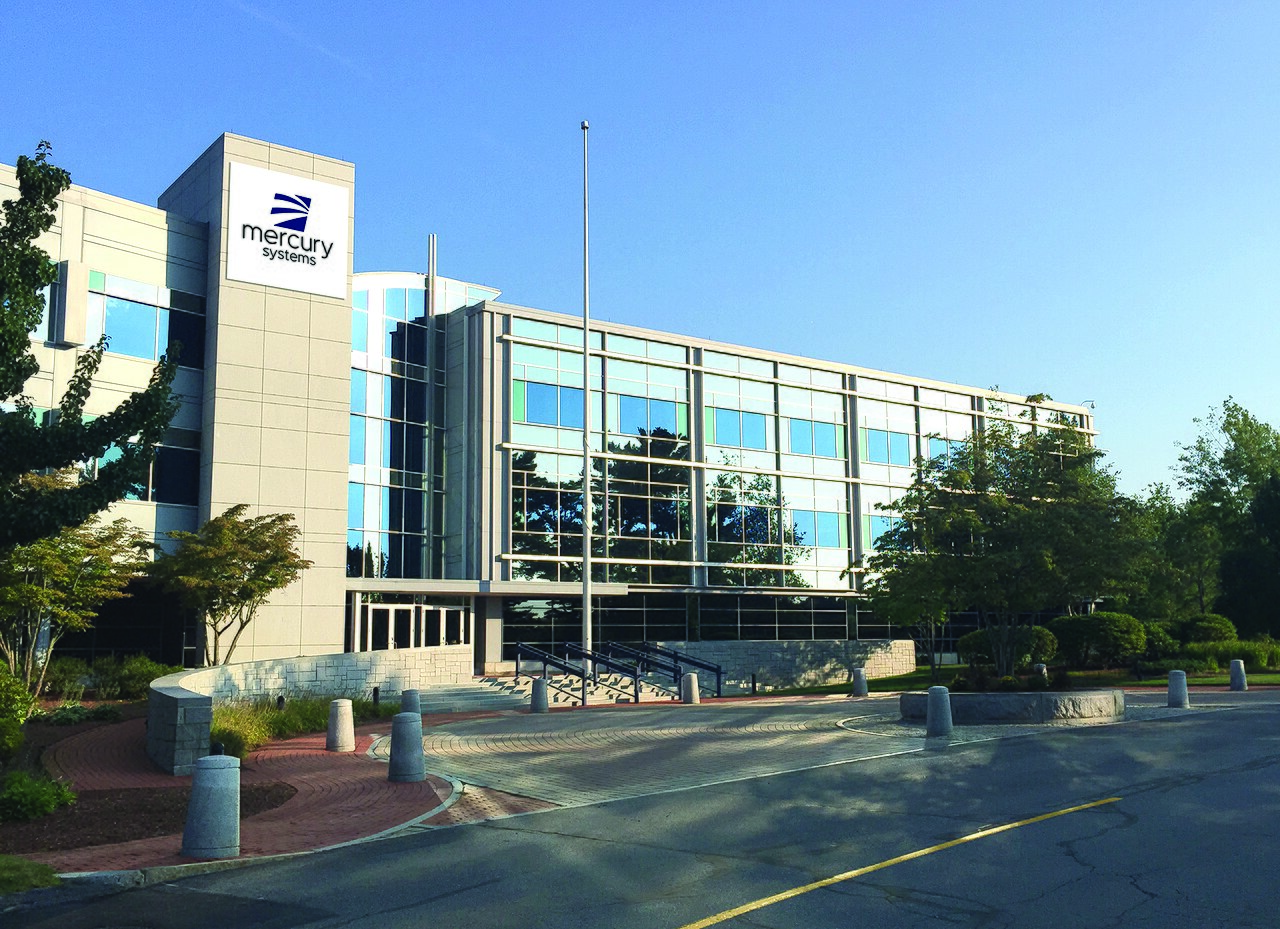
Mercury Systems is an Andover, Massachusetts, aerospace and defence electronics company that makes secure processing subsystems, RF and microwave components, mission computers and rugged servers for radar, electronic warfare and other military sensor and weapons systems. It reported revenue of $983.6 million for fiscal 2026, the year ended 3 July 2026, and employed 2,102 people.
Mercury sells mostly to the prime contractors that build US and allied weapons. About 97% of fiscal 2026 revenue came from defence and government customers, and RTX (15%), Lockheed Martin (11%) and Northrop Grumman (10%) together accounted for 36%. Backlog stood at about $1.9 billion on 3 July 2026, and the company reported a net loss of $29.7 million for the year.
What Does Mercury Systems Do?
Mercury builds the electronics that sit inside larger military systems rather than the platforms themselves. Its 10-K says customers deploy its products in sensor and radar processing, electronic warfare, avionics, weapons, and command, control, communications, computers and intelligence (C4I) applications. The company describes its technology in five areas: signal (microwave and mixed-signal), compute, data management (recording, storage and encryption), display, and secure processing.
Security engineering is a selling point. The filing cites cryptography, secure boot and physical protection features, including its BuiltSECURE technology, intended to resist reverse engineering and improve cyber resilience. Its product families include digital radio frequency memory (DRFM) units used in electronic warfare, mission computers, and RF and microwave components and subsystems.
| Item | Detail |
|---|---|
| Headquarters | 50 Minuteman Road, Andover, Massachusetts |
| Incorporated | 1981, in Massachusetts |
| Employees | 2,102 excluding contractors (3 July 2026); 2,162 (27 June 2025) |
| Revenue | $983.6 million (fiscal 2026); $912.0 million (fiscal 2025) |
| Chairman and CEO | Bill Ballhaus |
| Fiscal year end | Friday closest to 30 June; fiscal 2026 ended 3 July 2026 (53 weeks) |
| Listing | Nasdaq: MRCY |
| Business units | Signal Technologies, Processing Technologies, Integrated Processing Solutions, and Europe, Middle East and Africa |
| Main customers | RTX, Lockheed Martin, Northrop Grumman |
How Many Employees Does Mercury Systems Have?
Mercury reported 2,102 employees, excluding contractors, on 3 July 2026. The 10-K breaks them down as 518 in research and development, 111 in sales and marketing, 1,186 in manufacturing and customer support, and 287 in general and administrative roles. Some 2,031 work in the United States across 12 states and 71 work in Spain, Switzerland and the United Kingdom.
A year earlier, on 27 June 2025, the company reported 2,162 employees. In fiscal 2018 the figure was 1,320, before a run of acquisitions roughly doubled the workforce.
Which Programmes Does Mercury Systems Supply?
Mercury rarely appears on a platform’s name plate, but its filings list the programmes its content flows into. The fiscal 2018 10-K, the last to include a long list, named Aegis, Patriot, the Surface Electronic Warfare Improvement Program (SEWIP), F-35, F-16 SABR, E-2D Hawkeye, Reaper, Predator and Paveway, and said its products had been deployed in more than 300 programmes with over 25 defence primes. The fiscal 2025 10-K named F-35, F/A-18, KC-46, LTAMDS, SCAR and THAAD as programmes that could bring significant future revenue. The fiscal 2026 10-K states that no single programme made up 10% or more of revenue.
For background on the platforms, see our explainers on the F-35 Lightning II, the Patriot missile system and the THAAD missile defense system.
Mercury Systems Revenue and Financial Results
| Fiscal year | Revenue | Net income (loss) | Backlog |
|---|---|---|---|
| 2018 (30 June 2018) | $493.2M | $40.9M | — |
| 2024 (ended June 2024) | $835.3M | $(137.6)M | — |
| 2025 (27 June 2025) | $912.0M | $(37.9)M | About $1.4B |
| 2026 (3 July 2026) | $983.6M | $(29.7)M | About $1.9B |
Fiscal 2026 revenue rose 7.9%. Adjusted EBITDA, a non-GAAP measure, was $150.2 million against $119.4 million a year earlier, while free cash flow fell to $68.1 million from $119.0 million. Fourth-quarter revenue was $289.8 million, and bookings of $660 million were a record, a book-to-bill ratio of 2.28. Of the roughly $1.9 billion backlog, $996.0 million is expected to convert to revenue within 12 months.
The balance sheet improved: cash was $214.3 million and total debt $441.5 million at 3 July 2026, against $309.1 million and $591.5 million a year earlier. Research and development spending was $59.7 million in fiscal 2026, $67.6 million in 2025 and $101.3 million in 2024. Chairman and CEO Bill Ballhaus said results were ahead of expectations and that the company was raising its outlook for organic growth.
Who Are Mercury Systems’ Customers?
Mercury is a supplier to primes, so its customer list reads like a league table of US defence contractors. In fiscal 2026 RTX accounted for 15% of revenue, Lockheed Martin 11% and Northrop Grumman 10%. In fiscal 2025 the 10-K named RTX at 13%, Lockheed Martin at 10% and the US Navy at 10%. International operations in Spain, Switzerland and the United Kingdom serve European customers.
Read our profiles of RTX, Lockheed Martin and Northrop Grumman for the programmes those customers run.
Mercury Systems History Timeline
| Year | Event |
|---|---|
| 1981 | Company incorporated in Massachusetts |
| 2015–2016 | Acquires Lewis Innovative Technologies (December 2015) and the Microsemi carve-out business (May 2016) |
| 2016–2017 | Acquires CES Creative Electronic Systems (November 2016) and Delta Microwave (April 2017) |
| 2017–2018 | Acquires Richland Technologies (July 2017), Themis Computer (February 2018) and Germane Systems (July 2018) |
| 2018 | Revenue of $493.2 million and 1,320 employees |
| 2025 | Revenue of $912.0 million; 2,162 employees |
| 2026 | Revenue of $983.6 million; record bookings of $660 million in the fourth quarter |
Related Coverage on Defence Electronics and Radar
Mercury competes and partners in a crowded field of sensor and electronics suppliers. See our company profiles of L3Harris and Hensoldt, and our story on Echodyne and SRC joining an Army counter-UAS contract as radar suppliers.
Mercury Systems FAQ
Where is Mercury Systems headquartered?
At 50 Minuteman Road in Andover, Massachusetts.
How many employees does Mercury Systems have?
2,102, excluding contractors, as of 3 July 2026, according to its fiscal 2026 Form 10-K.
What was Mercury Systems revenue in fiscal 2026?
$983.6 million for the year ended 3 July 2026, up 7.9% from $912.0 million.
What does Mercury Systems make?
Secure processing subsystems, RF and microwave components, mission computers, rugged servers and data storage for radar, electronic warfare, avionics and weapons.
Who is the CEO of Mercury Systems?
Bill Ballhaus is chairman and chief executive officer.
Who are Mercury Systems’ biggest customers?
RTX (15%), Lockheed Martin (11%) and Northrop Grumman (10%) of fiscal 2026 revenue.
When does the Mercury Systems fiscal year end?
On the Friday closest to 30 June; fiscal 2026 ended on 3 July 2026.
Is Mercury Systems profitable?
Not on a GAAP basis in fiscal 2026, with a net loss of $29.7 million, though adjusted EBITDA was $150.2 million.
- Mercury Form 10-K for fiscal 2026 (year ended 3 July 2026): sec.gov
- Mercury fourth-quarter and fiscal 2026 earnings release (Form 8-K): sec.gov
- Mercury fourth-quarter and fiscal 2026 results, newswire copy: notified.com
- Mercury Form 10-K for fiscal 2025: sec.gov
- Mercury Form 10-K for fiscal 2018: sec.gov
- Wikimedia Commons – Mercury Systems Headquarters Front Entrance.jpg (CC BY 4.0): commons.wikimedia.org