

Ukraine’s Naval Drones Hit Russian Corvette Merkury in Libya
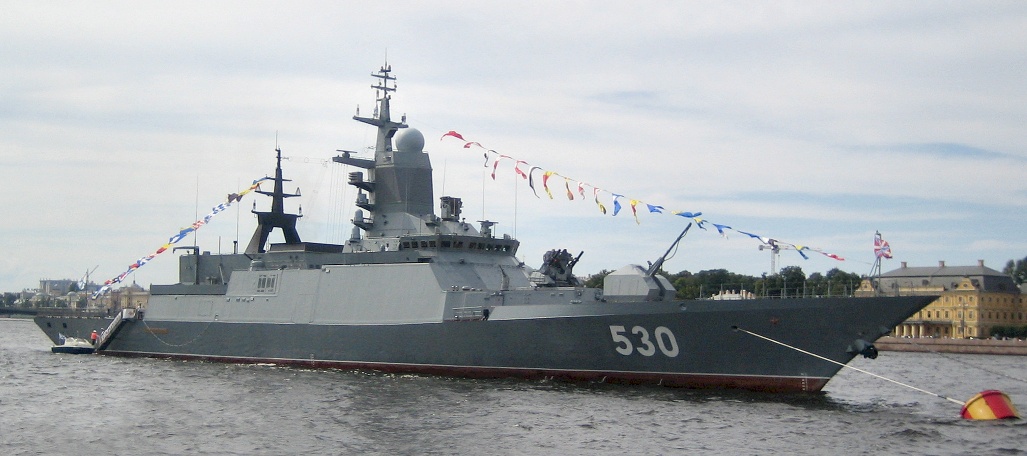

Lead
A Russian Navy corvette, the Merkury, was struck by sea drones while docked at the eastern Libyan port of Benghazi before dawn on November 22, 2026, according to Libyan officials, Ukrainian officials and satellite imagery reviewed by multiple outlets. Libya’s eastern-based administration described the incident as a suspected drone attack that caused an explosion and fire aboard the ship. Ukrainian President Volodymyr Zelenskyy later said Ukraine’s military had carried out the strike using seven domestically built naval drones, and that the corvette was sunk. Satellite imagery published by Naval News and cited by Al Jazeera showed the vessel capsized and largely submerged, with only its bow above the waterline. If Ukrainian involvement is confirmed, the strike would mark one of the furthest-reaching operations of Kyiv’s naval drone campaign, carried out roughly 2,000 kilometers from Ukrainian territory and signaling that Russian naval assets tied to Moscow’s African logistics network are no longer out of reach.
What Happened
According to two Libyan military officials who spoke to the Associated Press, multiple Ukrainian sea drones were launched from a base operated by Ukrainian forces in western Libya. The officials said at least four drones were intercepted before reaching their target and two struck the Merkury, triggering a fire at the port. Local residents told Al Jazeera they saw several drones converge on the ship. A separate sea drone reportedly struck a Malta-flagged commercial vessel off Benghazi the same evening; Libya’s Health Ministry said the injured crew of that vessel were rescued and are being treated. None of these battlefield details have been independently verified, and casualty figures reported by unnamed local sources remain unconfirmed.
President Zelenskyy said the operation also damaged the Russian cargo ship MV Angara, which he said Moscow had used to transport weapons, and destroyed a Ka-27 helicopter that had been aboard the corvette. He called the Merkury “one of their newest ships, commissioned in 2023, during the full-scale war,” and said Ukrainian forces “continue operations in designated waters.” Ukraine’s security service, the SBU, said the strike demonstrated that Russia’s fleet and logistics chain have “no safe routes,” even far from the Black Sea.
The Benghazi-based administration, loyal to Khalifa Haftar’s Libyan National Army (LNA), said the Merkury had docked to refuel and resupply under an existing maritime cooperation agreement with Russia, and that it had opened a joint investigation with Moscow. Libyan Prime Minister Osama Hammad, who heads the Tripoli-based Government of National Unity, called the strike a violation of Libyan sovereignty and submitted a formal request to the UN General Assembly and Security Council for an independent international investigation. The UN Support Mission in Libya (UNSMIL) expressed “serious concern” and said Libya “must not become a battleground for foreign conflicts.” The Kremlin’s spokesman, Dmitry Peskov, said any details would have to come from Russia’s Defense Ministry; as of this writing, no detailed Russian account of the incident has been published.
The Ship: A Project 20380 Corvette
The Merkury is a Steregushchiy-class (Project 20380) corvette built by Severnaya Verf and commissioned into the Russian Navy on May 13, 2023, under its original name Retivyi. The class is designed for littoral warfare and anti-submarine operations and has a standard displacement of around 1,800 tons, full load displacement of roughly 2,200 tons, a length of 104.5 meters and a crew of about 90. Published armament for the class includes a 100mm main gun, a Uran (3M24) anti-ship missile system, torpedo tubes, a close-in weapons system for point air defense, and short-range surface-to-air missiles. The ship was reportedly transiting toward Russia’s Pacific Fleet by way of the Mediterranean and Red Sea when it stopped in Benghazi, a routing Russian warships have used repeatedly to avoid Turkish-controlled straits restrictions tied to the war in Ukraine.
Russia’s Footprint in Libya
Benghazi has functioned as a logistics and refueling hub for Russian naval and military transport linked to eastern Libya’s Haftar-aligned administration, which has maintained close security ties with Moscow for years, including hosting personnel from Russia’s Africa Corps (the successor to Wagner Group operations in Libya). Russian state and private military assets have used Libyan ports and airbases as a waypoint for operations extending into Mali, Sudan, the Central African Republic and elsewhere in Africa, making the country a hinge point in Moscow’s African logistics network rather than simply a conflict backwater.
Ukraine, meanwhile, has reportedly built its own quiet presence on the other side of the country. Citing an investigation by French broadcaster RFI and Libyan and Western officials, several outlets, including the Kyiv Independent, Euronews and United24 Media, have reported that Ukrainian military and intelligence personnel — described variously as numbering in the low hundreds — have operated from Tripoli-aligned western Libya since at least late 2025 under an informal arrangement with the UN-recognized Government of National Unity, reportedly providing drone training to Libyan forces in exchange for basing access. Associated Press sources said Ukrainian personnel, mostly drone specialists, operate mainly from an airbase near Misrata, with additional presence in Tripoli and Zawiya. None of these arrangements have been confirmed on the record by Kyiv, which has consistently declined to comment when approached by reporters.
This is not the first attack attributed to that presence. In March 2026, Russia accused Ukraine of using a drone launched from Libyan territory to strike the LNG carrier Arctic Metagaz in the Mediterranean. RFI’s investigation separately linked Ukrainian-operated naval drones to a December 2025 strike on the sanctioned tanker Qendil, allegedly launched from near Misrata using a Magura V5-type unmanned surface vessel. Those incidents, along with the Merkury strike and a suspected drone hit on a sanctioned Russian cargo vessel in Finland’s Gulf of Finland on November 21, 2026, point to a pattern: Ukraine extending a maritime interdiction campaign against vessels it links to Russia’s military-industrial complex and its sanctions-evading “shadow fleet,” well beyond the Black Sea and Baltic theaters where it began.
Global Context: A Widening Drone War at Sea
Ukraine’s naval drone units, run primarily by its HUR military intelligence directorate and the SBU security service, have already forced much of Russia’s Black Sea Fleet out of Crimea using domestically produced unmanned surface vessels such as the Magura and Sea Baby. Extending that model into the Mediterranean — a theater with no Ukrainian coastline and no legal combat zone — is a significant operational and political escalation. It also mirrors a broader European and Baltic pattern: Finland has separately attributed a November 2026 drone strike on a sanctioned Russian cargo ship in the Gulf of Finland to Ukraine, and NATO states have grown increasingly vocal about Russia’s “shadow fleet” of tankers used to move sanctioned oil and military cargo.
For Libya, the strike complicates an already fragile balance between the Tripoli-based GNU and the Haftar-aligned east, both of which have cultivated competing foreign patrons — Turkey and Qatar on one side, Russia and the UAE on the other. A foreign military operation launched from one half of a divided country against assets of a foreign power embedded in the other half raises the risk of Libya being pulled more directly into a conflict it has no formal part in, which is precisely the scenario UNSMIL and the GNU have warned against.
Why It Matters
If the attribution to Ukraine holds up, the Benghazi strike shows that no Russian naval asset tied to Moscow’s overseas logistics is fully insulated from Ukrainian reach, regardless of distance from the declared war zone. For Russia, the loss or serious damage of a modern corvette commissioned only in 2023 — one of a relatively small class of ships central to its post-2022 naval modernization — is a tangible material loss on top of the reputational cost of losing a warship at a foreign ally’s own port. For Libya, the incident is a reminder that hosting either side’s patrons carries exposure to the other side’s reach, a dynamic that could push both the Tripoli and Benghazi governments to reconsider how openly they accommodate foreign military logistics.
What Happens Next
Libya’s eastern administration and Russia have said they are conducting a joint investigation, though neither has published findings. Libyan Prime Minister Hammad’s request for a UN Security Council and General Assembly investigation, if taken up, could produce the first independent accounting of the incident; UNSMIL has already called for one. Neither Russia nor Ukraine has laid out next steps publicly. Given the pattern of prior incidents attributed to Ukrainian forces in Libya, further strikes on Russia-linked shipping transiting the central Mediterranean would not be surprising, and renewed scrutiny of both Tripoli’s and Benghazi’s foreign military arrangements is likely regardless of how the investigation proceeds.
FAQ
Was the Russian corvette Merkury actually sunk?
Satellite imagery reviewed by Naval News and cited by Al Jazeera showed the ship capsized with only its bow visible above the waterline, and President Zelenskyy said it was sunk. Libyan officials have described the ship as damaged by a suspected drone attack rather than confirming it sank. Russia’s Defense Ministry has not issued a detailed public account.
Has Ukraine officially claimed the attack?
President Zelenskyy publicly credited Ukrainian forces with the strike, saying seven naval drones were used, and Ukraine’s SBU said the operation showed Russian shipping has no safe routes. Kyiv has not detailed the units involved or confirmed where the drones were launched from.
Why was a Russian warship docked in Benghazi, Libya?
Libya’s Haftar-aligned eastern administration said the ship stopped to refuel and resupply under an existing maritime cooperation arrangement with Russia. Benghazi has served as a logistics waypoint for Russian naval transits and for Africa Corps (formerly Wagner) activity supporting Russian operations elsewhere in Africa.
Does Ukraine have a military presence in Libya?
Several outlets, citing an RFI investigation and Libyan and Western officials, report that Ukrainian military and intelligence personnel have operated from western Libya since late 2025 under an informal arrangement with the Tripoli-based government, reportedly training Libyan forces on drones. Ukraine has not confirmed this on the record.
How does this fit into Ukraine’s broader naval drone campaign?
Ukraine has used domestically built naval drones such as the Magura and Sea Baby to push Russia’s Black Sea Fleet out of Crimea and has reportedly struck Russia-linked tankers in the Mediterranean and Baltic. The Benghazi strike, roughly 2,000 kilometers from Ukraine, would be among the most geographically extended operations attributed to that campaign so far.
Sources
- Al Jazeera, “Russian vessel hit by suspected Ukrainian drone at Libya’s Benghazi port,” November 22, 2026 — read here — used for Libyan official statements, UNSMIL reaction and background on Libya’s divided governments.
- Kyiv Independent, “Russian warship docked in Benghazi hit by suspected drone attack, Libyan officials say,” November 2026 — read here — used for timeline, Haftar administration and Tripoli government statements, and background on the alleged 2025 Ukraine-Tripoli basing arrangement.
- CNBC, “Russian warship sinks at Libya port, as Zelenskyy hails operation,” November 23, 2026 — read here — used for direct Zelenskyy quotes, SBU statement, and UNSMIL and Kremlin reaction.
- Naval News, “Russian Warship Explosion in Libya Destroys Corvette Merkury,” November 2026 — read here — used for satellite imagery assessment of the ship’s condition.
- Baird Maritime, “Vessel Review: Merkury — Russian Navy corvette optimised for littoral warfare” — read here — used for ship specifications.
- Kyiv Post, “Kyiv Struck Russian Tanker Off Libya Using New Libyan Bases, Officials Claim,” April 2026 — read here — used for background on the alleged Ukrainian presence in western Libya and the Arctic Metagaz incident.
- Associated Press via WTOP, “Ukrainian forces operating in Libya have attacked a Russian tanker, officials say,” April 2026 — read here — used for details on alleged Ukrainian basing at Misrata, Tripoli and Zawiya.
- Internal reference: Ukraine Says It Hit Russian Missile Ship Naro-Fominsk in the Gulf of Finland — background on the parallel Baltic Sea strike.
- Internal reference: Russia’s Military Bases Abroad: Where Russian Forces Are Stationed in 2026 — background on Russia’s overseas logistics network.
- Internal reference: Russia Pitches Combat Drones to Africa, but Delivery Still Lags — background on Russia-Africa defense ties.