MIRV and MaRV Warheads Explained, How One Missile Hits Many Targets
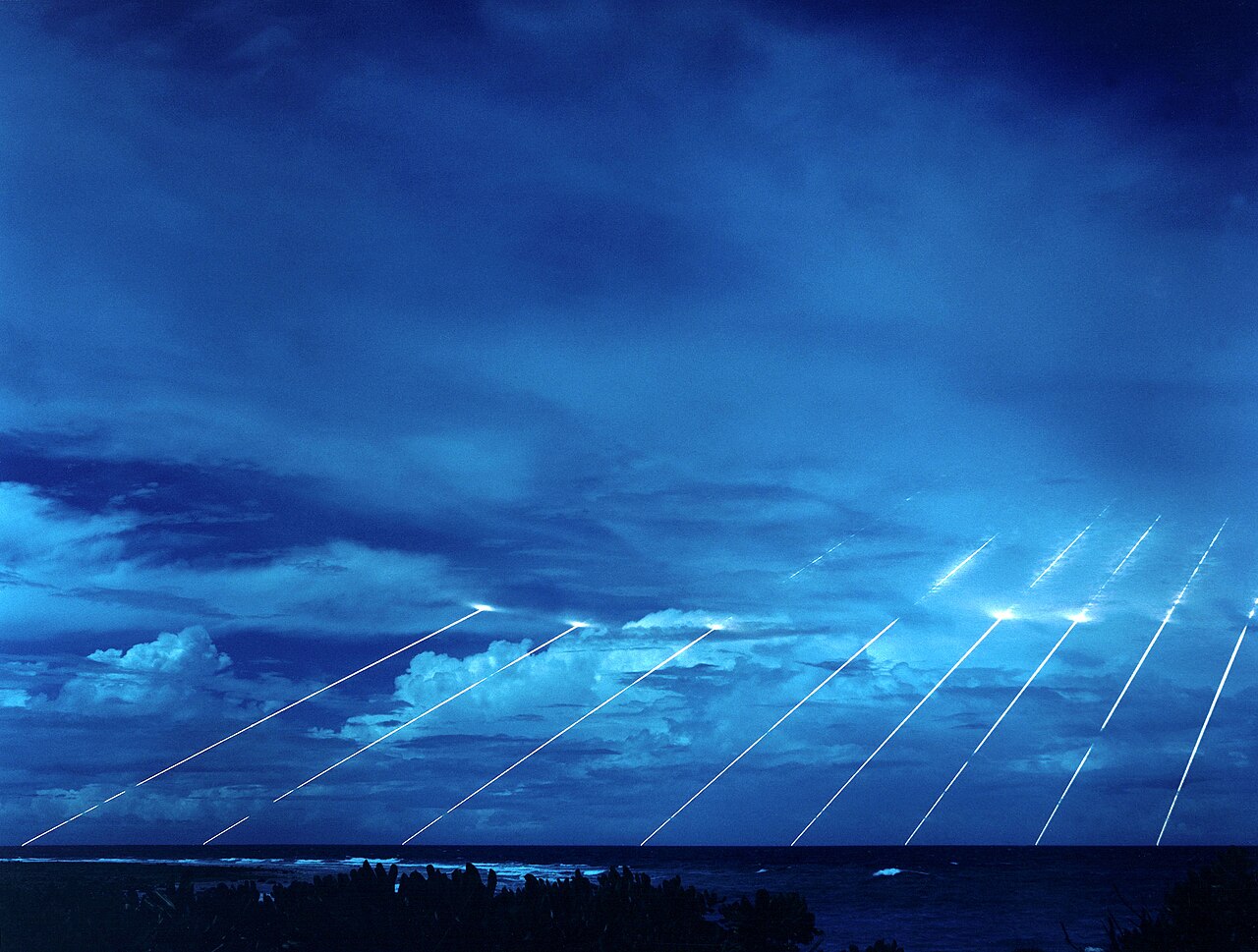
MIRV technology lets a single ballistic missile attack multiple targets, and it is why one retired US Peacekeeper missile could carry up to 10 independently targeted warheads across thousands of kilometers. Together with its maneuvering cousin the MaRV, the multiple independently targetable reentry vehicle remains the single most consequential idea in strategic missile design, and it is spreading.
What is a MIRV warhead
A MIRV, or multiple independently targetable reentry vehicle, is a warhead package that lets one missile strike several separate targets. Instead of a single warhead, the missile’s upper stage carries a dispensing platform, the post-boost vehicle or bus, loaded with several conical reentry vehicles. Each one can be released on a distinct trajectory toward its own aim point, sometimes hundreds of kilometers from the others.
The idea was fielded first on the US Minuteman III in 1970, followed quickly by Soviet heavy ICBMs, and it transformed the arithmetic of deterrence overnight. A silo housing one missile no longer threatened one target, it threatened a spread of them.
How MIRV bus deployment works
| Phase | What happens |
|---|---|
| Boost | Rocket stages burn for roughly 3 to 5 minutes, lofting the payload out of the atmosphere |
| Bus maneuvers | The post-boost vehicle uses small thrusters to adjust velocity between releases |
| Warhead release | Reentry vehicles are ejected one by one, each on its own ballistic path |
| Decoys deployed | Penetration aids and decoys are scattered to confuse defenses |
| Midcourse | Warheads coast through space for up to 20 minutes, unpowered |
| Reentry | Each vehicle reenters at several kilometers per second and strikes its aim point |
The bus is the clever part. After the boost stages fall away, it orients itself, releases a warhead, then fires thrusters to nudge onto a slightly different course before releasing the next. Accuracy depends on how precisely the bus times and aims each release, since the reentry vehicles themselves are, on a classic MIRV, unguided once separated, flying purely ballistic paths like other high-speed reentry systems.
What is a MaRV and how is it different
A MaRV, or maneuverable reentry vehicle, can steer after reentry, using fins, flaps or shifting its center of mass to pull course changes on the way down. That serves two purposes, terminal accuracy against a precise target and evasion of missile defenses that predict a purely ballistic path. The US Pershing II of the 1980s used a radar-guided MaRV to achieve accuracy sharp enough for a relatively small warhead, and China’s DF-21D is described in public sources as using a maneuvering vehicle to attack ships, a claim covered in our DF-21D guide.
MaRVs pay for agility with complexity and some range or payload penalty, and steering through reentry plasma at Mach 10 and above remains a hard control problem. Hypersonic glide vehicles push the same logic further, spending most of their flight maneuvering inside the atmosphere.
Which missiles carry MIRV or MaRV warheads
| System | Country | Payload, public reporting |
|---|---|---|
| Minuteman III | USA | MIRV-capable; deployed with a single warhead under New START |
| Trident II D5 | USA / UK | MIRVed submarine-launched missile, multiple W76 or W88 warheads |
| Peacekeeper (retired 2005) | USA | Up to 10 MIRVs, the high-water mark of US land-based MIRVing |
| R-36M2 / RS-28 Sarmat | Russia | Heavy ICBMs; up to 10 warheads reported, Sarmat figures are manufacturer claims |
| DF-5B, DF-41 | China | MIRVed per US government reporting; exact loads are Chinese state media claims |
| Pershing II (retired) | USA | Single radar-guided MaRV, eliminated under the INF Treaty |
| DF-21D, DF-26 | China | Anti-ship roles with maneuvering vehicles, per US reporting and Chinese claims |
Why MIRVs shape nuclear strategy
MIRVs are destabilizing in a very specific way, they reward striking first. A single incoming warhead that destroys a silo holding ten warheads trades one for ten, so heavily MIRVed forces in vulnerable silos create pressure to launch quickly in a crisis. Arms control has wrestled with this for decades, START II attempted to ban land-based MIRVs outright, and the US chose to download Minuteman III to a single warhead while Russia moved the other way, deploying heavily MIRVed silo and mobile missiles.
MIRVs also stress missile defense economics. Interceptors like those described in our SM-3 explainer must kill every credible object in a cloud of warheads and decoys, so each additional reentry vehicle multiplies the defender’s cost far faster than the attacker’s. That asymmetry is why defenses are sized against rogue-state arsenals rather than peer MIRV salvos.
MIRV and MaRV frequently asked questions
What does MIRV stand for?
Multiple independently targetable reentry vehicle, a payload system that lets one ballistic missile deliver several warheads to separate targets.
What is the difference between MIRV and MaRV?
MIRV warheads fly ballistic paths after release; a MaRV can steer during reentry for accuracy or to evade defenses.
How many warheads can a MIRV missile carry?
The retired US Peacekeeper carried up to 10; Trident II carries multiple warheads, and Russian heavy ICBMs are reported to carry up to 10.
Why did the US remove MIRVs from Minuteman III?
To improve stability and meet New START limits, each Minuteman III now carries a single warhead, though the missile remains MIRV-capable.
Can missile defenses stop MIRVs?
With great difficulty. Each missile presents multiple warheads plus decoys, so defenses are sized against small arsenals, not peer MIRV salvos.
- US government and Congressional Research Service publications on strategic forces
- Arms-control treaty texts and public compliance reports
- Wikipedia – Multiple independently targetable reentry vehicle (accessed October 2026)
- Defence & Tech reporting on strategic missile programs