The Solid Rocket Motor Shortage Holding Back the Missile Boom
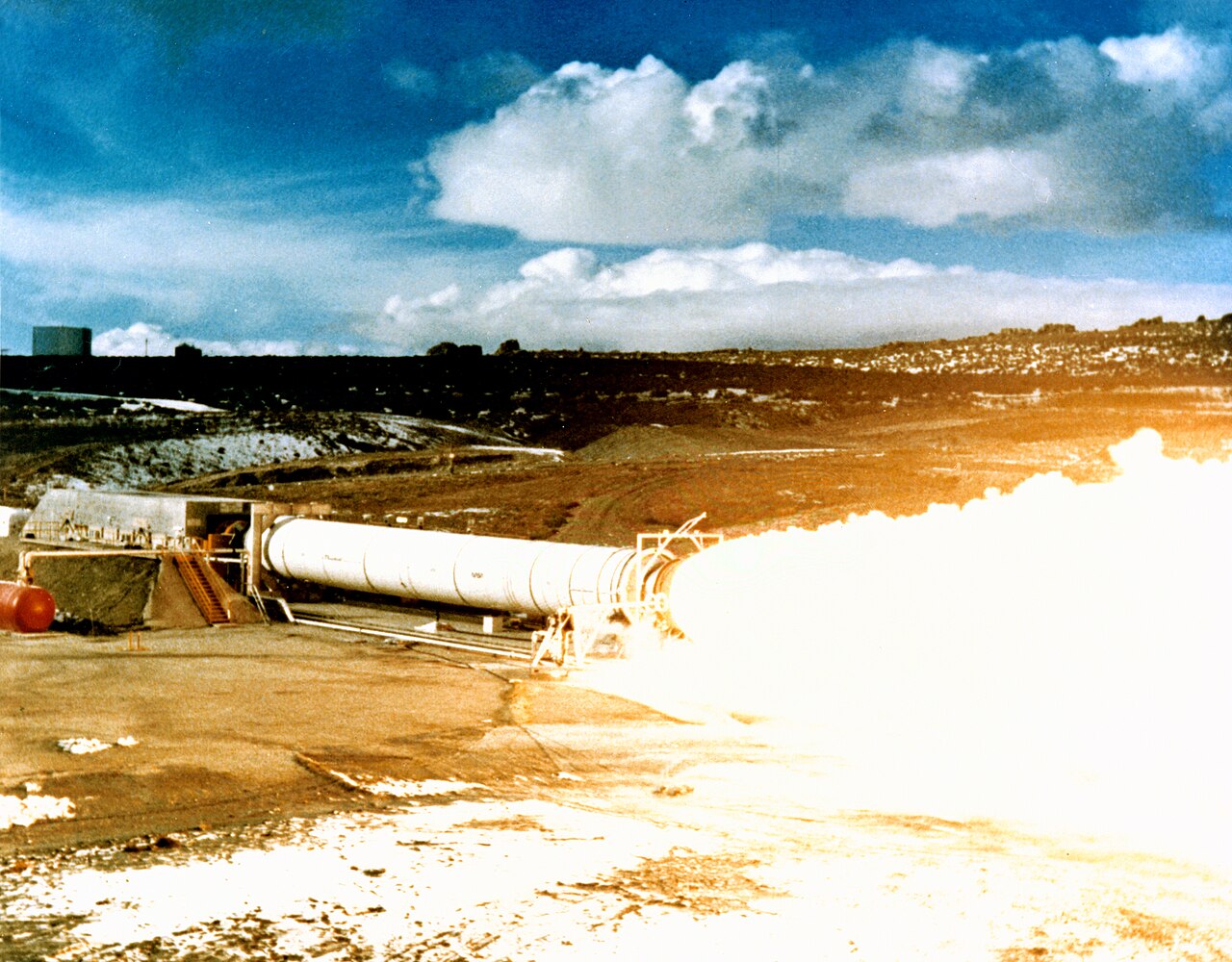
The solid rocket motor shortage is the quietest constraint on Western rearmament, a bottleneck in which two US suppliers feed nearly every missile program while demand has multiplied since 2022. Every GMLRS rocket, Javelin, Stinger, AMRAAM and interceptor rides on a solid motor, and the queue for them now stretches years.
Why solid rocket motors are the bottleneck
A solid rocket motor looks like the simplest part of a missile, a tube of rubberized propellant, and is actually among the hardest to scale. Casting energetic propellant is slow, hazardous, capital-intensive chemistry: mixing buildings must be blast-separated, curing takes days per motor, and the workforce needs years of qualification. Inputs are their own choke points, ammonium perchlorate oxidizer comes overwhelmingly from a single US producer, and specialty chemicals trace back to a thin global supplier base. When missile orders tripled after 2022, everything upstream of the motor could flex faster than the motor itself.
How the US ended up with two suppliers
The Cold War US industrial base counted around ten solid-motor houses. Post-1991 consolidation collapsed them into two: Aerojet Rocketdyne, bought by L3Harris in 2023, and Northrop Grumman, which absorbed Orbital ATK in 2018. Both carry decades of program heritage and both have struggled with delivery rates on key tactical programs, which is why primes have gone shopping. Lockheed Martin’s multi-billion-dollar propulsion deal with L3Harris for THAAD interceptors, which we covered here, shows how primes now lock in motor capacity years ahead, and why the AMRAAM production surge behind Raytheon’s $20.7 billion multiyear contract leans so hard on propulsion scheduling.
| Tier | Who and what |
|---|---|
| Incumbents | L3Harris (Aerojet Rocketdyne, acquired 2023) and Northrop Grumman (Orbital ATK, acquired 2018) |
| New entrants | Ursa Major, X-Bow Systems, Anduril, Avio USA, plus prime-owned energetics expansions |
| Single-source risk | Ammonium perchlorate oxidizer concentrated in one major US producer |
| Policy levers | Defense Production Act Title III grants, multiyear procurement contracts, second-sourcing mandates |
Which weapons compete for motors
| Segment | Examples |
|---|---|
| Tube and rocket artillery | GMLRS at a 14,000-per-year target, PrSM ramping |
| Air-to-air | AMRAAM, AIM-9X, next-generation missiles |
| Air defense interceptors | Patriot PAC-3, THAAD, SM-family, Stinger restart |
| Anti-armor | Javelin toward roughly 3,900+ per year |
| Strategic and hypersonic | ICBM modernization boosters, large-diameter hypersonic motors |
The competition is not only between programs but between motor classes. Large strategic and hypersonic boosters consume the same mixing capacity, engineers and oxidizer as tactical motors, and priority calls between them are made quietly inside production schedules rather than in public budget lines.
The new entrants betting on rockets
The gap has pulled in a wave of newcomers. Ursa Major adapted its space-engine expertise to tactical motors and won Pentagon backing; X-Bow Systems pitches small, rapidly cast motors from New Mexico; Anduril is building large production facilities with vertically integrated energetics; and Italy’s Avio, through its US arm, broke ground on a Virginia plant. General Dynamics and other primes are adding energetics capacity of their own, and the Pentagon has seeded the field with Defense Production Act funding. None of these yet matches the incumbents’ scale, but for the first time in thirty years, US motor capacity is being built rather than closed.
Europe’s own rocket motor squeeze
Europe concentrated even harder than America. Roxel, the Franco-British joint venture, Bayern-Chemie inside MBDA, Nammo in Norway and Avio in Italy carry most of the continent’s tactical motor load, and all have announced expansions since 2022, Nammo with direct state investment. The European squeeze shows up in missile delivery schedules rather than headlines: air defense interceptors ordered in 2023 arriving in 2027 are waiting on motors as often as on seekers. Propellant ingredients, again, are the deepest constraint, and several EU programs now fund oxidizer and energetics plants directly.
Solid rocket motor frequently asked questions
Why is there a solid rocket motor shortage?
Missile demand multiplied after 2022 while the US supplier base had consolidated to two major producers, and propellant casting capacity takes years to build and certify.
Who makes solid rocket motors in the US?
L3Harris (Aerojet Rocketdyne) and Northrop Grumman dominate, with Ursa Major, X-Bow, Anduril, Avio USA and others building new capacity.
What is the hardest part of making a solid rocket motor?
Energetics, safely mixing and casting propellant at scale, plus single-source inputs like ammonium perchlorate oxidizer and a scarce qualified workforce.
Which missiles are affected by the shortage?
Effectively all of them, GMLRS, PrSM, AMRAAM, Javelin, Stinger, Patriot, THAAD and SM-family interceptors draw on the same industrial base.
Is Europe also short of rocket motors?
Yes. Roxel, Bayern-Chemie, Nammo and Avio carry most European production and are all expanding, with delivery timelines for air defense missiles reflecting the strain.
- US Army and Pentagon statements on munitions ramp targets
- Company announcements from L3Harris, Northrop Grumman, Ursa Major, X-Bow, Anduril and Avio (manufacturer claims noted)
- Public reporting on Defense Production Act energetics investments
- Defence & Tech reporting on the missile industrial base