Russia Pitches Combat Drones to Africa, but Delivery Still Lags

Lead
Russia used the third Russia-Africa Summit in Moscow on October 28-29 to pitch combat drones and loitering munitions to delegations from dozens of African states, with Rosoboronexport Director General Alexander Mikheyev saying African buyers now account for roughly 30 percent of the state arms exporter’s order book. The display came alongside Kremlin claims of 45 African countries holding military-technical cooperation agreements with Moscow, but independent analysts and at least one Africa-focused defense publication say the gap between Russia’s pledges and its actual deliveries remains wide, with Ethiopia’s confirmed delivery of Su-35 fighters standing out as the clearest concrete outcome of the gathering.
What Happened
The summit, held under the banner “Russia-Africa Partnership Forum,” drew delegations from African governments to Moscow for two days, with the Kremlin’s presidential aide Yuri Ushakov citing 48 African countries as participants and Russian officials separately citing 22 heads of state in attendance, according to Kremlin readouts relayed by regional outlets. Organizers said 33 documents were slated for signature, covering areas from civil nuclear energy and fertilizer trade to a new 2027-2029 action plan for the Russia-Africa Partnership Forum.
On the sidelines, Rosoboronexport’s exhibition stand displayed unmanned systems the company has been marketing heavily to African militaries over the past year: the KUB-2E loitering munition, the Skat-350M reconnaissance drone, the export version of the Lancet reconnaissance-strike system (Lancet-E), and a proposed layered counter-drone concept it calls an “Anti-Drone Dome,” combining detection, electronic warfare and kinetic interceptors, according to a report by the Zambian Observer from the summit. President Vladimir Putin told African leaders that Russia now has intergovernmental military-technical cooperation agreements with 45 African countries; Mikheyev had cited a similar figure of 46 in comments earlier this year.
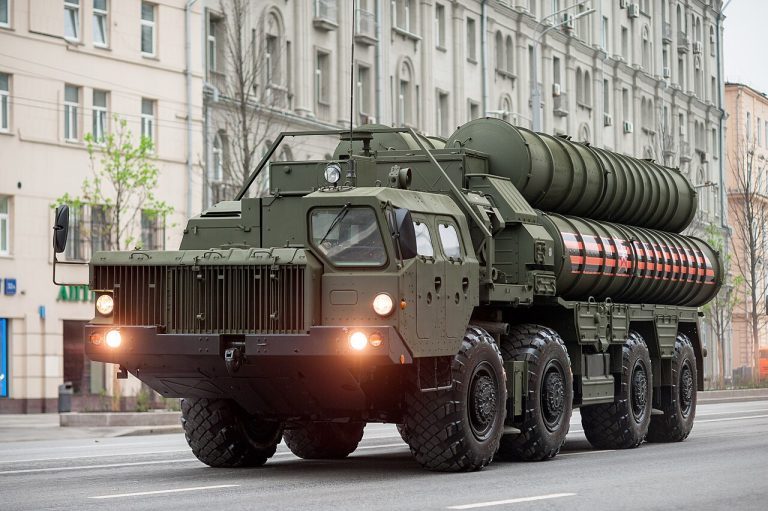
No specific new contracts for the displayed drones were announced publicly during the summit itself. The one confirmed major military delivery tied to the gathering involved a bilateral, not multilateral, announcement: Ethiopian Prime Minister Abiy Ahmed said on the sidelines that Ethiopia had received a batch of Russian Su-35 fighters a year ahead of schedule and would acquire four S-400 air-defense battalions, a separate deal unrelated to the drone systems on display.
The Product and System on Display
The KUB-2E is a compact, fixed-wing loitering munition developed by the ZALA Aero/Kalashnikov group, designed to loiter over a target area before diving onto it with a warhead of roughly three kilograms. It is marketed alongside the Skat-350M, a smaller reconnaissance drone intended to locate and designate targets for strike systems like the KUB-2E or the better-known Lancet family. Lancet-E is the export designation of the Lancet loitering munition, which Russian forces have used extensively against Ukrainian armor, artillery and air-defense positions since 2022 and which Rosoboronexport has promoted as combat-proven at successive arms fairs, including Africa Aerospace and Defence (AAD) 2026 in Centurion, South Africa, in September.
Russian officials have pitched the three systems as a package: a reconnaissance drone to find targets, a loitering munition to strike them, and — in the newer “Anti-Drone Dome” pitch — a counter-drone layer to protect against the same category of weapon now proliferating on African battlefields. None of the three systems has yet been publicly confirmed as delivered to, or purchased by, a specific African military; the summit display represented marketing and negotiation rather than a signed transaction, based on available reporting.
Who Uses It
Russia’s own armed forces are the only confirmed operator of the Lancet and KUB families at scale, having fired them by the thousands against Ukrainian targets. No African government has publicly confirmed fielding the KUB-2E or Skat-350M. Rosoboronexport said in May that it expected to sign Lancet-E contracts with “several” African and Middle Eastern countries by the end of 2026, but did not name the countries, and no signing has since been confirmed in available reporting.
Separately from the drone pitch, Russia’s Deputy Defense Minister Vasily Osmakov met Mali’s deputy defense minister, Omar Diarra, in Moscow on October 27 to discuss “the current state and prospects” of bilateral defense cooperation, according to Russia’s Defense Ministry, as part of preparations for the summit’s main events. Russia already maintains a military presence in Mali, the Central African Republic, Libya and elsewhere in the Sahel through the state-linked Africa Corps, though that force is built around personnel deployments and legacy weaponry rather than the new drone systems shown in Moscow.
Export and Procurement History
Rosoboronexport has said it has signed roughly 150 contracts worth more than $20 billion with African countries since 2023, and that Africa accounts for about 30 percent of its total order portfolio, figures Mikheyev has repeated in multiple statements this year. The company has intergovernmental military-technical cooperation agreements with between 45 and 46 African countries, depending on which 2026 statement is cited — a discrepancy that itself illustrates how loosely some of these figures are tracked and reported. The Lancet-E/Skat-350M/KUB-2E package was shown previously at AAD 2026 in South Africa in September, where Rosoboronexport said it planned meetings with African armed forces and security agencies; the Moscow summit extended that same sales pitch to a broader set of delegations.
By contrast, the clearest confirmed hardware transfer linked to the summit — Ethiopia’s Su-35s and planned S-400 batteries — traces to a bilateral agreement predating the gathering rather than a new contract signed there, underscoring a recurring pattern at Russia-Africa summits: splashy displays and aggregate statistics at the forum itself, with concrete deliveries usually the product of separate, slower-moving bilateral tracks.
Global Competitors
Russia is not the dominant drone supplier to Africa. According to a dataset compiled by the specialist outlet Military Africa, the continent’s militaries operate nearly 2,000 drones from 21 supplier countries, with Türkiye’s Bayraktar TB2 the single most widely distributed system, in service with 11 African countries. China’s Wing Loong, CH-4 and FH-95 drones are also fielded widely, including by Chad, Ivory Coast and both sides of Sudan’s civil war. On overall arms transfers rather than drones specifically, the Stockholm International Peace Research Institute credits the United States with 19 percent of African major-weapons imports in 2021-2025, China with 17 percent and Russia with 15 percent — meaning Moscow’s marketing push in Moscow this week was aimed at narrowing a gap with rivals who already hold larger shares of the African market.
Why It Matters
Loitering munitions and small reconnaissance drones are relatively cheap, battlefield-proven in Ukraine, and well-suited to the kind of irregular, resource-constrained conflicts many African militaries are fighting against jihadist insurgencies in the Sahel, rebel movements in Sudan and the Democratic Republic of Congo, and militant groups in Mozambique and Somalia. For Russia, pivoting its export pitch toward unmanned systems also reflects practical constraints: Western sanctions over the war in Ukraine have complicated Moscow’s ability to export higher-end manned platforms requiring foreign components, while drones built largely from domestically sourced or Chinese-sourced parts are easier to offer without running into the same supply bottlenecks.
What Happens Next
Independent assessments published around the summit are skeptical that the pledges will translate quickly into deliveries. The Africa Defense Forum, a publication produced under US Africa Command sponsorship, quoted analysts Joseph Siegle and Mustapha Bature Sallama arguing that previous Russia-Africa summits produced more declarations than deals, that debt-forgiveness and grain pledges from earlier summits proved largely symbolic, and that Moscow’s war-strained economy limits what it can actually deliver. A separate Chatham House analysis published around the summit likewise concluded that Russia is “engaging more with Africa” diplomatically while its “delivery is limited” in practice. Whether that assessment holds for the drone systems shown in Moscow will depend on whether Rosoboronexport’s promised year-end Lancet-E contracts with African buyers actually materialize — a question likely to resurface at the next major African defense exhibition rather than at this week’s summit.
FAQ
What weapons did Russia show African delegations at the 2026 Moscow summit?
Rosoboronexport’s stand featured the KUB-2E loitering munition, the Skat-350M reconnaissance drone, the Lancet-E strike system, and a proposed “Anti-Drone Dome” counter-drone concept, according to reporting from the summit.
How many African countries have military-technical agreements with Russia?
Russian officials have cited figures of 45 to 46 countries in various 2026 statements; the exact number varies depending on which Rosoboronexport or Kremlin statement is used.
Has any African country confirmed buying the KUB-2E or Lancet-E?
No African government had publicly confirmed a purchase of these specific systems as of the summit’s close. Rosoboronexport has said it expects to sign Lancet-E contracts with unnamed African and Middle Eastern buyers by the end of 2026.
What was the biggest confirmed military deal linked to the summit?
Ethiopia’s receipt of Russian Su-35 fighters and its planned purchase of four S-400 air-defense battalions, announced by Prime Minister Abiy Ahmed on the summit’s sidelines — a bilateral deal predating the gathering rather than a new multilateral announcement.
Who dominates Africa’s drone market overall?
Türkiye’s Bayraktar TB2 is the most widely fielded drone on the continent, operated by 11 countries, ahead of Chinese and Russian systems, according to a Military Africa dataset.
Sources
- Zambian Observer, “Russia Showcases Drones and Advanced Weapons to African Delegates at Moscow Summit,” October 29, 2026 — https://zambianobserver.com/russia-showcases-drones-and-advanced-weapons-to-african-delegates-at-moscow-summit/ — primary source for the weapons displayed at the summit stand.
- Africa Defense Forum (adf-magazine.com), “Third Russia-Africa Summit Follows Unmet Expectations,” October 2026 — https://adf-magazine.com/2026/10/third-russia-africa-summit-follows-unmet-expectations/ — analyst skepticism on delivery gaps; published under US Africa Command sponsorship, noted for transparency.
- Al Jazeera, “Why is Russia sending fighter jets and air defences to Ethiopia?” October 29, 2026 — https://www.aljazeera.com/news/2026/10/29/why-is-russia-sending-fighter-jets-and-air-defences-to-ethiopia — Ethiopia Su-35/S-400 announcement, SIPRI African arms-import share figures.
- TASS, report on Russia-Mali defense ministry talks, October 27, 2026 — https://tass.com/defense/2209099 — bilateral meeting ahead of the summit.
- TASS, “Third Russia-Africa summit to be held in Moscow on October 28-29 — joint statement” — https://tass.com/politics/2157099 — summit dates and planning background.
- Chatham House, “Russia-Africa Summit: Moscow is engaging more with Africa, but its delivery is limited,” October 2026 — https://www.chathamhouse.org/2026/10/russia-africa-summit-moscow-engaging-more-africa-its-delivery-limited — independent analysis of delivery gap.
- Military Africa, African drone procurement dataset — https://www.military.africa/africa-drone-procurement.html — Bayraktar TB2 and overall African drone fleet figures.
- Rosoboronexport/TASS statements on Africa order-book share and contract totals, cited via multiple 2026 TASS and Sputnik Africa reports.