NATO STANAG Standards Explained, What They Are and Why They Matter
A NATO STANAG, or Standardization Agreement, is a document in which member nations agree to make their equipment, procedures or data formats compatible, and the alliance maintains well over a thousand of them. They are why a US magazine can often fit a Polish rifle, why allied aircraft share datalinks, and why a vehicle armor rating means the same thing in Berlin and Ankara.
What is a NATO STANAG
STANAG is the abbreviation for Standardization Agreement. Each one is a formal record that some or all NATO members have agreed to implement a common standard, whether a technical specification, a procedure or a data format. The detailed standard usually lives in a separate Allied Publication, and the STANAG is the agreement to apply it.
The NATO Standardization Office in Brussels manages the system, working with committees of national experts. The goal is interoperability, meaning that forces from 32 countries can fight, supply and communicate together without rebuilding their equipment for every operation. The concept dates to the early years of the alliance, when the differing rifles, radios and ammunition used by allies had already caused trouble in exercises.
How do STANAGs work
A STANAG starts when a nation or working group proposes a standard, which is then drafted, reviewed and circulated for ratification. Each member can ratify, meaning it agrees in principle, and then implement, meaning it puts the standard into practice in its own forces. A country can ratify with reservations, or simply decline to adopt a particular STANAG.
That is an important limit: a STANAG is not a law, and there is no enforcement body. Its strength comes from peer pressure and shared interest. Countries that want to operate smoothly within NATO have strong reasons to follow the standards, and procurement offices often write STANAG compliance directly into contracts. Suppliers advertise “STANAG-compliant” products for that reason.
Famous NATO STANAGs
| STANAG | What it covers |
|---|---|
| STANAG 4172 | 5.56×45 mm NATO ammunition |
| STANAG 4179 | Rifle magazine interface, widely known as the “STANAG magazine” pattern from the M16 |
| STANAG 4694 | NATO accessory rail for mounting optics and lights |
| STANAG 4569 | Protection levels for occupants of logistic and light armored vehicles |
| STANAG 4586 | Standard interfaces for unmanned aerial vehicle control systems |
| STANAG 4607 | Ground moving target indicator data format for surveillance radars |
| STANAG 5516 | Link 16 tactical datalink message standard |
The best-known example among shooters is the magazine. When gun owners talk about a “STANAG magazine,” they mean the AR-15 and M16 magazine shape that NATO adopted as a common interface; the name has stuck even though not every rifle built to that shape is an official NATO standard. Another familiar case is the Link 16 datalink, which lets aircraft, ships and ground units from many nations share a common air picture.
STANAG 4569 protection levels
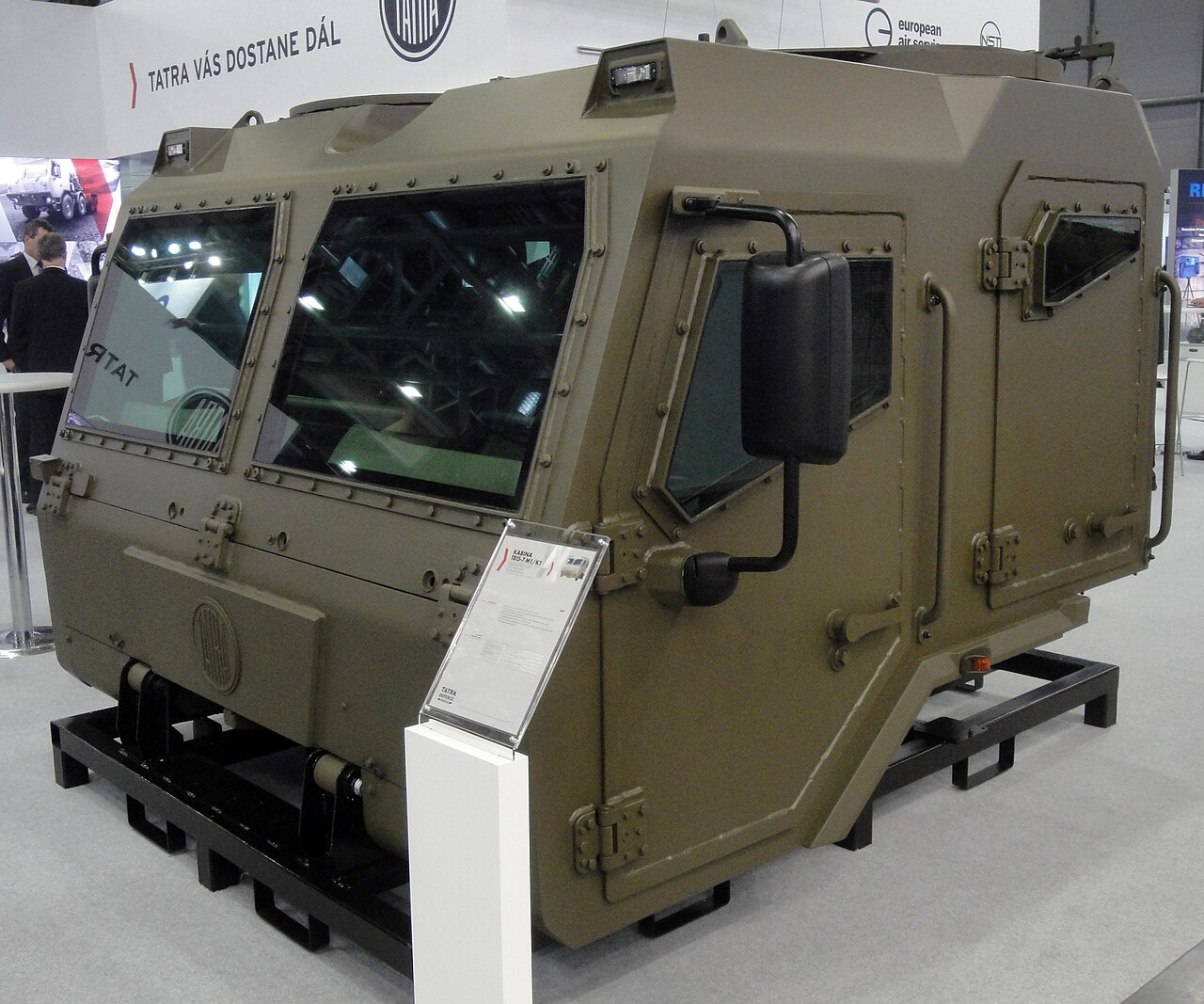
STANAG 4569 is one of the most frequently quoted standards in vehicle marketing. It defines ballistic protection levels from 1 to 6, each tied to a test threat at a stated range, and separate levels for blast from mines and improvised explosive devices. A vehicle maker who states “Level 4 protection” is pointing to this scale. Armor materials and tactics behind such ratings are explained in our guide to reactive and composite armor.
| Level | Typical test threat |
|---|---|
| Level 1 | Small arms ball rounds such as 7.62 mm at 30 m |
| Level 2 | 7.62 mm armor-piercing rounds |
| Level 3 | Heavier 7.62 mm armor-piercing rounds at closer range |
| Level 4 | 14.5 mm armor-piercing rounds at 200 m |
| Level 5 | 25 mm armor-piercing discarding sabot rounds at 500 m |
| Level 6 | 30 mm armor-piercing fin-stabilized rounds at 500 m |
Nations may interpret the test results differently, and many vehicles are rated for certain sides or angles only, for example Level 4 on the frontal arc but lower on the flanks. Treat ratings as a starting point, not a guarantee.
Why NATO standards matter
The war in Ukraine has made standardization a practical issue. Allies have struggled to supply enough 155 mm shells, for example, and questions about whether shells, charges and fuzes from different makers work with different howitzers sit directly within the standards system. Our explainer on the 155 mm shell production race shows why common specifications help when production must be shared across many countries.
The system has weak points. Standards can be slow to write, nations can drag their feet on implementation, and the alliance has also seen split approaches, such as different artillery calibers and gun barrel lengths that require bridging documents. Newer domains, including drones, cyber and space, also move faster than the standardization process.
STANAG frequently asked questions
What does STANAG stand for?
Standardization Agreement, a NATO document by which member nations agree to apply a common standard.
Are STANAGs legally binding?
No. Nations choose whether to ratify and implement each one, and can do so with reservations.
What is a STANAG magazine?
The magazine shape used by M16 and AR-15 rifles, adopted as a NATO interface under STANAG 4179.
What does STANAG 4569 mean?
It is the NATO standard that defines protection levels for vehicle occupants against bullets, artillery fragments and mines.
Who writes STANAGs?
NATO committees of national experts, coordinated by the NATO Standardization Office in Brussels.
- NATO Standardization Office public information
- NATO Allied Publications and STANAG listings (public extracts)
- Wikipedia – STANAG (accessed October 2026)
- Defence & Tech reporting