F-47 Radar and Sensors: What Is Known, What Is Classified
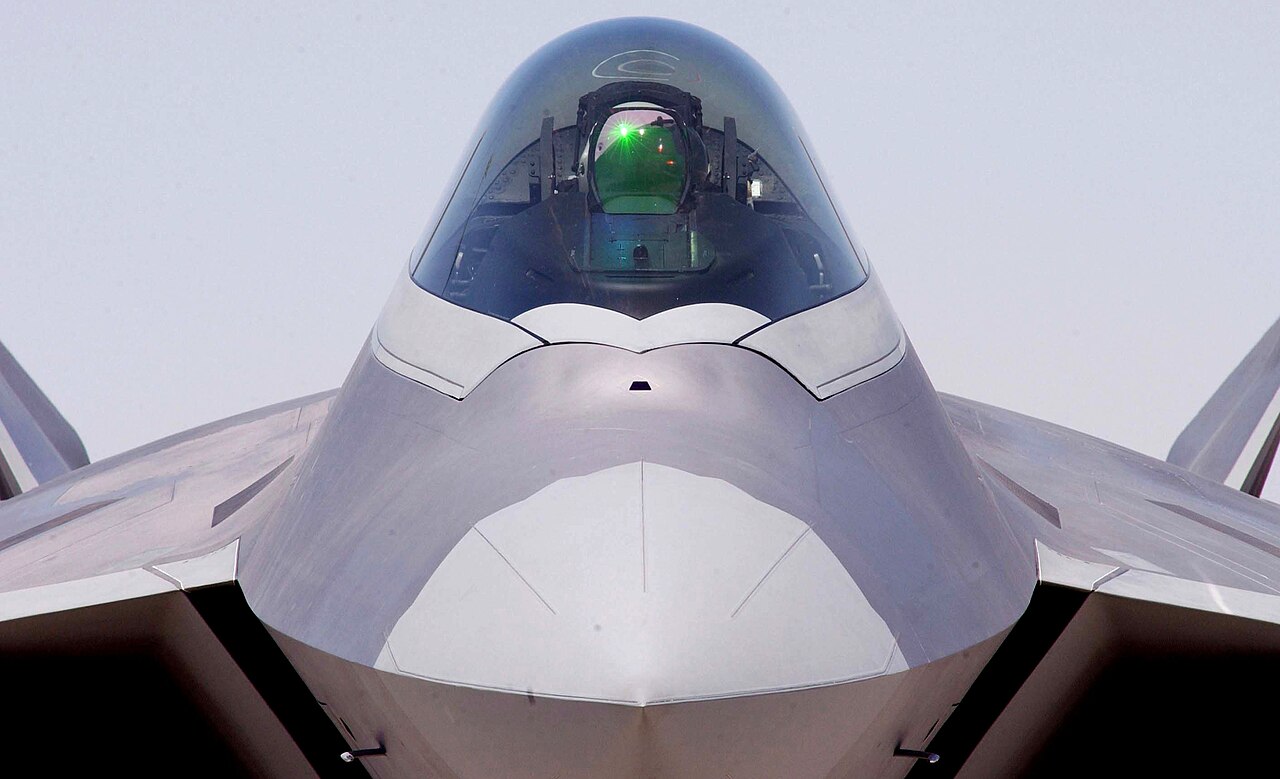
The Air Force has not named a single sensor on the F-47. There is no published radar designation, no supplier list and no description of its infrared or electronic warfare systems. That silence is deliberate. Sensors and the software that joins them together are among the most sensitive parts of any combat aircraft, and they are where much of the F-47’s advantage is supposed to lie.
This article therefore works from two things that are public: what American fighters carry today, and what the Air Force has said the F-47 must do. Everything beyond that is marked as inference.
What the official record contains
The record is thin. The Air Force graphic published in May 2025 gives a combat radius, a top speed, a stealth rating and a fleet size. It says nothing about sensors. Budget documents for the programme are largely classified. Boeing has not identified its mission-systems suppliers.
Officials have described the aircraft in general terms. They say it will have more advanced stealth and longer range than fifth-generation fighters and will be built to take upgrades more easily. None of that describes a radar. For what the images show of the airframe, see our piece on the F-47’s design.
The baseline: what US fighters carry now
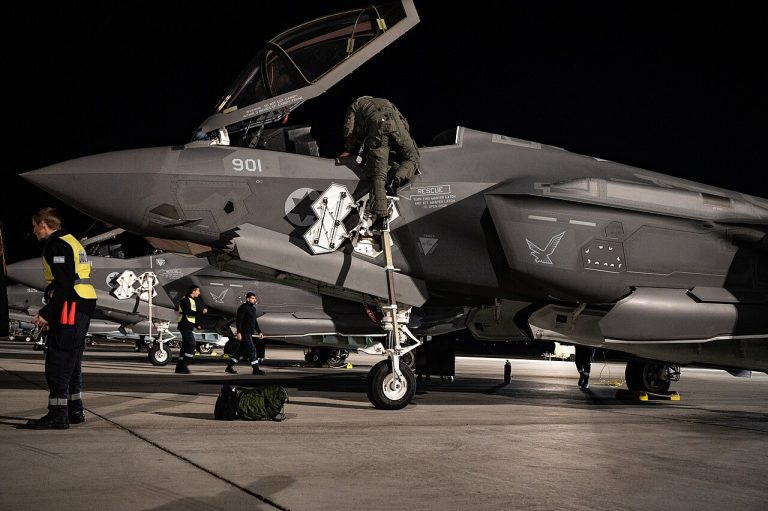
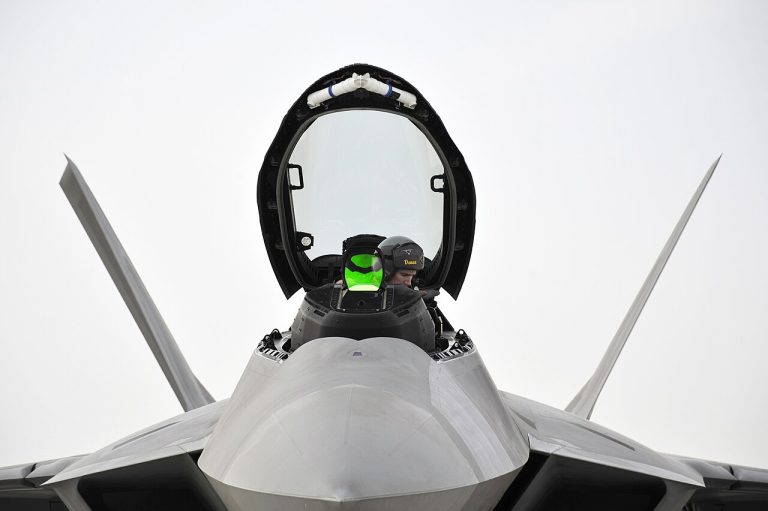
The F-47 will not start from nothing. The F-22 and F-35 show the level it has to exceed.
| Sensor | F-22 | F-35 | F-47 |
|---|---|---|---|
| Radar | AN/APG-77 AESA | AN/APG-81, with AN/APG-85 arriving | Not disclosed; an advanced AESA is expected |
| Infrared | Being added by upgrade | EOTS and the Distributed Aperture System | Not disclosed; built-in infrared search is expected |
| Electronic warfare | AN/ALR-94 | AN/ASQ-239 | Not disclosed |
| Data links | Intra-flight link, Link 16 | MADL, Link 16 | Not disclosed; must include links to uncrewed aircraft |
An AESA, or active electronically scanned array, steers its beam electronically and can search, track and jam at once. We explain the principle in how AESA radar works. The F-35’s sensors, described in our guides to its radar and its sensor fusion, are the nearest public model for what a modern suite looks like.
Three ways the F-47 is expected to differ
The first is a greater reliance on passive sensing. A radar gives away the aircraft that uses it. An aircraft built for the most heavily defended airspace is likely to listen and watch before it transmits, using infrared search and track and receivers that detect enemy radars. Infrared matters more as opponents field their own stealth aircraft, which are hard to see on radar but still produce heat.
The second is distributed sensing. The F-47 will fly with Collaborative Combat Aircraft, and some of those drones are expected to carry sensors forward. A drone can switch on its radar and accept the risk while the crewed fighter stays silent behind it and receives the picture by data link.
The third is power. The NGAP engines are intended to supply much more electrical power and cooling than current engines. Radars and jammers are limited by both, so more of each should mean longer detection range and stronger electronic attack. How much more has not been stated.
Open architecture: the part officials do talk about
One feature has been discussed in public. The Air Force says NGAD is built on a government-owned open architecture. In plain terms, the service controls the interfaces between the aircraft’s computers and its sensors, so that a new radar mode or a new sensor can be added without redesigning the whole system, and without depending on one company.
This is a reaction to experience. Upgrading the F-35 has been slow and costly, as the delays to its TR-3 hardware and Block 4 software showed. The F-47 is supposed to be upgraded in shorter cycles, with the possibility of different suppliers competing for each improvement.
Whether that works in practice will not be known for years. It is a goal, and several earlier programmes had the same goal.
What the sensors have to find
The demands are easier to state than the answers. The F-47 must detect stealth fighters such as China’s J-20 and the newer J-36 at ranges that let it shoot first. It must find targets for long-range missiles such as the AIM-260, which can fly farther than a single fighter’s radar may be able to track a stealthy target. And it must do this while being hunted by ground radars and long-range missiles.
No single sensor does all of that. The likely answer is fusion: radar, infrared and electronic receivers on the F-47, combined with data from drones, other fighters, airborne early warning aircraft and satellites. The pilot would see one picture, not separate displays, which is the approach fifth-generation aircraft began and which we describe in our guide to sensor fusion.
That is a description of the problem, and the publicly known direction of travel. The actual equipment remains secret.
Frequently asked questions
What radar does the F-47 have?
It has not been disclosed. An advanced AESA radar is expected, but no designation or supplier has been published.
Does the F-47 have infrared search and track?
Not confirmed. A built-in infrared sensor is widely expected because it can detect stealth aircraft without emitting.
Who makes the F-47’s sensors?
Unknown. Boeing has not named its mission-systems suppliers.
Will the F-47 use sensors on drones?
That is the stated concept. Collaborative Combat Aircraft are expected to carry sensors and share what they see with the crewed fighter.
Is the F-47’s radar better than the F-35’s?
There is no public data to compare. More electrical power and cooling from its engines should allow more capable sensors.
What is open architecture?
A design approach in which the government controls the interfaces, so sensors and software can be upgraded or replaced without rebuilding the whole system.
- The War Zone – First F-47 6th Generation Fighter Now Being Built: twz.com
- Army Recognition – US Air Force’s first F-47 will take off in 2028, years before its next-gen engine is ready: armyrecognition.com
- The Aviationist – U.S. Air Force Awards CCA Production Contracts: theaviationist.com
- The Aviationist – NGAD’s Images Might Not Show Any Real Feature of the F-47: theaviationist.com
- The War Zone – New Views Of China’s Next Generation Fighters: twz.com