Russia’s ICBMs: Yars, Sarmat, Topol-M and Voevoda Explained
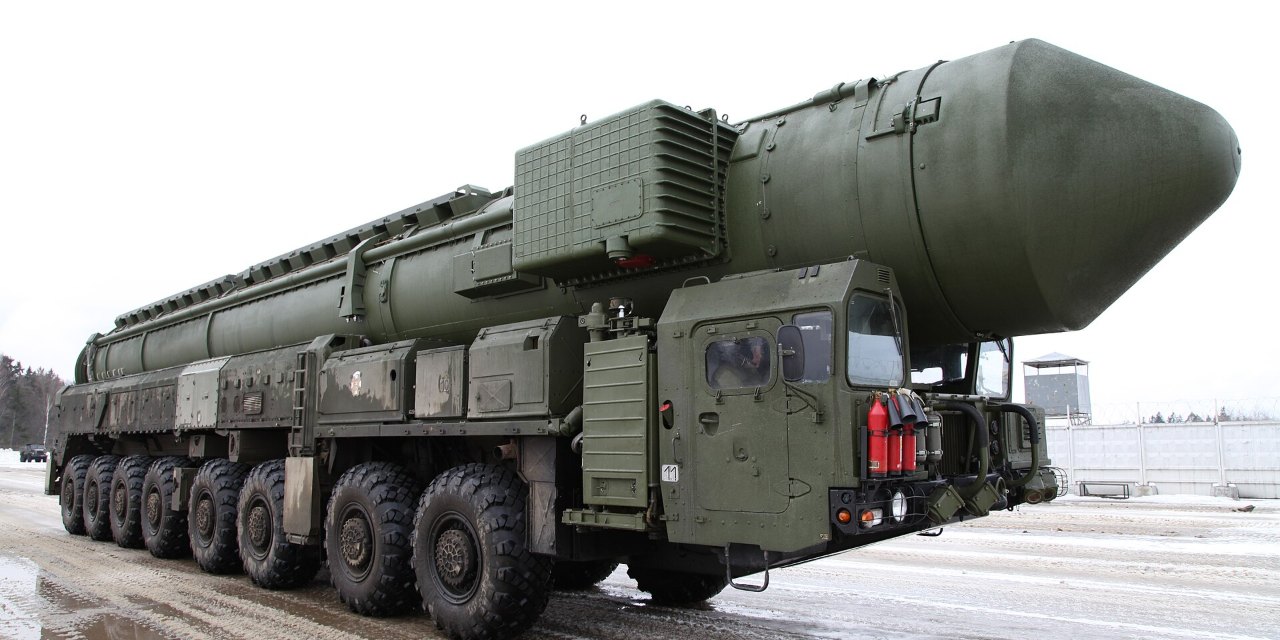
Russia has about 324 intercontinental ballistic missiles (ICBMs) carrying roughly 892 nuclear warheads, according to the Federation of American Scientists’ 2026 assessment. Two-thirds of them are RS-24 Yars, a solid-fuel missile that can be fired from a silo or from a truck hidden in a forest.
Land-based missiles are the largest part of Russia’s nuclear deterrent and the part it has modernized most fully. This guide covers each missile type, the troubled Sarmat program and the force that operates them.
What ICBMs does Russia have?
An ICBM is a ballistic missile with a range above 5,500 km. Russia operates four types and is testing a fifth. Their place in the wider arsenal is described in what missiles Russia has.
| Missile | NATO name | Number | Warheads each | Basing | Fuel |
|---|---|---|---|---|---|
| RS-24 Yars | SS-27 Mod 2 | About 207 | Up to 4 | Road-mobile and silo | Solid |
| Topol-M | SS-27 Mod 1 | 78 | 1 | 60 silo, 18 road-mobile | Solid |
| R-36M2 Voevoda | SS-18 Satan | About 40 | Up to 10 | Silo | Liquid |
| UR-100N with Avangard | SS-19 Mod 4 | Two regiments | 1 glide vehicle | Silo | Liquid |
| RS-28 Sarmat | SS-X-29 | None deployed | 10 or more, claimed | Silo | Liquid |
RS-24 Yars, the backbone of the force
The Yars entered service in 2010 as a development of the Topol-M with multiple warheads. It weighs about 50 tonnes, burns solid fuel, has a range of about 11,000 km and carries up to four independently targeted warheads.
Its importance lies in how it is based. Most Yars missiles ride on 16-wheel launch vehicles that leave their garrisons and disperse along forest roads, which makes them very hard to find and destroy in a first strike. Others sit in hardened silos. Mobile Yars regiments are based at sites including Teykovo, Yoshkar-Ola, Nizhny Tagil, Novosibirsk, Irkutsk and Barnaul.
Topol-M and Voevoda, the older missiles
The Topol-M was the first ICBM Russia fielded after the Soviet collapse. It carries a single warhead and remains in service in silos at Tatishchevo and on a small number of mobile launchers. It is being replaced by the Yars.
The R-36M2 Voevoda, which NATO calls the SS-18 Satan, is the heaviest ICBM ever deployed. It weighs more than 200 tonnes and can carry ten warheads. The missile was designed in Soviet Ukraine, at the Yuzhnoye bureau in Dnipro, and its service life has been stretched for decades. About 40 remain at Dombarovsky and Uzhur. A few silos at Dombarovsky hold UR-100N missiles fitted with the Avangard glide vehicle, described in our guide to Russia’s hypersonic missiles.
RS-28 Sarmat, the replacement that is late
The Sarmat is meant to replace the Voevoda. It is a 208-tonne liquid-fuel missile that Russia says can throw 10 tonnes of payload to 18,000 km, enough to attack the United States over the South Pole and avoid most missile defense radars. Deployment was first promised for 2018.
| Date | Result |
|---|---|
| April 2022 | First full-range test from Plesetsk, successful |
| February 2023 | Test failed, according to US officials |
| September 2024 | Missile exploded in its silo at Plesetsk, leaving a large crater |
| November 2025 | Launch from Dombarovsky failed shortly after ignition |
| May 2026 | Successful test launch from Dombarovsky |
Russian officials have several times declared the Sarmat ready. The Federation of American Scientists judged that none was operationally deployed as of March 2026, although a regiment at Uzhur is being converted to receive it.
The Strategic Rocket Forces
Russia’s ICBMs belong to a separate branch, the Strategic Rocket Forces, with about 50,000 personnel and headquarters at Vlasikha near Moscow. It is organized into three missile armies and about a dozen divisions. The branch also operates the Oreshnik intermediate-range missile.
Every autumn the force takes part in a strategic nuclear exercise in which a Yars is launched from Plesetsk at the Kura test range in Kamchatka. New START required Russia to notify the United States of such launches. With the treaty expired since February 2026, that obligation rests only on a separate 1988 notification agreement.
How fast could a Russian ICBM reach the United States?
About 30 minutes. A missile launched from central Russia would fly over the Arctic, reaching speeds above 24,000 km/h before its warheads re-enter the atmosphere. Silo-based missiles can be launched within minutes of an order. The warhead totals and doctrine behind them are covered in how many nuclear weapons Russia has.
Frequently asked questions
How many ICBMs does Russia have?
About 324 nuclear-armed ICBMs, according to the Federation of American Scientists’ 2026 estimate.
What is Russia’s main ICBM?
The RS-24 Yars, with about 207 deployed in silos and on road-mobile launchers.
Is the Sarmat missile in service?
Not as of early 2026, according to FAS. It had a successful test in May 2026 after failures in 2024 and 2025.
What is the Satan missile?
Satan is the NATO name for the R-36M2 Voevoda, the heaviest ICBM ever deployed. About 40 remain.
What is the range of a Russian ICBM?
About 11,000 km for the Yars and Topol-M. Russia claims 18,000 km for the Sarmat.
- Bulletin of the Atomic Scientists – Russian nuclear weapons, 2026 (Kristensen, Korda, Johns, Knight-Boyle): thebulletin.org
- CSIS Missile Threat – Missiles of Russia: missilethreat.csis.org
- Wikipedia – RS-28 Sarmat: en.wikipedia.org
- Wikipedia – RS-24 Yars: en.wikipedia.org
- Wikipedia – Strategic Rocket Forces: en.wikipedia.org