Bayraktar TB3: Specs, Carrier Ops on TCG Anadolu and TEI Engine
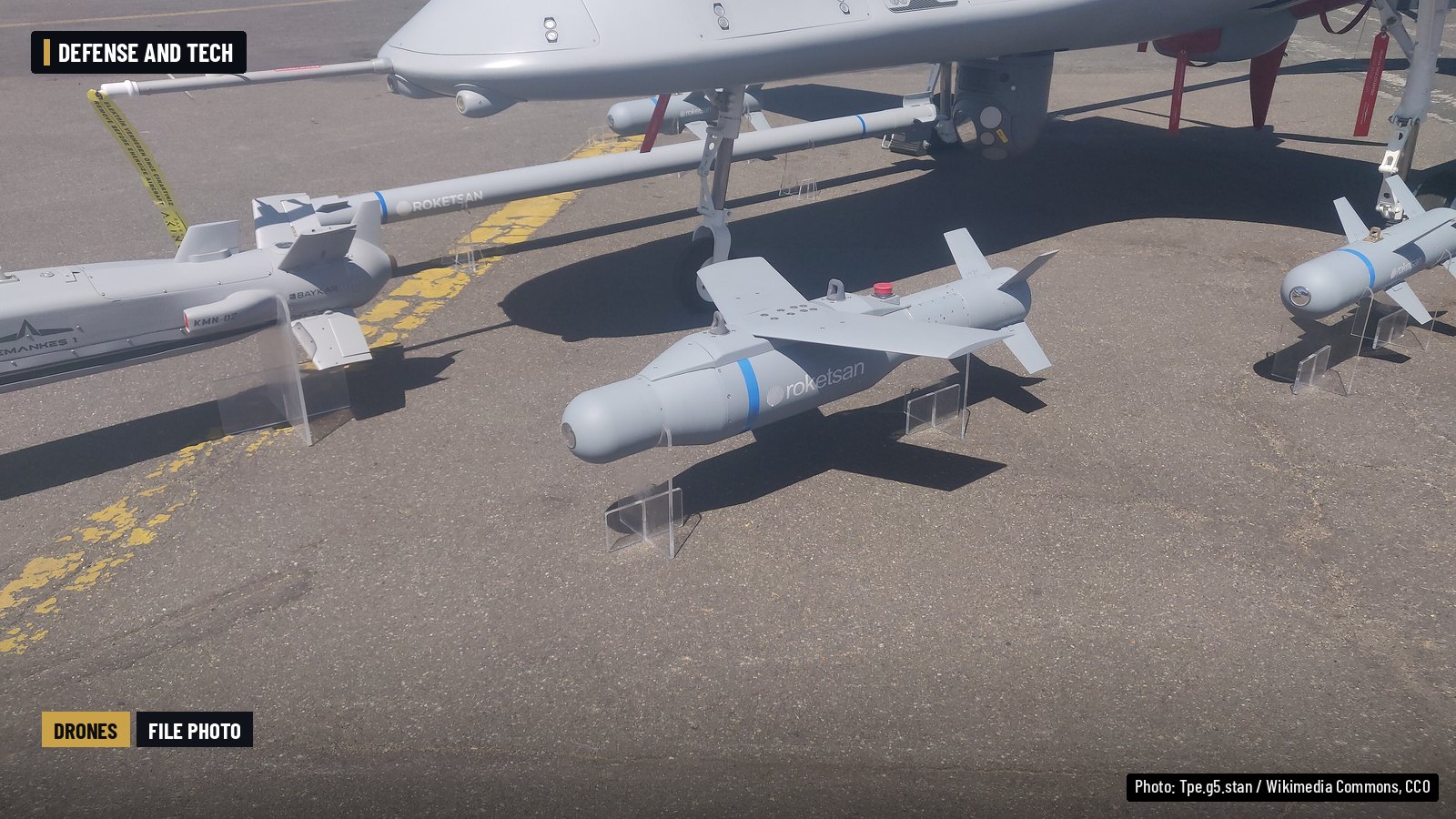

The Bayraktar TB3 is Baykar’s short-runway, ship-capable unmanned combat aerial vehicle. Baykar lists a 1,600 kg maximum take-off weight, a 280 kg payload, more than 24 hours’ endurance, a 25,000 ft service ceiling and a 170 hp turbodiesel engine, and says the aircraft can take off and land autonomously on carriers with short decks such as TCG Anadolu. The figures below come from Baykar’s product page and Baykar and TEI press statements checked on 5 November 2026 (Baykar).
- Maker: Baykar, Türkiye; indigenous UCAV under development for short-runway carrier operations
- Baykar figures: 1,600 kg MTOW (may vary on naval version), 280 kg payload, 170 hp turbodiesel, 24+ h endurance, 25,000 ft service ceiling
- 19 November 2024: Baykar said TB3 PT2 took off from and landed on TCG Anadolu without landing-support equipment
- By 2 June 2025 Baykar reported 100+ shipborne sorties on TCG Anadolu; TEI PD-170/PD-200 named in manufacturer statements
- Product page still says under development; no official inventory-entry date or TB3 export list found in sources for this update
What is the Bayraktar TB3?
Baykar describes the TB3 as an indigenous armed unmanned aerial system under development, built for reconnaissance, surveillance and intelligence as well as strike missions with smart munitions under the wings. The design focus is autonomous take-off and landing on short-runway aircraft carriers, with both line-of-sight (LOS) and beyond-line-of-sight (BLOS) communications for remote control over long distances (Baykar). Those are the manufacturer’s descriptions of the intended role, not independent operational assessments.
In Baykar’s range the TB3 sits above the lighter Bayraktar TB2, alongside the heavier high-altitude Bayraktar AKINCI, and below the jet-powered Bayraktar KIZILELMA. For the company, see our Baykar company profile.
Baykar lists Land and Marine versions and notes that maximum take-off weight may vary on the naval version. Defense and Tech covers both inside this page rather than on separate URLs.
Bayraktar TB3 specifications
The table shows the figures on Baykar’s official product page, checked on 5 November 2026.
| Parameter | Bayraktar TB3 (Baykar figures) |
|---|---|
| Class / role | Armed UAV for ISR and strike; short-runway carrier take-off and landing |
| Maximum take-off weight | 1,600 kg (may vary on naval version) |
| Payload capacity | 280 kg |
| Engine (product page) | 170 hp turbodiesel |
| Speed | 110–130 KTAS (cruise to maximum) |
| Endurance | 24+ hours |
| Service ceiling / operational altitude | 25,000 ft / 20,000 ft |
| Wingspan / length / height | 14 m / 8.35 m / 2.6 m |
| Communication | LOS and BLOS |
| Take-off, landing, cruise, taxi | Autonomous |
| ISR payload (types listed) | ELINT; simultaneous EO/IR/laser designator; surveillance radar |
| Weapons (types listed) | Laser-, INS/GPS- and IR-guided munitions; mini cruise missiles |
| Versions listed | Land and Marine |
Baykar’s product page does not break out separate performance tables for the land and marine versions beyond the MTOW note. An earlier Baykar press item once cited a 1,450 kg MTOW; this article follows the current product page. Endurance, range and ceiling also depend on payload and mission profile, which Baykar does not publish for each configuration.
Shipboard operations on TCG Anadolu
The TB3’s defining claim is short-deck carrier work. Baykar says it completed ski-jump tests at its Keşan Flight Training and Test Centre on a 12-degree ramp built to match TCG Anadolu’s deck, with the first ski-jump test on 1 June 2024 (Baykar, 19–20 November 2024).
On 19 November 2024, Baykar reported that Bayraktar TB3 PT2 took off from TCG Anadolu’s short runway with the 12-degree ski-jump while the ship was operating off Aksaz, Muğla, at the junction of the Aegean and Mediterranean. The flight lasted about 46 minutes and the aircraft landed back on the same short runway without landing-support equipment. Baykar described this as the first time an armed unmanned aircraft had taken off from and landed on a short-runway vessel (Baykar).
Further Baykar shipboard reports include tests on 26 November 2024; four successful sorties in the Gulf of Saros on 22 April 2025 under fully autonomous take-off and landing trials; and, between 28 May and 2 June 2025, vision-based, AI-assisted automatic take-off and landing checks on TCG Anadolu. By 2 June 2025 Baykar said the type had completed more than 100 shipborne sorties on TCG Anadolu, about 1,167 hours and 8 minutes of total flight time and 709 test sorties overall (Baykar, 22–23 April 2025; Baykar, 2–3 June 2025). In the same June release Baykar referred to a folding-wing design for the TB3.
These are manufacturer test and development claims. Baykar’s product page still describes the TB3 as under development. This research found no official public statement that the type has entered Turkish Armed Forces inventory as a fleet aircraft, so order, delivery and inventory figures are not stated here.
Engines and localisation
The product page lists a 170 hp turbodiesel without naming the maker. Baykar’s June 2025 shipboard release says the TB3 is powered by the PD-170 developed by TEI (Tusaş Engine Industries) and that, with that engine, the aircraft reached 36,310 ft on 25 June 2024 — a test altitude above the 25,000 ft service ceiling on the product page (Baykar). An earlier Baykar release on the high-altitude system performance test reported a climb to 33,000 ft with the PD-170 and gave the maiden flight date as 27 October 2023 (Baykar).
TEI’s own PD170 page says the engine was developed under the patronage of Türkiye’s Presidency of Defence Industries (SSB), lists about 172 hp, and states that it has flown on the Bayraktar TB3 (TEI). TEI also publishes the TEI-PD200 as a marine-adapted turbodiesel and says that engine continues flights with the Bayraktar TB3 (TEI). This article does not assign a single engine to every airframe; both PD-170 and PD-200 appear in official manufacturer text.
The practical point for readers is localisation: Baykar and TEI present the TB3 powerplant line as a domestic turbodiesel path rather than a foreign light-aircraft engine. The SSB role documented here is for the TEI engine programme. Baykar states elsewhere that it funds its own UAV projects with company resources; this pass did not find a separate official citation describing the TB3 airframe programme itself as SSB-led.
Sensors and munitions tested
Baykar lists ELINT, simultaneous electro-optical/infrared/laser-designator payloads and a surveillance radar among the ISR options, and laser-guided, INS/GPS-guided and infrared-guided munitions plus mini cruise missiles among the weapon types (Baykar).
Named live-fire milestones in Baykar releases include: the first MAM-T firing on 17 January 2025 with ASELSAN’s ASELFLIR-500; UAV-122 supersonic-missile hits on naval targets on 25 and 27 March 2025, with a Bayraktar TB2 providing laser designation on 27 March; and dual MAM-L salvo strikes from TCG Anadolu by airframes PT-3 and PT-4 during the SEAWOLF-2025 Distinguished Observer Day in May 2025, after earlier MAM-L work with ASELFLIR-500 and ASELSAN CATS (Baykar, 17 January 2025; Baykar, June 2025). A successful test is not the same as a cleared fleet weapon fit for every operator.
On 20 December 2023 Baykar also reported a 32-hour endurance flight covering 5,700 km during the test programme (Baykar).
Industry context
TCG Anadolu gives the Turkish Navy a short-deck aviation platform; the TB3 is Baykar’s answer for an uncrewed aircraft sized to that deck. Compared with the TB2, Baykar’s current figures show a higher MTOW and payload (1,600 kg and 280 kg versus the TB2 product-page baseline covered in our TB2 guide). Compared with the AKINCI, the TB3 is lighter and lower-flying, with the carrier role as the main differentiator. Export customers and unit prices for the TB3 have not been published in the official sources checked for this update, so they are omitted.
Frequently asked questions
Who makes the Bayraktar TB3?
Baykar of Türkiye. Baykar describes the aircraft as an indigenous design under development. The TEI PD-170 turbodiesel used in published tests was developed under SSB patronage according to TEI.
Can the TB3 operate from TCG Anadolu?
Baykar says yes in testing: on 19 November 2024 TB3 PT2 took off from and landed on TCG Anadolu’s short runway without landing-support equipment, and by early June 2025 Baykar reported more than 100 shipborne sorties on the ship. Fleet inventory status is not confirmed in the sources used here.
What are the main Bayraktar TB3 specifications?
Baykar lists 1,600 kg MTOW, 280 kg payload, 24+ hours’ endurance, 25,000 ft service ceiling, 20,000 ft operational altitude, 110–130 KTAS, a 14 m wingspan and a 170 hp turbodiesel.
What engine does the Bayraktar TB3 use?
The product page says a 170 hp turbodiesel. Baykar and TEI identify the TEI PD-170 in flight tests; TEI also says the marine-adapted TEI-PD200 continues flights with the TB3.
Has the Bayraktar TB3 entered service or been exported?
Baykar’s product page still calls the type under development. This update found no official public inventory-entry date for the Turkish Armed Forces and no official TB3 export customer list or unit price.
How does the TB3 differ from the TB2?
Baykar presents the TB3 as a larger, ship-capable design with higher MTOW and payload, autonomous short-deck carrier operations, and a domestic turbodiesel powerplant line. The TB2 remains Baykar’s lighter, widely exported tactical UCAV; see our TB2 guide.
Sources
- Baykar – Bayraktar TB3 product page (EN) (accessed 5 November 2026)
- Baykar – Bayraktar TB3 product page (TR)
- Baykar – first TCG Anadolu take-off and landing, 19 November 2024
- Baykar – four sorties on TCG Anadolu, 22 April 2025
- Baykar – 100 shipborne sorties, PD-170, munitions milestones, June 2025
- Baykar – first MAM-T firing, 17 January 2025
- Baykar – PD-170 high-altitude test; first flight 27 October 2023
- TEI – TEI-PD170 turbodiesel
- TEI – TEI-PD200 marine-adapted turbodiesel
Last updated: 5 November 2026.