Ajax AFV Specs, Variants and the Noise and Vibration Crisis
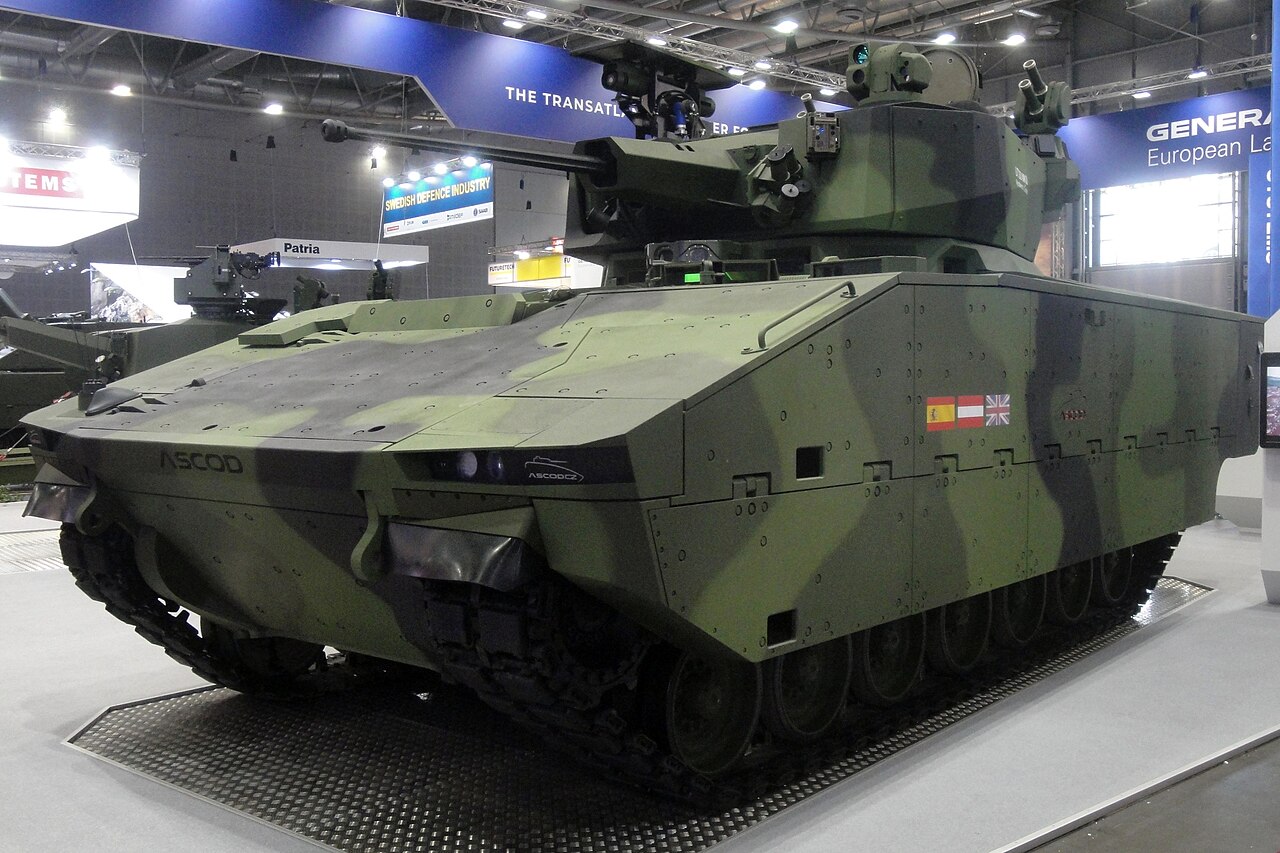
The Ajax armored fighting vehicle is the British Army’s 589-vehicle family of tracked reconnaissance and support vehicles, a program that began in 2014 and ran years late after crews reported hearing damage and other injuries from noise and vibration. The vehicle itself is a modern, digitized platform with a 40 mm cannon, and the story since 2021 is about whether it can be made safe and useful.
What is the Ajax AFV
Ajax is the flagship of the British Army’s Strike Brigades concept and was meant to replace the old CVR(T) reconnaissance family. It is built by General Dynamics Land Systems UK and is derived from the ASCOD 2 tracked platform, the same basic design as the Spanish Pizarro and Austrian Ulan. In 2014 the Ministry of Defence signed a contract for 589 vehicles across six roles, valued at roughly 3.5 billion pounds at the time, and the overall program cost later grew well beyond that after delays.
The vehicle is a leap beyond its predecessors in sensors and networking. It carries a modern digital architecture, a large suite of cameras and targeting systems and a telescoped 40 mm cannon that is shorter than a conventional gun of similar power. The Army wanted a scout that could see much farther than it was seen, and that could share the picture in real time with other units.
Ajax AFV specifications
| Specification | Value |
|---|---|
| Builder | General Dynamics Land Systems UK (hull), with turret systems from Lockheed Martin UK |
| Weight | Roughly 38 to 42 tonnes depending on variant |
| Crew | 3 (commander, gunner, driver) for the base reconnaissance vehicle |
| Main gun | 40 mm CTAS telescoped cannon, 7.62 mm coaxial machine gun |
| Engine | MTU 8V199 diesel, in the 800 hp class |
| Speed | About 70 km/h on roads |
| Range | Around 500 km |
| Base platform | ASCOD 2 tracked chassis |
The specification that matters most is digital. Ajax is often described as a computer on tracks, with a central vehicle electronic architecture that lets the crew feed images and targeting data into the wider network. Protection is reported to meet modern threat levels, though exact armor packages are not public. The vehicle weighs far more than the light scouts it replaces, which raises questions about whether it is suited to the reconnaissance role.
The 40 mm cannon fires a range of ammunition, including armor-piercing and air-burst rounds, with a rate of fire and accuracy suited to fighting light armor and infantry out to several kilometers. Wheeled competitors such as the Boxer are being bought in parallel for other British Army roles.
Ajax variants
| Name | Role | Note |
|---|---|---|
| Ajax | Reconnaissance | 40 mm gun turret, the core vehicle |
| Ares | Armored personnel carrier | Carries dismounted troops |
| Athena | Command and control | Headquarters vehicle |
| Atlas | Armored recovery | Recovers disabled vehicles |
| Apollo | Repair | Field maintenance and repair |
| Argus | Engineer reconnaissance | Supports engineer tasks |
Why is Ajax delayed, noise and vibration problems
The first deliveries came in 2020, years after the original schedule. Soon after, soldiers trialing the vehicles reported symptoms including tinnitus, swollen joints and other injuries, and in 2021 the Army suspended trials and restricted use while investigating. Reports said the vibration problem was linked to track and suspension behavior at speed and the noise to exposure inside the hull. Investigations also looked at whether the testing regime and reporting had been adequate.
The aftermath was expensive and political. A government-ordered independent inquiry led by Clive Sheldon KC was reported to find serious failings in how the program was managed and how safety concerns were handled, and the Ministry of Defence accepted that lessons were needed. The Army and the manufacturer made engineering and procedural changes, including modifications to the vehicle and protection for crews, and trials resumed in stages. The episode ranks with the cancelled US Army M10 Booker as a cautionary tale about complex armored programs.
Is Ajax in service now
Ajax has moved toward service with the British Army after the safety pause, but progress has been far slower than the original plan. The Army has said it needs the vehicle to fill a capability gap, and the reconnaissance mission is increasingly tied to drones and other sensors. Readers should check current MoD statements for declared operating capability dates and numbers, since reported timelines have shifted repeatedly.
The vehicle’s future also depends on wider British Army plans. A heavier Challenger 3 force and Boxer-based wheeled units are being fielded alongside it, and questions remain about how Ajax fits into a smaller, more networked army.
Ajax AFV frequently asked questions
What is the Ajax armored vehicle?
A British Army family of tracked armored vehicles built by General Dynamics and derived from the ASCOD 2 platform, led by a 40 mm-armed reconnaissance vehicle.
Why was Ajax paused?
Crews reported hearing damage and other injuries linked to noise and vibration, leading to a halt in trials in 2021.
How many Ajax vehicles is the UK buying?
The original contract was for 589 vehicles across six variants.
What gun does Ajax have?
A 40 mm CTAS telescoped cannon and a coaxial 7.62 mm machine gun.
Does any other country operate Ajax?
No export customer has been announced; the British Army is the only operator of the Ajax family.
- UK Ministry of Defence and British Army program information
- National Audit Office and parliamentary reports on the Ajax program
- Wikipedia – Ajax (armoured fighting vehicle) (accessed October 2026)
- Defence & Tech reporting