
The 3rd Assassination Attempt on Trump: Analyzing the Lone Wolf Threat Matrix
WASHINGTON — The security apparatus of the United States is navigating uncharted territory. Following a shocking incident at the Washington Hilton in April 2026, Donald Trump has now been the target of three separate assassination attempts within a span of less than two years.
For defense and security analysts, the most alarming aspect of this unprecedented threat environment is not a coordinated conspiracy, but the absolute lack of one. A psychological and tactical review of the three attackers reveals a highly fragmented threat matrix. The Secret Service is no longer just fighting organized terror; they are fighting the unpredictable, radicalized “lone wolf.”
To understand why these attacks are happening, we must critically evaluate the distinct profiles, operational methods, and underlying motivations of the three perpetrators.

1. The Infamy Seeker: Thomas Matthew Crooks
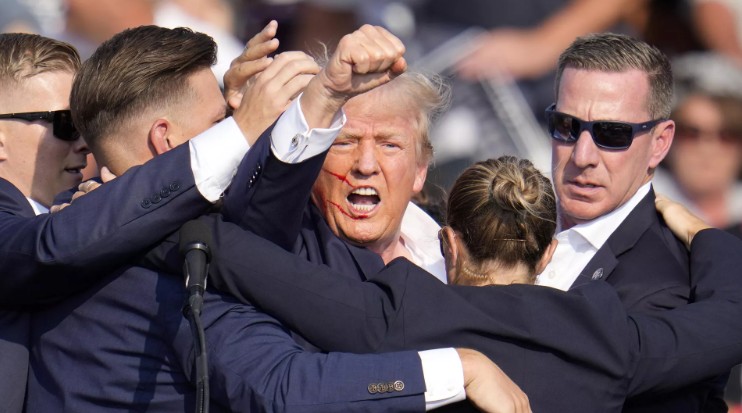
The Event: July 2024. Crooks opened fire from a rooftop during a campaign rally in Butler, Pennsylvania, grazing Trump’s ear and killing a bystander before being neutralized by Secret Service counter-snipers.
The Profile: A 20-year-old with a history of social isolation and an intense fixation on mass casualty events.
The Motivation: According to the finalized FBI investigation, Crooks lacked a coherent partisan ideology. His internet search history revealed an obsession with school shootings, explosive manufacturing, and the schedules of both Democratic and Republican figures. Security analysts classify Crooks as an “Infamy Seeker”—a deeply disturbed individual who did not necessarily hate Trump’s politics, but rather targeted him because he was the highest-profile figure available to achieve a dark, historic notoriety.

2. The Radicalized Policy Extremist: Ryan Wesley Routh
The Event: September 2024. Routh was apprehended by the Secret Service while hiding in the shrubbery with a rifle at the Trump International Golf Club in West Palm Beach, Florida.
The Profile: A 58-year-old former construction worker with a long history of erratic activism and a hyper-fixation on international geopolitics.
The Motivation: Routh’s motivation was strictly policy-driven. A manifesto left behind prior to the attempt explicitly confessed his intent. He was obsessively dedicated to the war in Ukraine—even traveling to Kyiv in an attempt to recruit foreign fighters. He viewed Trump’s foreign policy stance as an existential threat to global democracy. Routh represents the “Policy Extremist,” an individual whose consumption of geopolitical conflict radicalizes them into believing political violence is a justified diplomatic intervention.

3. The Ideological Anti-Government Actor: Cole Tomas Allen
The Event: April 2026. In the latest and 3rd assassination attempt, Allen was intercepted and neutralized by Secret Service agents at the Washington Hilton during the White House Correspondents’ Dinner weekend.
The Profile: A 31-year-old with a documented history of severe mental instability. Law enforcement in Connecticut had previously received warnings from his family regarding his deteriorating psychological state.
The Motivation: Preliminary intelligence reports indicate Allen was carrying a deeply disturbing manifesto expressing intense anti-government sentiments and a radicalized, violent hatred directed at Christians. Unlike Routh’s geopolitical focus or Crooks’s desire for fame, Allen’s motivation was rooted in profound ideological delusion and religious animosity. He viewed the administration and its figures as legitimate targets in a twisted, personal holy war.
Strategic Evaluation: The Asymmetric Nightmare
Why are these attacks happening with such frequency? The overarching evaluation points to a phenomenon known as Stochastic Terrorism.
In a highly polarized political climate amplified by social media echo chambers, unstable individuals are exposed to constant, hyper-urgent rhetoric framing political opponents as literal threats to the nation’s survival.
The Secret Service’s traditional protection doctrine was built to detect coordinated plots (communications, money transfers, cell structures). However, you cannot easily wiretap a solitary, mentally unstable 20-year-old sitting in his bedroom researching rally locations, or a 58-year-old hiding in the bushes acting purely on his own geopolitical obsessions.
The 3rd assassination attempt solidifies a grim reality: As long as the political temperature remains at a boiling point, the “lone wolf” will remain the most dangerous and elusive threat to American leadership.