Top 10 Defense Startups in the World in 2026
The top defense startups of 2026 have moved from pitch decks to production lines, led by Anduril at a reported $61 billion valuation and Europe’s Helsing at roughly $18 billion. This ranking orders the ten that matter most by what they actually field, the contracts they win and the money behind them, in a year when venture capital finally treats munitions as infrastructure.
How this ranking works
Rankings weigh fielded capability first, real hardware and software in the hands of real forces, then contract momentum with defense ministries, funding and valuation as a proxy for staying power, and strategic importance of the niche. A brilliant prototype ranks below a mediocre product being bought in thousands. We count only companies founded roughly within the last 15 years that remain independent of the traditional primes. Consistent with this site’s editorial policy, companies and platforms headquartered in Israel are excluded from consideration.
The top ten defense startups of 2026
| Rank | Company | Country | Known for |
|---|---|---|---|
| 1 | Anduril | USA | Lattice software, Barracuda munitions, Fury CCA, ~$61B reported valuation |
| 2 | Helsing | Germany | AI strike drones, software for Eurofighter EW, ~$18B reported valuation |
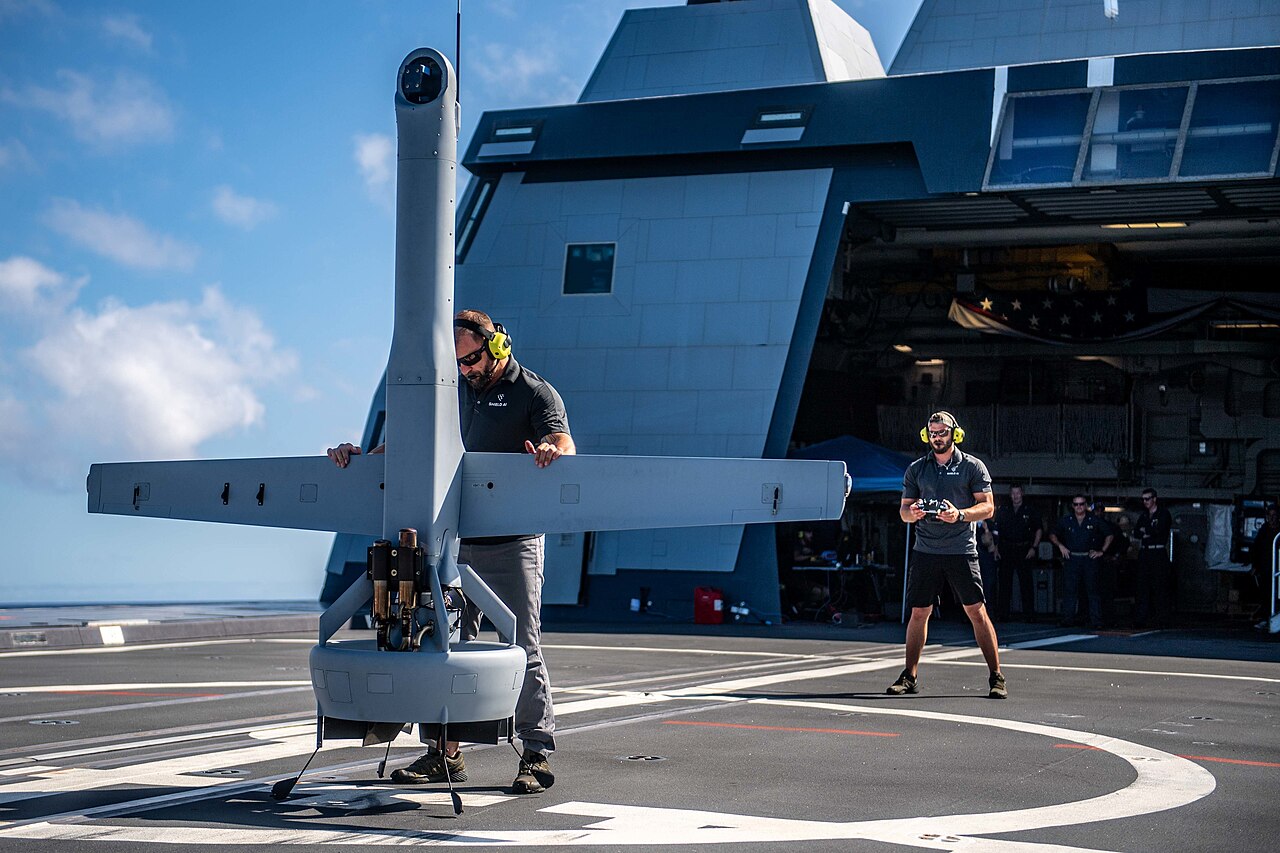
| 3 | Shield AI | USA | V-BAT VTOL drone, Hivemind autonomy stack |
| 4 | Saronic | USA | Autonomous surface vessels, Navy MUSV win, ~$9B reported valuation |
| 5 | Castelion | USA | Low-cost Blackbeard hypersonic strike missiles |
| 6 | Quantum Systems | Germany | Vector reconnaissance drones proven in Ukraine |
| 7 | Skydio | USA | Autonomous small drones, America’s DJI answer |
| 8 | Epirus | USA | Leonidas high-power microwave counter-swarm weapon |
| 9 | Tekever | Portugal | AR3/AR5 maritime surveillance drones, Ukraine service |
| 10 | Ursa Major | USA | Rocket engines and solid motors easing the propulsion bottleneck |
Why the leaders lead
Anduril holds the crown because it graduated from disruptor to prime, winning the Army’s IVAS follow-on, building solid rocket motors, and cutting metal on the Fury collaborative combat aircraft while its Lattice software stitches everything together. Its reported $61 billion valuation now exceeds several legacy primes’ market caps.
Helsing is Europe’s counterweight, an AI house that learned to build hardware, shipping HX-2 strike drones, winning electronic warfare software roles on European fighters and pushing into autonomous underwater surveillance. Shield AI earns third on the V-BAT’s expanding operational record and a Hivemind autonomy stack that other manufacturers license, while Saronic vaulted up the list by winning a place in the Navy’s 30-vessel medium USV buy within four years of founding.
The challengers and specialists
Castelion applies SpaceX manufacturing logic to hypersonic missiles, and its Army contract momentum for the Blackbeard family makes it the most consequential munitions bet of the class. Quantum Systems and Tekever earned their places the hard way, with thousands of sorties over Ukraine, operator-reported performance that no demo day can match. Skydio dominates the Blue UAS small-drone lane despite commercial turbulence, Epirus fields the rare directed-energy weapon that actually ships, its Leonidas microwave arrays bought for counter-swarm defense, and Ursa Major quietly sells what everyone needs and nobody has, rocket propulsion capacity outside the primes.
What to watch in 2026
Three storylines will reshuffle next year’s list. First, consolidation, the leaders are becoming acquirers, and mid-tier startups face a choice between selling and scaling. Second, Europe’s rearmament budgets are minting challengers fast, with several eyeing the valuations Helsing normalized. Third, production is the new differentiator, the startups that survive will be those that turn venture capital into factory throughput before the funding climate cools, exactly the transition the munitions buildup we track weekly demands.
Notable near-misses this year include ICEYE, whose radar satellites arguably outgrew the startup label, Ursa Major’s solid-motor rivals X-Bow and Avio’s US venture, and a crowded field of European drone and counter-drone firms one big contract away from breaking in. The bench, in other words, is deeper than it has ever been.
Defense startups frequently asked questions
What is the biggest defense startup in the world?
Anduril, at a reported $61 billion valuation in 2026, with products spanning software, munitions, drones and autonomous fighters.
What is Europe’s biggest defense startup?
Helsing, the Munich-based AI and drone company, valued at roughly $18 billion in its latest reported round.
Which defense startups are proven in Ukraine?
Quantum Systems and Tekever fly extensively there, with operator-reported records, and several others supply munitions or software to Ukrainian forces.
Why are investors funding defense startups now?
Rearmament budgets, munitions shortfalls exposed since 2022, and early exits like acquisitions and soaring valuations have made the sector investable at scale.
How were these companies ranked?
By fielded capability, contract momentum, funding and niche importance, as detailed in the methodology section above.
- Reported funding round coverage and company announcements (2025-2026)
- US and European government contract announcements
- Wikipedia – company articles for listed firms (accessed October 2026)
- Defence & Tech reporting on the defense technology sector