
Inside Anduril, the $61 Billion Startup Rewiring US Defense
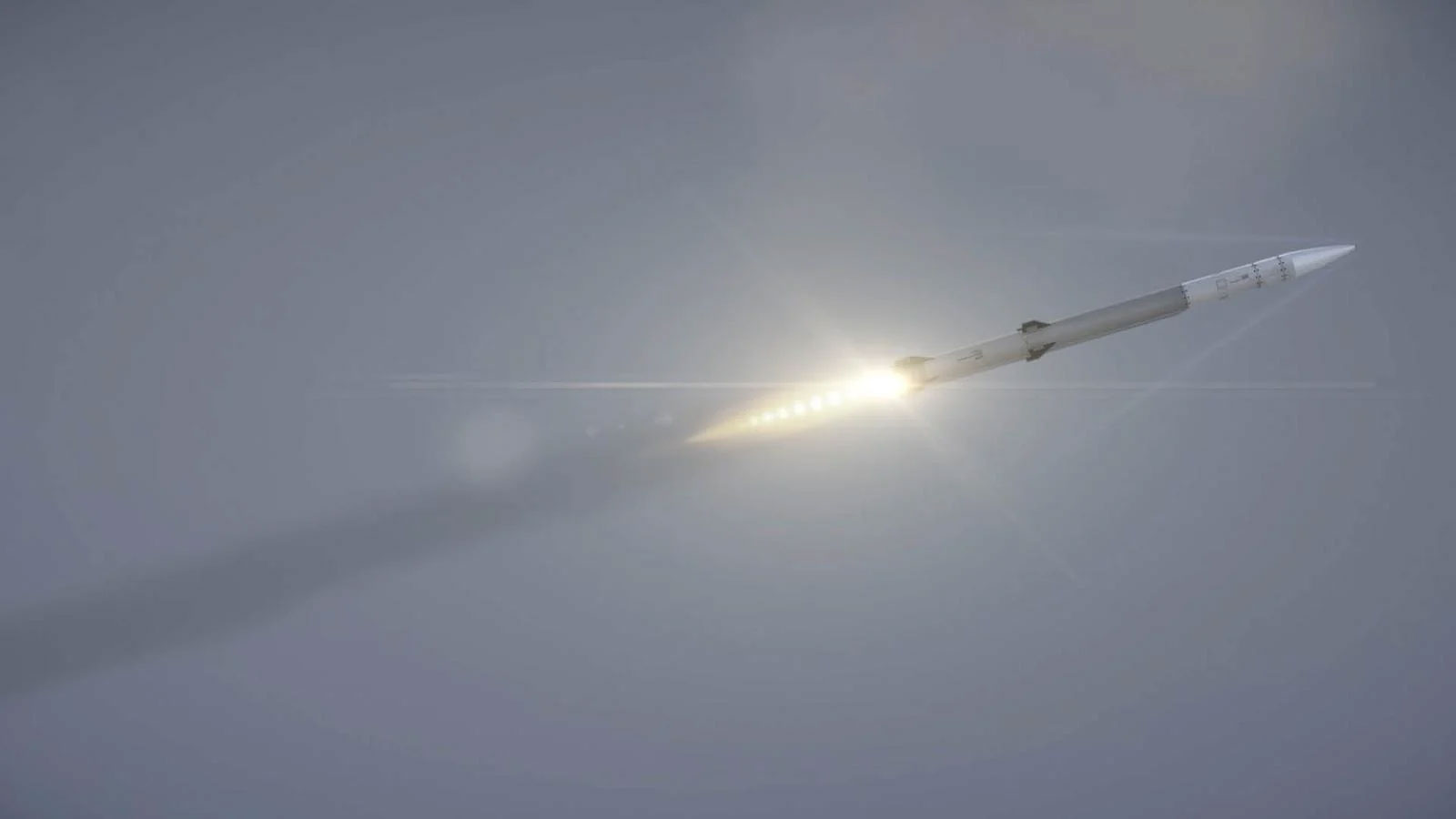
Anduril Industries has gone from a 2017 startup to a $61 billion defense prime challenger in under a decade, building autonomous weapons, a fighter-class drone and a software brain called Lattice that ties them together. With roughly $2.2 billion in 2025 revenue, 7,000 employees and a hyperscale factory rising in Ohio, the company is the clearest test yet of whether venture-funded defense tech can break into programs long owned by the traditional primes.
Anduril at a glance
| Item | Detail |
|---|---|
| Founded | April 2017, by Palmer Luckey with Trae Stephens, Matt Grimm, Joe Chen and Brian Schimpf |
| Headquarters | Costa Mesa, California; offices from Washington DC to London and Sydney |
| Employees | About 7,000 (2026) |
| Revenue | About $2.2 billion (2025, reported) |
| Valuation | $61 billion after a $5 billion raise in May 2026 led by Thrive Capital and Andreessen Horowitz |
| CEO / Chairman | Brian Schimpf / Trae Stephens |
The product family, from Lattice to Fury
| Product | What it is |
|---|---|
| Lattice | AI command-and-control software that fuses sensors and tasks autonomous systems; the connective tissue of everything else |
| Fury (YFQ-44A) | Jet-powered Collaborative Combat Aircraft prototype for the US Air Force |
| Roadrunner | Reusable VTOL jet interceptor for air defense |
| Barracuda 100/250/500 | Family of low-cost cruise missiles designed for mass production |
| Altius 600/700M | Tube-launched attack and ISR drones |
| Ghost | Compact autonomous helicopter for ISR |
| Dive-LD | Autonomous underwater vehicles |
| Sentry towers | Autonomous surveillance towers used on the US border and bases |
Anduril’s biggest programs
Three wins define the company’s jump in scale. In 2024 the US Air Force picked Anduril’s Fury, alongside General Atomics, to build the first increment of the Collaborative Combat Aircraft program, putting a startup’s airframe in the service’s future fighter mix; our CCA explainer maps that race. In 2025 Anduril took over the US Army’s IVAS mixed-reality headset program from Microsoft, a franchise planned at more than 100,000 units. And in counter-drone and base defense, its interceptors and Lattice installations run from US bases to the border, with the company now paired with Boeing in the Army’s IFPC Increment 2 interceptor race.
Arsenal-1 and the manufacturing bet
Anduril’s argument to the Pentagon is not just software; it is volume. Arsenal-1, a roughly $1 billion factory complex under construction near Columbus, Ohio, is designed to mass-produce autonomous weapons the way automotive plants produce cars, with the Barracuda missile family and Roadrunner among the intended tenants. The pitch lands directly on the Pentagon’s munitions-stockpile anxiety: wars in Ukraine and the Middle East have shown that precision weapons run out in weeks, and cheap drones need cheap answers.
Growth by acquisition and the talent trade
Part of Anduril’s product family arrived by checkbook. The Altius drones came with the 2021 purchase of Area-I, the underwater vehicles with Dive Technologies, and further deals added solid rocket motors and EW capabilities, a deliberate strategy of buying niche engineering teams and plugging their hardware into Lattice. The other acquisition channel is people: the company has pulled senior program talent from SpaceX, Palantir and the traditional primes, selling engineers the chance to ship hardware on startup timelines with a prime-sized order book.
The critics’ case
The skeptics’ argument deserves its paragraph. A $61 billion valuation prices in flawless execution across half a dozen simultaneous franchises, fighter-class aircraft, headsets, missiles, factories, any one of which has humbled larger companies. Revenue of $2.2 billion, however fast-growing, is still a twentieth of Lockheed Martin’s, and government contracting has a long history of punishing fixed-price optimism, as Boeing’s tanker losses showed. Anduril’s bet is that software margins and manufacturing scale arrive before investor patience runs out; the IVAS and CCA programs, both due to convert from development to volume this decade, are where that bet gets graded.
How Anduril makes money differently
Traditional primes bid on government requirements and charge cost-plus. Anduril builds products with its own capital first, then sells them as finished goods, a consumer-tech habit imported by founders who came from Oculus and Palantir. The model front-loads risk onto investors, which is what the $5 billion May 2026 round and the $61 billion valuation are paying for, and it explains the company’s speed: Fury, Barracuda and Roadrunner all went from concept to flying hardware in a few years. The open question is margins at scale, and whether the Pentagon’s budget process will reward fixed-price products as consistently as Anduril’s investors assume.
Anduril frequently asked questions
What does Anduril make?
Autonomous weapons and the software that runs them: the Lattice C2 platform, the Fury combat drone, Roadrunner and Barracuda interceptors and missiles, Altius and Ghost drones, underwater vehicles and surveillance towers.
How much is Anduril worth?
$61 billion after its May 2026 funding round, making it the most valuable private defense company in the West.
Who founded Anduril?
Palmer Luckey, founder of Oculus, with Trae Stephens, Brian Schimpf, Matt Grimm and Joe Chen in 2017.
Is Anduril profitable?
The company is private and does not publish profits; reported revenue was about $2.2 billion in 2025, with heavy reinvestment in factories and R&D.
What is Arsenal-1?
Anduril’s hyperscale manufacturing plant being built near Columbus, Ohio, intended to mass-produce its missiles, interceptors and drones.
- Wikipedia – Anduril Industries (accessed October 2026)
- Public reporting on the May 2026 funding round and CCA/IVAS programs
- Company announcements on Arsenal-1 and product launches