
US Air War Against al-Shabaab Nears 2026 Record as Transparency Erodes
The United States conducted at least three airstrikes against al-Shabaab in southern Somalia in the final week of September, pushing the year’s total to roughly 86 declared strikes and keeping Washington’s air campaign on pace to approach, though not yet surpass, last year’s record. The strikes come as al-Shabaab has staged a string of counter-offensives that briefly brought the group within 30 kilometers of Mogadishu, and as U.S. Africa Command (AFRICOM) continues a policy it adopted in 2025 of withholding casualty and civilian-harm estimates from nearly every strike it announces.
What Happened
According to AFRICOM press releases, U.S. forces struck al-Shabaab positions near Qumbi in the Lower Juba region, roughly 90 kilometers north-northwest of Kismayo, on September 24. The following day, AFRICOM announced two further strikes in Jubaland state: one near Welmaro, about 40 kilometers west of Jilib, and a second near Ali Farhan, roughly 90 kilometers northeast of Jilib. As is now standard practice, the command’s statements named only the target — “al-Shabaab” — and the general location, without disclosing the aircraft or munitions used, the number of fighters targeted, or any assessment of casualties. Neither Somalia’s Ministry of Defense nor Jubaland’s regional administration had publicly confirmed the specific strikes as of this writing, and no independent, on-the-ground reporting of the incidents has emerged.
Those three strikes brought AFRICOM’s publicly disclosed 2026 total to at least 86, according to a tally kept by FDD’s Long War Journal and corroborated by AFRICOM’s own, sporadically updated press release archive. That pace trails the 124 strikes AFRICOM carried out in 2025 — itself a record — but remains well above the 63 strikes in 2019, the previous high under President Donald Trump’s first administration, and far above the 48 strikes recorded during a comparable stretch of the Biden administration.
The Campaign and Why It Has Grown
AFRICOM’s stated rationale for the sustained tempo is coordination with intensified Somali National Army operations rather than a sudden deterioration in the threat picture on its own. AFRICOM commander Gen. Michael Anderson described the uptick as “a combined effort” with Somali forces, noting in July that partner operations in Puntland had confined Islamic State–Somalia’s leadership to a shrinking pocket of territory with disrupted supply lines. The command has also acknowledged a deliberate shift in emphasis: where 2025’s record strike count was driven mainly by operations against ISIS-Somalia, the majority of 2026’s strikes have targeted al-Shabaab, the much larger al-Qaeda affiliate that controls swaths of central and southern Somalia.
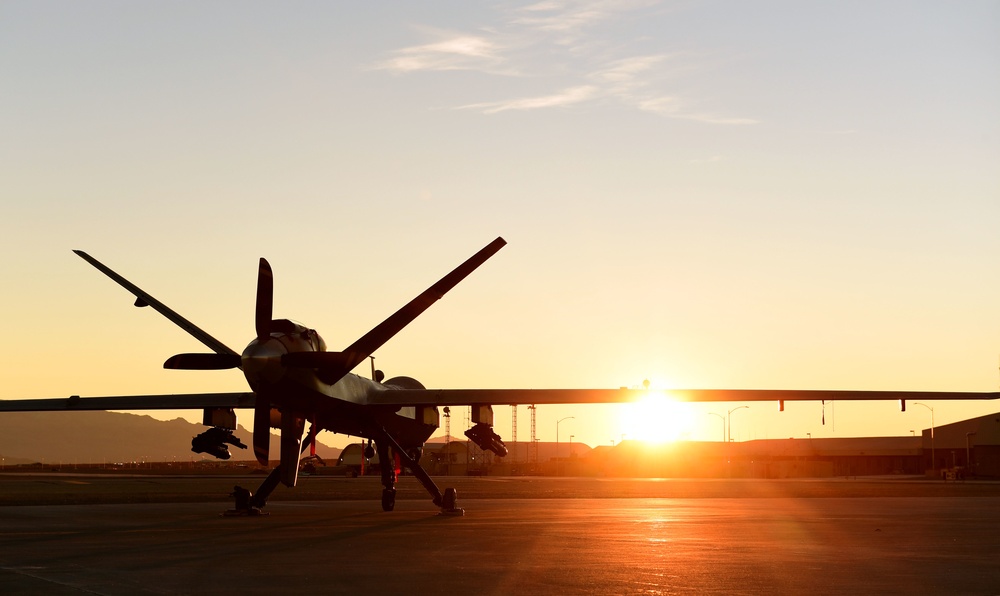
The campaign relies heavily on MQ-9 Reaper drones flown from bases in Djibouti and elsewhere in the region, supplemented by manned strike aircraft, in coordination with Somali Danab special forces and African Union–mandated troops on the ground. The Trump administration loosened the strike-approval process soon after taking office, delegating more authority to AFRICOM commanders and reportedly narrowing the review steps required before a strike is cleared — a change officials credit with enabling the higher tempo across 2025 and 2026.
Who Is Involved
- U.S. Africa Command — conducts the strikes, in most cases in coordination with the Federal Government of Somalia, under long-standing authorities to act against groups it designates as threats to U.S. forces and partners.
- Federal Government of Somalia — President Hassan Sheikh Mohamud’s administration has requested continued U.S. air support and announced a new ground offensive against al-Shabaab in July, though the campaign has had mixed results.
- Jubaland regional authorities — have not publicly commented on the most recent strikes in their territory.
- Al-Shabaab — the al-Qaeda affiliate remains the primary target and, according to multiple independent trackers, has recently regained ground rather than lost it.
Ground Reality: Strikes Up, Territory Contested
The intensifying air campaign has not translated into a clear battlefield advantage for Mogadishu. A three-year, Turkish- and U.S.-backed Somali offensive that once drove al-Shabaab out of significant territory has, according to regional reporting, stalled in several areas since mid-2026, with the group reclaiming towns including Biyo Adde and Mirtaqwo in the Middle Shabelle region and briefly seizing Bal’ad, about 30 kilometers north of the capital, before being pushed back. Analysts tracking the conflict have warned that without a durable change in the ground campaign, air power alone is unlikely to reverse al-Shabaab’s momentum — a pattern consistent with over a decade of U.S. strikes in Somalia that have degraded individual commanders without eliminating the group’s territorial base.
Why It Matters
Somalia has quietly become one of the most active fronts in the U.S. military’s global counterterrorism posture, with strike totals now regularly exceeding those in Yemen or the Sahel in recent years, yet it draws comparatively little sustained international coverage. The halt in AFRICOM’s civilian-harm reporting — a practice the command maintained, however imperfectly, through 2024 — has drawn criticism from human rights monitors who argue it removes one of the few independent checks on a campaign now running at a pace of roughly two strikes per week. The gap between a record-paced air war and a contested, sometimes reversing ground campaign also raises questions about the campaign’s strategic endpoint that Washington and Mogadishu have yet to publicly address.
What Happens Next
AFRICOM has given no indication of slowing the tempo, and Somali officials have signaled further offensive operations are planned against al-Shabaab strongholds in the Lower Shabelle and Middle Shabelle regions. Whether the current pace closes on, or eventually exceeds, 2025’s full-year record of 124 strikes will depend largely on how the next quarter unfolds; at the current rate, 2026 is on course to finish just below that mark unless operations accelerate further in the final months of the year.
FAQ
How many airstrikes has the U.S. carried out in Somalia in 2026?
At least 86 as of late September 2026, according to AFRICOM press releases compiled by FDD’s Long War Journal, with the final total expected to be confirmed only in year-end tallies since AFRICOM’s releases are not exhaustive in real time.
Why did the U.S. stop releasing casualty estimates for Somalia strikes?
AFRICOM has not published a detailed public rationale. Independent monitors first noted the shift toward 2025, when the command’s press releases moved to a standardized format that omits battle-damage assessments and casualty figures “to ensure continued operations security,” in AFRICOM’s own phrasing.
Is al-Shabaab winning despite the increased U.S. strikes?
Al-Shabaab has not reversed its broader strategic position, but it has recaptured some towns lost earlier in the Somali-led offensive and briefly advanced to within 30 kilometers of Mogadishu in 2026, according to regional reporting — evidence that air strikes alone have not been sufficient to secure lasting Somali government gains in contested areas.
What aircraft does the U.S. use in the Somalia campaign?
The campaign relies primarily on MQ-9 Reaper drones operating from regional bases such as Djibouti, supplemented by manned strike aircraft, typically in coordination with Somali and African Union partner forces on the ground.
Sources
- U.S. Africa Command, press releases on strikes near Qumbi (Sept. 24, 2026) and near Welmaro/Ali Farhan, Jubaland (Sept. 25, 2026) — primary official source for strike locations and dates.
- FDD’s Long War Journal, “US refocuses air campaign in Somalia on Shabaab,” July 2026 — independent strike-count tracking and year-over-year comparison.
- Antiwar.com, “US Launches Two More Airstrikes in Somalia as Bombing Campaign Continues Amid Media Blackout,” Sept. 30, 2026 — reporting on the September 25 strikes and AFRICOM’s reporting practices.
- Dawan Africa, reporting on AFRICOM commander Gen. Michael Anderson’s comments on the drivers of the 2026 strike tempo, July 2026.
- Regional reporting on the Somali National Army’s Middle Shabelle offensive and al-Shabaab’s counter-advances toward Bal’ad, 2026 — used for ground-campaign context, attributed throughout as regional/local reporting rather than independently verified by this publication.