American Rheinmetall Delivers First Lynx XM30 Prototype in Bradley Replacement Race
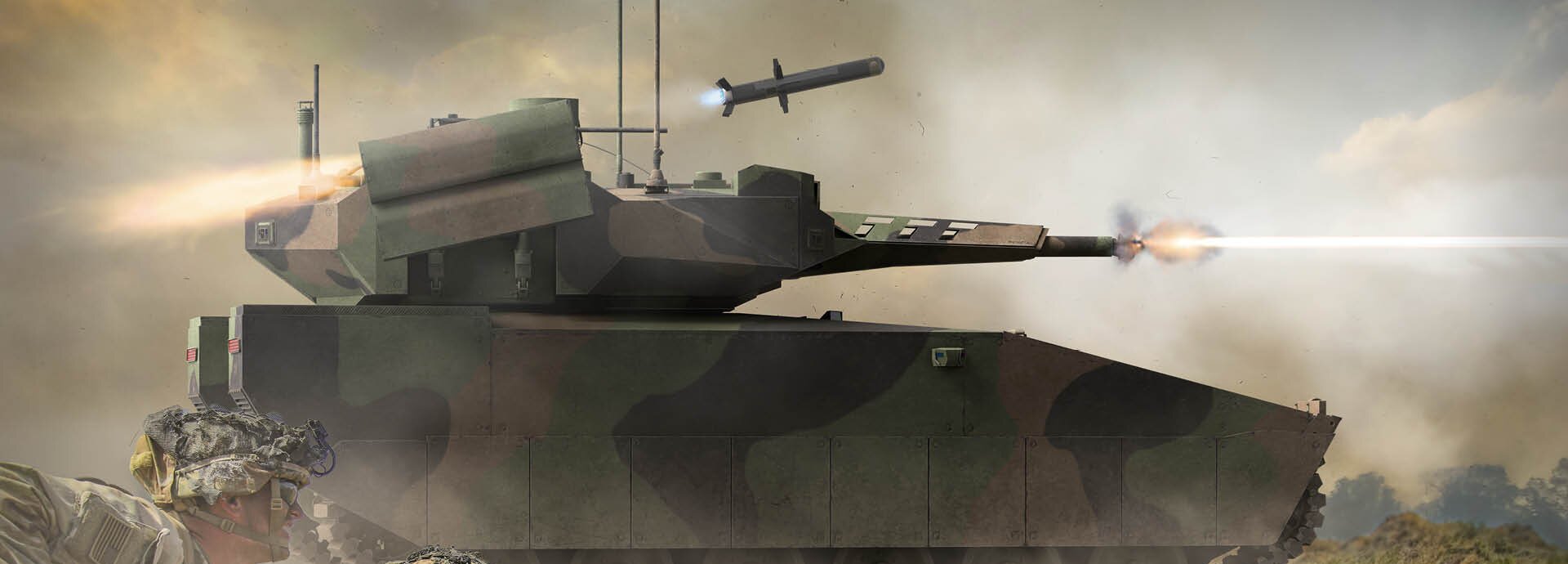
American Rheinmetall has delivered the first of eight Lynx XM30 prototypes to the U.S. Army, putting hardware into government testing in the competition to replace the M2 Bradley — a vehicle the Army has been trying to retire for more than two decades.
The vehicle was handed over on 1 September and entered developmental and performance testing immediately. The remaining seven prototypes are due before the end of the year. The deliveries fall under a Phase 3/4 Engineering and Manufacturing Development contract worth approximately $764 million covering digital design, physical prototyping and full-system validation.
A programme with a long shadow
The XM30 is the Army’s fourth serious attempt to replace the Bradley. The Future Combat Systems Manned Ground Vehicle collapsed in 2009. The Ground Combat Vehicle programme was cancelled in 2014. The Optionally Manned Fighting Vehicle competition was restarted in 2020 after the first round attracted only one compliant bidder — General Dynamics Land Systems having been disqualified on a delivery technicality, leaving Rheinmetall’s entry alone in a competition of one.
That history explains the structure of the current effort. Rather than specifying a vehicle and asking industry to build it, the Army ran a digital design phase first, then funded two competitors — American Rheinmetall and General Dynamics Land Systems — to build physical prototypes in parallel. Both will be tested against each other before a production decision.
“Executing a parallel evaluation timeline requires a level of industrial agility that Team Lynx was built for,” said American Rheinmetall chief executive Matt Warnick. “We are proving that the U.S. Defense Industrial Base can move at the speed of operational relevance.”
What the vehicle brings
The Lynx XM30’s most consequential feature is its hybrid-electric powertrain, a first for a U.S. tracked fighting vehicle of this class. The immediate benefit is electrical generation capacity: modern combat vehicles carry active protection systems, electronic warfare suites, high-power sensors and networking equipment that collectively demand far more power than a Bradley-era electrical architecture can supply. Hybrid drive also allows silent watch — running sensors and communications without the engine, which reduces both acoustic and thermal signature during observation.
Beyond power, the vehicle uses a modular open architecture intended to let subsystems be swapped or upgraded without redesigning the platform. The Army has learned repeatedly that vehicles designed as closed systems become expensive to modernise; the XM30 requirements were written to avoid repeating that.
Rheinmetall describes the design as built for a battlefield populated by drones, precision munitions and electronic warfare — a specification that reflects observation of Ukraine rather than the counterinsurgency assumptions that shaped the previous generation of armoured vehicle requirements.
Team Lynx combines American Rheinmetall as prime with Textron Systems, Raytheon, L3Harris Technologies, Allison Transmission and Anduril Industries.
The Bradley problem
The M2 entered service in 1981. It has been rebuilt repeatedly, and the A4 variant is a substantially different vehicle from the original, but the fundamental constraint is physical: weight growth from added armour and equipment has consumed the margin the chassis was designed with. Power, cooling and internal volume are all at their limits, which restricts what further capability can be added.
The operational lesson from Ukraine has been mixed rather than dismissive. Bradleys supplied to Ukrainian forces performed better than many expected, protecting crews through hits that destroyed comparable vehicles. But the same conflict demonstrated how exposed armoured vehicles have become to cheap top-attack drones — a threat the Bradley’s protection scheme was never designed to counter and cannot readily be adapted to address.
What comes next
Government testing of the first prototype is under way. Once the full set of eight is delivered, the vehicles move to operational unit training, soldier field manoeuvres and large-scale combat simulations — the phase where crews rather than engineers determine whether a design works.
That soldier-touchpoint testing has been the graveyard of previous programmes. Vehicles that satisfied requirements documents proved unwieldy in practice, or imposed maintenance burdens units could not sustain. The parallel-competitor structure gives the Army something it lacked in earlier attempts: a genuine alternative if one design disappoints.
A production decision is not expected before the parallel evaluation concludes. For European armoured vehicle manufacturers, the programme is being watched closely — Rheinmetall’s Lynx family already competes across NATO markets, and an American selection would carry substantial weight in Central and Eastern European procurement decisions still to be made. For the Army, the more immediate test is simply whether this attempt reaches production at all.
Sources
- Rheinmetall press release, “American Rheinmetall delivers first Lynx XM30 combat vehicle prototype to the U.S. Army,” 1 September 2026
- Military Times, “American Rheinmetall delivers its first prototype to replace Bradley Fighting Vehicle,” 1 September 2026
- Stars and Stripes, “Army receives prototype that could eventually replace Bradley Fighting Vehicle,” 1 September 2026
- Army Recognition, “American Rheinmetall Delivers First Lynx XM30 Prototype for U.S. Army Developmental and Performance Testing,” September 2026