
Helsing Explained: Europe’s Defence AI Firm, Drones, Funding

Helsing is a Munich-based defence technology company founded in 2021 by Torsten Reil, Gundbert Scherf and Niklas Köhler. It began as an AI software house and now builds strike drones, underwater gliders and an uncrewed combat jet. In July 2026 it raised $1.8 billion at an $18 billion valuation, the largest round ever for a European defence start-up. Its HX-2 strike drone is in serial production for Ukraine and under contract for the Bundeswehr, its CA-1 Europa is a prototype due to fly in 2027, and its battlefield record in Ukraine is disputed. Helsing is privately held, has no listed shares and does not publish revenue.
- Founded 2021 in Munich; offices in Berlin, London, Paris and Plymouth; subsidiaries Grob Aircraft (Germany), Blue Ocean (Australia/UK) and Keybotic (Spain).
- Series E of $1.8 billion at $18 billion closed 13 July 2026, led by Lightspeed and General Catalyst; Series D of €600 million at €12 billion in June 2025 led by Daniel Ek’s Prima Materia.
- Bundeswehr signed a €268 million initial HX-2 contract on 25 February 2026, with a framework capped at €1 billion per supplier; systems are for the brigade in Lithuania from 2027.
- Ukraine: 4,000 HF-1 drones from 2024, then 6,000 HX-2 ordered in February 2025; Bloomberg reported in January 2026 that Kyiv paused further orders after poor front-line trials.
- Luftwaffe contract (November 2025) puts Helsing’s Cirra AI into Saab’s Arexis electronic warfare suite on 15 Eurofighters; Centaur AI flew a Gripen E in May and June 2025.
- CA-1 Europa: prototype only, first flight planned 2027, target service entry 2029 (strike) and 2031 (electronic attack).
What Helsing is and how its strategy changed
Helsing was set up in 2021 by three people who had never run an arms company: Torsten Reil, who built the games technology firm NaturalMotion, Gundbert Scherf, a former German defence ministry official, and Niklas Köhler, a machine learning researcher. Their pitch was that Europe’s armed forces needed software more than new hulls, and that a start-up could write it faster than the primes. The first contracts were accordingly about code: electronic warfare algorithms for the Luftwaffe’s Eurofighter and an AI pilot project with Saab. Ukraine changed the company. Helsing began supplying software and then complete strike drones to Ukrainian units, and by 2024 it called itself a hardware and software platform for defence.
The pivot to manufacturing is visible in the corporate structure. In June 2025 Helsing bought Grob Aircraft, a composite aircraft builder in Tussenhausen in Bavaria, to gain an airframe factory for its combat drone. In October 2025 it announced the purchase of Blue Ocean, the Australian underwater-vehicle maker that co-developed its SG-1 Fathom glider. In January 2026 it added Keybotic, a Barcelona robotics firm, to seed a ground robotics line. Alongside the acquisitions Helsing has built what it calls Resilience Factories: a first drone plant in southern Germany that opened in early 2025 with a stated capacity of 1,000 HX-2 a month, a maritime plant in Plymouth opened by UK Defence Secretary John Healey on 19 November 2025, a second German site that trade newsletters reported live in February 2026, and a $50 million factory in Martinsburg, West Virginia, announced on 13 July 2026.
That is a lot of factories for a five-year-old company. The logic is that governments want sovereign production inside their own borders and that AI-defined weapons only pay off in tens of thousands. The board reflects the ambition: Spotify founder Daniel Ek and former Airbus chief executive Tom Enders co-chair it, with former NATO commander Denis Mercier among the directors. Enders said at the CA-1 unveiling in September 2025 that Helsing “has the potential to become the Airbus of the 21st century”. Whether the products justify that is the question, and it belongs to the wider story of Europe’s Defence AI Companies: Who Is Building What in 2026 racing to turn venture capital into fielded kit.
Funding, valuation and the questions investors ask
Here the money tells the story. Helsing’s first institutional round, a Series A in 2021, was led by Prima Materia, Daniel Ek’s investment vehicle. General Catalyst led a €209 million Series B in September 2023 and a €450 million Series C in July 2024 at a reported valuation of about €5 billion. In June 2025 Prima Materia returned to lead a €600 million Series D that more than doubled the valuation to €12 billion, with Lightspeed, Accel, Plural, General Catalyst, Saab and BDT & MSD Partners alongside. Then, on 13 July 2026, Helsing announced a $1.8 billion Series E at an $18 billion valuation, led by Lightspeed Venture Partners and General Catalyst, with new money from Dragoneer, Disruptive, Iconiq, Goldman Sachs Alternatives, JPMorganChase and CPP Investments. The company said demand “significantly exceeded the available allocation” and that it remains predominantly European-owned.
| Round | Date | Amount | Valuation | Lead investor |
|---|---|---|---|---|
| Series A | 2021 | Not disclosed in cited sources | n/a | Prima Materia (Daniel Ek) |
| Series B | Sept 2023 | €209 million | Not disclosed | General Catalyst |
| Series C | July 2024 | €450 million | ~€5 billion (reported) | General Catalyst |
| Series D | June 2025 | €600 million | €12 billion | Prima Materia |
| Series E | 13 July 2026 | $1.8 billion | $18 billion | Lightspeed, General Catalyst |
Readers searching for “Helsing stock” or “Helsing revenue” should know three things. Helsing is private, so there are no shares to buy. It does not publish revenue; figures on data-vendor sites are unconfirmed estimates. And the valuation is contested even among admirers: the Financial Times ran a piece on 14 July 2026 asking whether the “crazy” $18 billion figure signalled a defence-tech bubble, a day after CNBC noted that US rival Anduril had raised $5 billion at $61 billion in May 2026. For scale, Helsing’s German competitor Stark raised €500 million at a €3.5 billion valuation in June 2026, and TechCrunch noted in May 2026 that Quantum Systems was valued above €3 billion and Tekever above £1 billion.
What the money buys is easier to state. Helsing said the Series E would fund “entirely new AI platforms” for its partner nations. In practice that means the CA-1 Europa, which the company has said will absorb hundreds of millions of euros before any customer signs, the new factories, and the working capital to build drones ahead of framework orders that governments release in tranches. It also buys time, because the contracts described below are smaller than the headline framework figures suggest.
Products and how mature each one really is
Helsing sells in four domains and its products sit at very different points on the maturity ladder. The software is the oldest and most proven part; the strike drone is in serial production with a disputed combat record; the combat jet and the underwater glider are still in test.
| Product | Domain | Status | Customer / programme | Latest milestone |
|---|---|---|---|---|
| Altra | Software (C2, swarming, targeting support) | OPERATIONAL | Ukrainian units (HF-1, HX-2); Bundeswehr package | Bundled in Bundeswehr HX-2 contract, Feb 2026 |
| Cirra | Air, electronic warfare AI | PROCUREMENT (integration under contract) | Luftwaffe Eurofighter EK, 15 aircraft, with Saab Arexis | Contract signed 20 Nov 2025; three-year integration |
| Centaur | Air, AI pilot agent | FLIGHT TEST | Saab / FMV Project Beyond (Gripen E) | Three BVR test flights 28 May to 3 June 2025 |
| HF-1 | Air, strike drone (with Terminal Autonomy) | OPERATIONAL (Ukraine) | Ukraine, 4,000 ordered 2024 | ~2,000 delivered; 40% reported unused (Bloomberg, Jan 2026) |
| HX-2 | Air, strike drone | SERIAL PRODUCTION; PROCUREMENT (Germany); OPERATIONAL (Ukraine, contested) | Ukraine 6,000 (Feb 2025); Bundeswehr €268m (Feb 2026); Japan trials | US Army Flytrap 5.0 trial, May 2026; West Virginia plant, July 2026 |
| CA-1 Europa (CA-1KA / CA-1EA) | Air, uncrewed combat aircraft | PROTOTYPE | No customer; self-funded | Hensoldt CAIRAS order, July 2026; first flight due 2027 |
| SG-1 Fathom + Lura | Maritime, ASW glider and acoustic AI | SEA TEST; early production | UK Project CABOT / Atlantic Bastion (no contract disclosed) | Plymouth factory opened 19 Nov 2025 |
| Ground robotics (Keybotic) | Land, sensing robots | LAB / PROTOTYPE | None disclosed | Keybotic acquired Jan 2026 |
Software first: Altra, Cirra and Centaur
Altra is the software layer that Helsing puts on drones it builds or partners on. It handles navigation, target recognition and coordination of several aircraft, and Ukrainian operators have praised it more than the airframes: Bloomberg reported in April 2025 that a Ukrainian drone-unit founder described it as working “really well”, with weekly updates driven by front-line feedback. Cirra is a different animal: a deep-learning module that classifies unfamiliar radar emitters on board an aircraft. On 20 November 2025 Helsing and Saab Germany signed a contract, described by the companies as worth a three-digit million euro sum, to integrate Cirra into the Arexis electronic warfare suite on 15 Luftwaffe Eurofighters over three years, with Airbus Defence and Space handling aircraft integration. That programme is the sharp end of How AI Is Changing Electronic Warfare in Europe: Cognitive EW and the closest Helsing has come to a traditional procurement.
Centaur is the AI pilot. Between 28 May and 3 June 2025 Saab flew a Gripen E with Centaur controlling beyond-visual-range engagements against a crewed Gripen D, with a safety pilot on board and Sweden’s FMV paying under Project Beyond. Saab’s Peter Nilsson summed up the argument in one line: “In software there are no generations, only speed.” Those flights are a genuine milestone. They are also a test, not a capability, and neither Saab nor FMV has announced an operational Centaur programme; see our Saab company profile.
HX-2: the product that made Helsing a weapons manufacturer
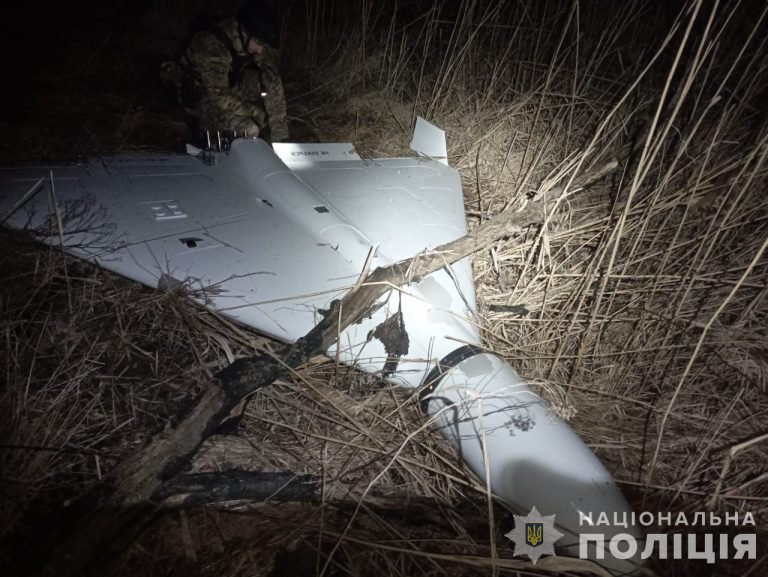
The HX-2 is a 12 kg, electrically powered X-wing loitering munition with a stated range of 100 km, catapult-launched and guided by Altra. Helsing unveiled it in December 2024 and announced on 13 February 2025 that it would build 6,000 for Ukraine, on top of 4,000 HF-1 ordered in 2024, with the first Resilience Factory turning out up to 1,000 a month. The Bundeswehr followed. On 25 February 2026 the Bundestag budget committee approved parallel contracts of €268 million each for Helsing’s HX-2 and Stark’s Virtus, each with a framework option capped at €1 billion, after a combined ceiling first reported at €4.3 billion was cut to €2 billion. The drones are meant for Panzerbrigade 45 in Lithuania from 2027, and the German Army plans six loitering-munition batteries by 2029. Rheinmetall’s rival bid was not selected in that round.
The HX-2 has since been tested by others. During Exercise Flytrap 5.0 at Pabradė in Lithuania in May 2026, US Army soldiers launched 17 HX-2 and recorded 15 direct hits and two near misses, according to a US Army account quoted by Calibre Defence. In August 2026 Japan’s Rakuten confirmed it is brokering an HX-2 sale to the Japan Ground Self-Defense Force, which is running field trials until the end of September 2026; no quantity or price has been disclosed. Among European loitering munitions, the HX-2 is now one of the most widely trialled, which makes its Ukrainian record all the more important.
CA-1 Europa and SG-1 Fathom: the bets that have not yet flown or fought
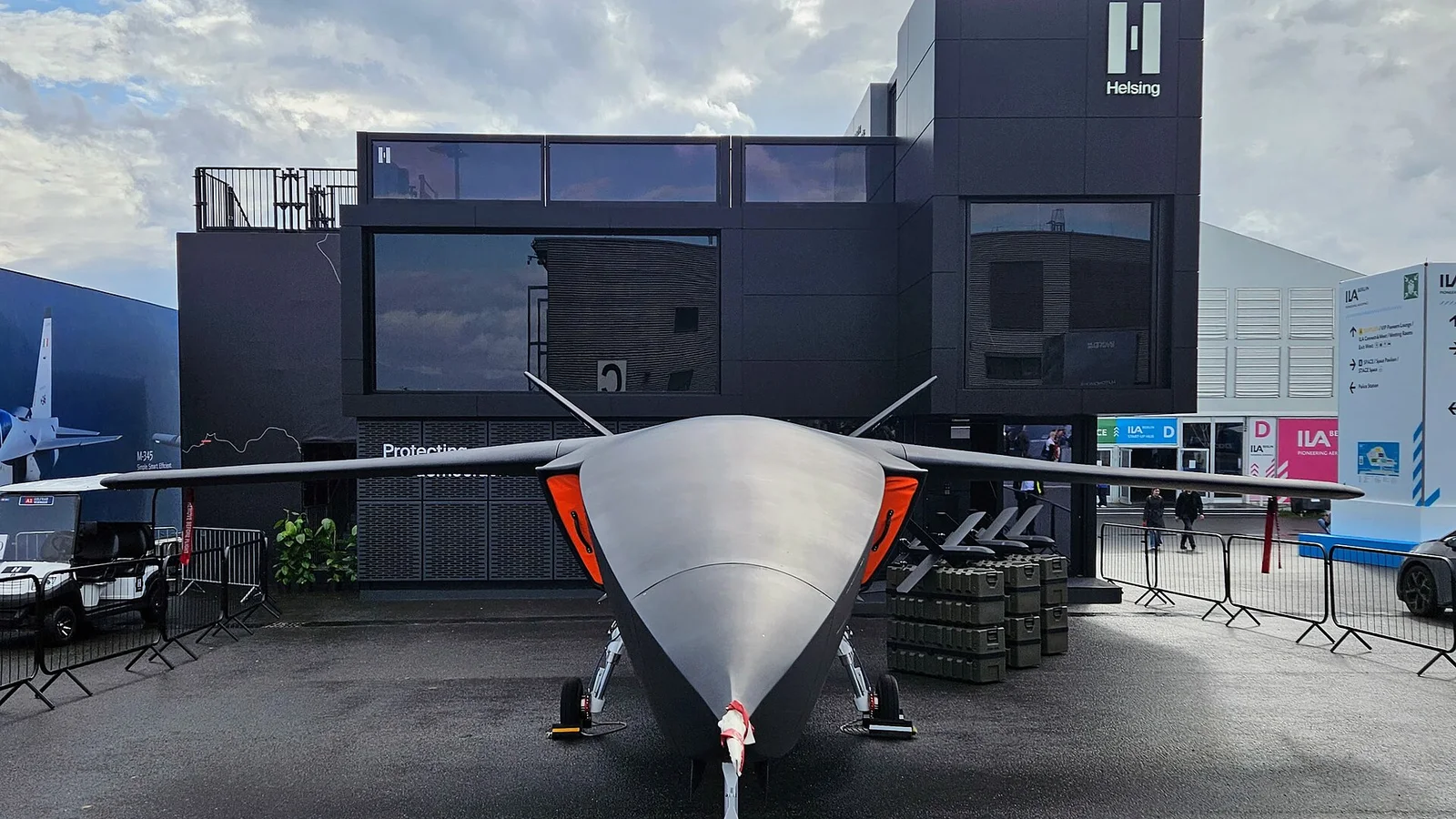
On 25 September 2025 Helsing rolled out a full-scale CA-1 Europa at Grob’s Tussenhausen plant: a single-engine, roughly 11 metre, 4 tonne uncrewed jet with internal weapons, built to fly alone, in groups or with crewed fighters. At ILA Berlin in June 2026 it showed a freshly moulded composite wing section and unveiled the CA-1EA electronic attack variant, which shares the airframe with the CA-1KA strike version. The plan is a first flight in 2027, initial operating capability in 2029 for the strike variant and 2031 for electronic attack. In July 2026 Hensoldt received an order for three CAIRAS missile-warning sets, the first supplier contract on the programme. The CA-1 has no launch customer. It competes with Airbus’s Wingman concept, which Helsing itself signed up to support with AI at ILA in 2024, and with the other Europe’s Loyal Wingman Programmes: Who Is Building CCAs that European air forces are still choosing between.
Underwater, Helsing unveiled the SG-1 Fathom glider and the Lura acoustic AI in May 2025. The glider is a slow, propeller-less sensor platform meant to loiter for up to three months and report submarine contacts; Lura is the model that classifies what it hears. Sea testing began in late 2025 at the Western Approaches, the BUTEC range in Scotland and Western Australia, and production started in Plymouth before the factory opened on 19 November 2025 under Helsing’s £350 million UK pledge from the 2024 Trinity House Agreement. The UK has linked the system to Project CABOT and its Atlantic Bastion anti-submarine concept. What is missing is a published production contract: as of September 2026 Fathom is a sea-test programme with a factory behind it, not a fielded Royal Navy capability.
Customers, contracts and where the revenue actually comes from
Ukraine is Helsing’s first and largest operational customer, though the money comes from donors rather than Kyiv’s budget: the 6,000 HX-2 order of February 2025 was financed by an “undisclosed international donor”, according to Breaking Defense, and Germany signalled in January 2026 that it would not fund follow-on batches without Ukrainian demand. By then about 2,000 HF-1 had been delivered and roughly 40 per cent were sitting unused in Ukrainian stores, Bloomberg reported. Helsing says HX-2 shipments continue at several hundred a month. Both can be true: deliveries under an existing order carry on while new orders are paused.
Germany is the customer that matters for the balance sheet. The €268 million HX-2 contract of February 2026 is firm; the framework beyond it is conditional: Defense News reported that the Bundestag attached reporting requirements and cancellation clauses tied to qualification tests, and that spending above the €2 billion segment ceiling needs fresh parliamentary approval. The November 2025 Cirra contract is a second German revenue line. Sweden funds Centaur through FMV. The United Kingdom has so far provided a factory site and test ranges rather than a disclosed order. The United States has run a trial and welcomed a factory. Japan is testing.
Partnerships fill in the rest of the map. Helsing works with Saab on Eurofighter EW and Gripen AI, with Airbus under the 2024 Wingman agreement, with Hensoldt on the CA-1 and, according to Defense News, with Rheinmetall and Kongsberg on AI integration. The Rheinmetall relationship is the awkward one, because Rheinmetall bid against Helsing for the German loitering-munition requirement. That tension is normal for a company trying to be both a software vendor to primes and a prime in its own right.
Criticism, controversy and the competition
The sharpest criticism concerns performance in Ukraine. On 18 January 2026 Bloomberg reported, citing an internal German military presentation dated 20 November 2025, that Ukraine had held off new Helsing orders after front-line trials by the 14th Regiment in which only about a quarter of HX-2 launched successfully, some airframes lacked the AI terminal guidance and target acquisition they were supposed to carry, and jamming repeatedly cut the operator link. WELT then cited a Ukrainian document recording five hits in 14 attempts, with complaints about unstable video and rigid touch controls. Helsing called the presentation unverified, pointed to hit rates “close to 100%” in trials in Germany, the UK and Kenya, and said the unit that ran the tests had since asked for more than 1,000 additional drones. The honest summary is that the HX-2 works in exercises and that its front-line record in a heavily jammed environment is disputed.
Price is the second complaint. Bloomberg reported in April 2025 that a Ukrainian officer put the HF-1 at €16,700 a unit, against roughly €2,200 for comparable domestic drones, and that Terminal Autonomy advertised the same airframe at €1,800 without Helsing’s software. Helsing answered that drones running its software had destroyed up to 20 times their cost in equipment. Parliamentary caution is a third theme: when the Bundestag approved the contracts in February 2026 it cut the segment ceiling from €4.3 billion to €2 billion and attached cancellation clauses tied to qualification tests. Then there is security. On 3 September 2026 incendiary devices were thrown at a construction site next to the Munich offices of Helsing and Rohde & Schwarz; German investigators later linked the attack to Russia’s GRU, according to the Kyiv Independent citing FAZ.
Against Anduril and Palantir, Helsing is smaller and younger. Anduril’s $61 billion valuation in May 2026 is more than three times Helsing’s and it has US programmes of record. Palantir is a listed company with a data and decision-support business Helsing does not try to replicate; the overlap is in battlefield software such as Altra. Helsing’s edge is political as much as technical: it is the European-owned option at a moment when Berlin, London and Paris want sovereign suppliers, and the only one of the three building an uncrewed combat jet in Europe. Its weaknesses are the ones the Ukrainian reports exposed: hardware younger than the software, and framework agreements that governments can slow down. Among European Defence Tech Startups: Who Funds Them and Who Buys, Stark, Quantum Systems and Tekever are the names most often mentioned alongside it, and Stark now shares the Bundeswehr loitering-munition programme. Altra’s swarming claims, meanwhile, sit in the same field as the Drone Swarms in Europe: Countries, Companies and Programmes work being funded across the EU.
One comparison from outside the EU is worth a paragraph. In the strike-drone segment, Turkish suppliers such as STM and Baykar already export loitering munitions and armed drones with years of operational use behind them, including to NATO members. Helsing competes not on that record but on software, production inside the EU and the promise of thousands of units a month from local factories. Whether European buyers value those over a proven combat history is what the Bundeswehr’s qualification tests in 2026 and 2027 will decide.
Frequently asked questions
What does Helsing actually make?
Helsing builds AI software for weapon systems (Altra for drones, Cirra for electronic warfare, Centaur as an AI pilot) and, since 2024, its own hardware: the HX-2 strike drone, the SG-1 Fathom underwater glider with the Lura acoustic AI, and the CA-1 Europa uncrewed combat aircraft, which is a prototype due to fly in 2027. It also owns Grob Aircraft, Blue Ocean and Keybotic.
Can I buy Helsing stock?
No. Helsing is a privately held German company financed by venture and growth investors. Its most recent round, a $1.8 billion Series E in July 2026, valued it at $18 billion. The company has not announced any plan for a listing, and it does not publish revenue figures; numbers on data-vendor sites are estimates that Helsing has not confirmed.
Who are Helsing’s customers?
Ukraine has received HF-1 and HX-2 drones funded by Germany and other donors. Germany signed a €268 million HX-2 contract in February 2026 and a Eurofighter electronic-warfare contract with Helsing and Saab in November 2025. Sweden funds Centaur flight tests through FMV. The UK hosts a Plymouth factory for SG-1 Fathom, the US Army has trialled the HX-2, and Japan is running HX-2 field tests.
Is the HX-2 combat proven?
It is in service with Ukrainian units, but its record is disputed. Bloomberg and WELT reported in January 2026 that front-line trials showed launch failures, missing AI features and a hit rate of five in 14, and that Kyiv paused new orders. Helsing rejected the findings and cited near-100 per cent hit rates in trials; US Army soldiers scored 15 hits from 17 launches in Lithuania in May 2026.
How does Helsing compare with Anduril?
Anduril is larger, valued at $61 billion after a $5 billion round in May 2026 against Helsing’s $18 billion, and has US programmes of record. Helsing’s advantages are European ownership, factories in Germany, the UK and soon the US, and a unique European uncrewed combat jet programme. Its hardware is younger and its largest contracts are framework agreements that governments release in stages.
Sources
- Defense News: Helsing raises $1.8 billion in Europe’s biggest defense-startup round (July 2026)
- CNBC: Europe’s Anduril rival Helsing raises $1.8 billion at $18 billion valuation (July 2026)
- DroneXL, citing the Financial Times: Helsing aims for $18 billion valuation in $1.2 billion round (May 2026)
- TechCrunch: Daniel Ek-backed defense tech Helsing to raise $1.2B at $18B valuation (May 2026)
- Munich Startup: Helsing secures additional 600 million euros, Series D (June 2025)
- Defense News: Once-reluctant Germany goes big on one-way attack drones (February 2026)
- DroneXL: Germany approves 536 million euro Helsing and Stark drone deal, cuts framework to 2 billion (February 2026)
- Kyiv Post, citing Bloomberg: Ukraine holds off drone orders from Europe’s biggest defense tech firm after setbacks (January 2026)
- The Defense Post: Ukraine, Germany pause further Helsing HX-2 drone orders after technical issues (January 2026)
- Militarnyi, citing WELT: German HX-2 drones in Ukraine prove only 35% accurate (January 2026)
- Militarnyi, citing Bloomberg: Criticism of Helsing drones, pricing and premature contract announcements (April 2025)
- Breaking Defense: Ukraine orders 6,000 loitering munitions from Germany’s Helsing (February 2025)
- Calibre Defence: US Army tests Helsing’s HX-2 strike drone during Flytrap 5.0 (July 2026)
- DroneXL: Helsing pitches Japan a strike drone with a contested combat record; West Virginia factory (August 2026)
- The Defense Post: Rakuten, Helsing to sell AI strike drones to Japan (August 2026)
- Saab: Saab achieves AI milestone with Gripen E (June 2025)
- Airforce Technology: Helsing, Saab Germany to equip Eurofighter with new EW system (November 2025)
- The War Zone: Helsing’s CA-1 drone is an MQ-28 Ghost Bat lookalike (September 2025)
- Defence Industry Europe: Helsing presents CA-1EA electronic warfare variant of CA-1 Europa (June 2026)
- The Defense Post: Helsing CA-1 Europa combat drone to get HENSOLDT missile warning system (July 2026)
- Janes: Helsing to produce SG-1 Fathom underwater glider at UK Resilience Factory (November 2025)
- Calibre Defence: Helsing opens its first UK Resilience Factory (November 2025)
- Janes: Helsing acquires UUV maker Blue Ocean (October 2025)
- Munich Startup: Helsing buys Grob Aircraft (June 2025)
- Adria Defense: Helsing acquires Keybotic (January 2026)
- Breaking Defense: Airbus reveals Wingman concept, teams with Helsing for AI (June 2024)
- Tectonic Defense: STARK raises €500M at €3.5B valuation (June 2026)
- The Kyiv Independent: Germany links arson attack near drone maker Helsing to Russia’s GRU (September 2026)