Pakistan Flight-Tests Fa’az Air-to-Air Missile, Its First Home-Grown Design
Pakistan has flight-tested the Fa’az air-to-air missile, the first weapon of its kind developed in the country, the Pakistan Air Force (PAF) announced on Tuesday 3 November 2026. The military statement says the missile has a terminal guidance system and can engage aerial targets at longer ranges, but gives no range, speed or seeker details.
- Pakistan announced on 3 November 2026 a successful flight test of Fa’az, which it calls its first indigenously developed air-to-air missile
- Official statement: the missile has a ‘state of the art terminal guidance system’ and can engage aerial targets ‘at longer ranges’
- Not disclosed officially: range, speed, seeker type, test date and location, or a production and service-entry timeline
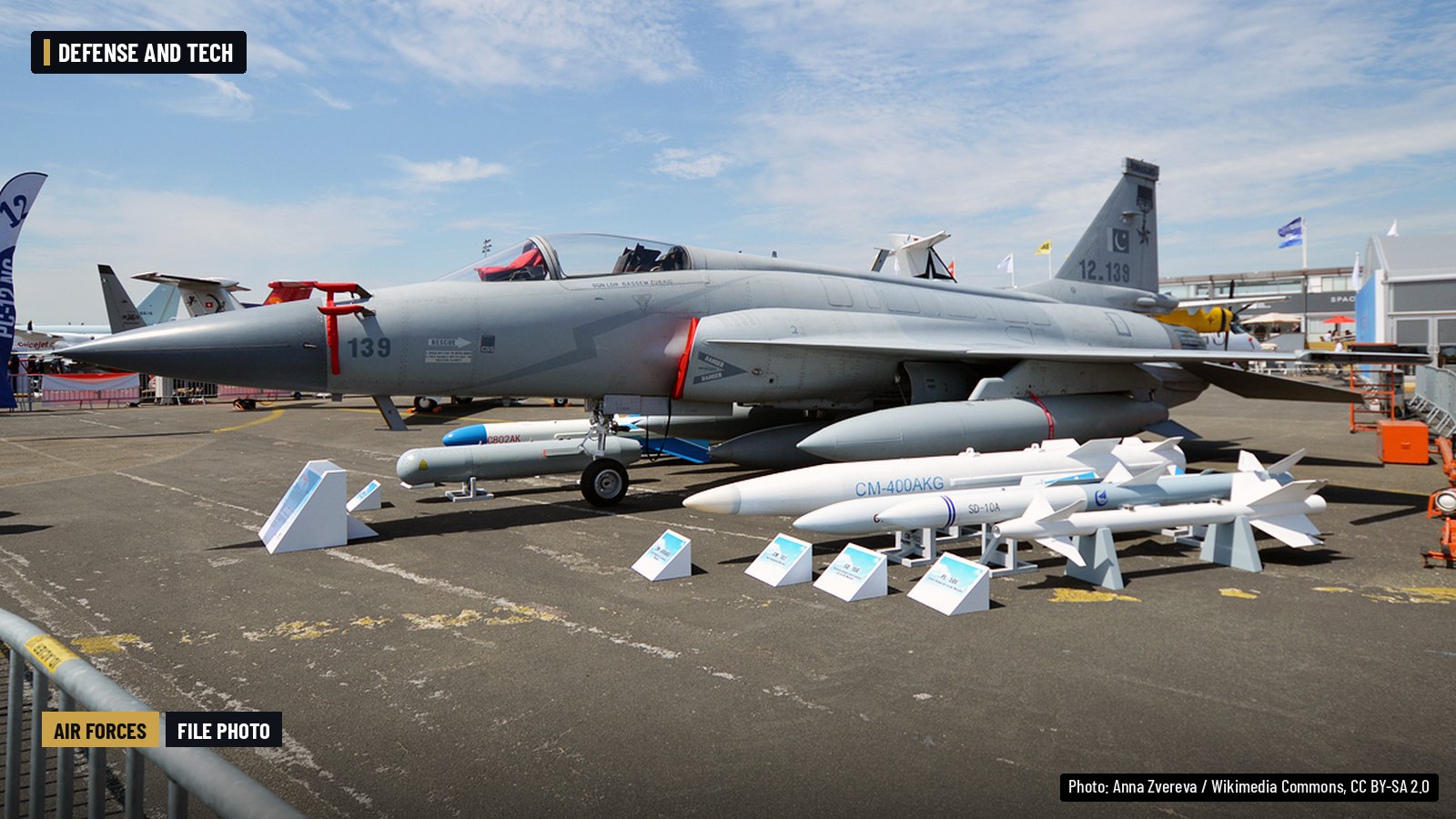
- A Pakistan Air Force video shows the missile being fired from a JF-17 fighter
- Mock-ups of two Fa’az versions were shown by Pakistan’s GIDS at IDEF 2023 in Istanbul
What the Pakistani military announced
The PAF’s press directorate published the statement on its official X account at 19:37 Istanbul time (21:37 in Pakistan) with a 45-second video (DGPR PAF). The same text was issued as an Inter-Services Public Relations (ISPR) statement, as reported by Dawn. It describes the test as ‘another significant milestone in the advancement of national aerospace and defense capabilities’ and says Fa’az ‘will significantly enhance operational flexibility of Pakistan Air Force’.
According to the statement, senior officers of the armed forces, scientists and engineers watched the launch. President Asif Ali Zardari, Prime Minister Shehbaz Sharif, Field Marshal Asim Munir, who is Chief of Army Staff and Chief of Defence Forces, and the service chiefs congratulated the development team.
The statement does not say where or exactly when the test took place, which aircraft fired the missile, what kind of target was used, or whether the missile hit it. It also says nothing about production or when the missile might enter service.
The JF-17 link
The PAF video shows a JF-17 Thunder firing the missile from an underwing pylon. Aviation Week and the Pakistani defence analysis site Quwa identified the aircraft as single-seat JF-17 serial 09-109; Quwa describes it as an early Block 1 aircraft. The JF-17 was developed with China and is built by the Pakistan Aeronautical Complex. Our JF-17 Block III guide covers the current version and its weapons.
What is known about Fa’az
Most of the public detail comes from the missile’s marketer rather than the military. Global Industrial and Defence Solutions (GIDS), the Pakistani state-owned defence group, showed mock-ups of two versions at the IDEF 2023 fair in Istanbul: Fa’az-RF with an active radar seeker and Fa’az-IIR with an imaging infrared seeker. GIDS figures reported by Quwa and Dawn give both a range of over 100 km and a top speed of Mach 3.5; a longer-range Fa’az-2, quoted at 180 km, was said to be in development. None of these figures was repeated in the 3 November statement, and they have not been independently verified.
Analysts quoted by Dawn and Quwa believe the missile tested was the infrared-guided Fa’az-IIR. Quwa says the programme is run by the Air Weapons Complex of the National Engineering and Scientific Commission (NESCOM). The military has not confirmed either point.
Previous developments
The test follows two other Pakistani missile announcements in October 2026, according to ISPR statements reported by Dawn: an extended-range Fatah-4 ground-launched cruise missile in early October and the Fatah-2 extended-range ballistic missile on 13 October. Fa’az is the first of the recent series aimed at aerial targets.
Industry context
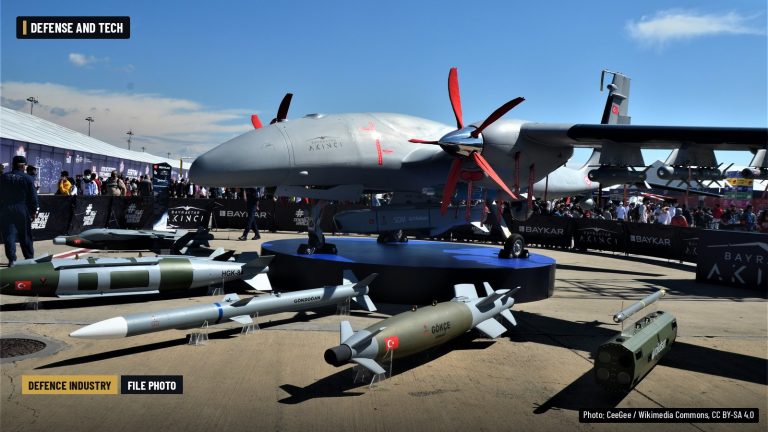
Dawn notes that the PAF relies on American and Chinese air-to-air missiles, including the AIM-120 AMRAAM and the PL-15. A domestic missile would give Pakistan more control over supply, upgrades and integration on its own fighters, but a single flight test is an early step: qualification firings, integration and production normally follow before a missile is declared operational. Türkiye has taken a similar route with the Bozdoğan and Gökdoğan air-to-air missiles developed by TÜBİTAK SAGE. For how the leading types compare, see our top 10 air-to-air missiles and Meteor vs AIM-120D vs PL-15 comparison.
Sources: Pakistan Air Force DGPR, official X account, 3 November 2026; ISPR statement as reported by Dawn, 3–4 November 2026; Aviation Week, 3 November 2026; Quwa, 3 November 2026.