NASAMS vs IRIS-T SLM, Which Air Defense System Wins
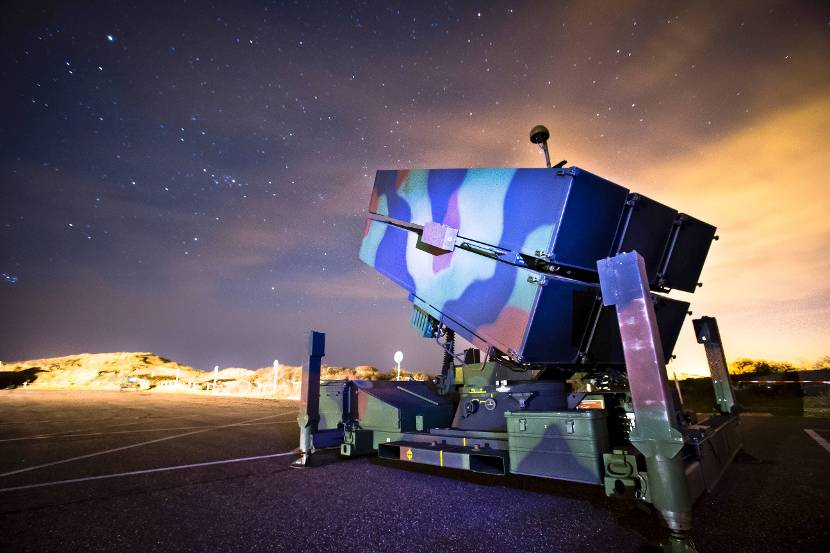
NASAMS and IRIS-T SLM are the two Western medium-range air defense systems that Ukraine’s war made famous, and both claim operator-reported intercept rates above 80 percent against cruise missiles and drones. One is a Norwegian-American veteran built around the AMRAAM, the other a newer German system whose first-ever combat shots were fired over Ukraine, and the right choice depends on the mission.
What is NASAMS
The NASAMS (National Advanced Surface-to-Air Missile System), built by Norway’s Kongsberg with RTX, has guarded airspace since 1998 and famously protects Washington, DC. Its trick is firing air-to-air missiles from the ground, primarily the AIM-120 AMRAAM, which gives every operator access to one of the deepest missile production lines in the world. A battery nets its Sentinel radars, fire distribution centers and dispersed launchers over kilometers, and can also fire AIM-9X short-range missiles and the extended-range AMRAAM-ER.
What is IRIS-T SLM
Diehl Defence’s IRIS-T SLM takes the same idea a generation later, a ground-launched version of the IRIS-T air-to-air missile enlarged for surface launch, vertically fired for 360-degree coverage and steered by datalink with an imaging-infrared endgame. Paired with Hensoldt’s TRML-4D AESA radar, a battery covers a 40-kilometer radius to 20 kilometers altitude. Germany donated the very first production systems to Ukraine in October 2022, and the type’s combat debut preceded its German service entry.
NASAMS vs IRIS-T SLM specifications
| Item | NASAMS | IRIS-T SLM |
|---|---|---|
| Maker | Kongsberg (Norway) / RTX (USA) | Diehl Defence (Germany) |
| In service | 1998, continuously upgraded (NASAMS 3) | 2022, combat debut in Ukraine |
| Interceptor | AIM-120 AMRAAM, AIM-9X, AMRAAM-ER | IRIS-T SLM missile, imaging-infrared seeker |
| Range | Roughly 25-30 km; up to ~50 km with AMRAAM-ER | 40 km stated, 20 km altitude |
| Radar | AN/MPQ-64F1 Sentinel, distributed netting | Hensoldt TRML-4D AESA, 360-degree |
| Launcher | 6-cell canister launchers, widely dispersible | 8-cell vertical launch on 8×8 truck |
| Magazine logic | Shares AMRAAM stocks with Western air forces | Dedicated missile line, ramping fast |
| Operators | Norway, USA, Ukraine and roughly a dozen more | Germany, Ukraine, Egypt and growing European list |
Ukraine combat record compared
Both systems arrived in Ukraine in the autumn of 2022 and were thrown straight into the campaign against Russian cruise missiles and Shahed drones. Ukrainian officials have repeatedly credited NASAMS with operator-reported intercept rates around 85-90 percent in its first months, and have described IRIS-T SLM batteries defending Kyiv with operator-reported success rates approaching 100 percent in individual engagements. Those figures come from the operator, not independent audit, and both systems have faced saturation raids designed to drain their magazines, but neither reputation has meaningfully dimmed across three years of strikes.
The systems ended up complementary in practice, IRIS-T’s vertical launch and infrared endgame suit point defense of cities and power plants, while NASAMS’s dispersed launchers and radar netting cover wider sectors, with Patriot held for ballistic threats above both.
Cost, production and availability
Neither is cheap, batteries run in the hundreds of millions of dollars and interceptors in the low millions each, but their supply pictures differ. NASAMS rides the AMRAAM production line, which the US and partners are expanding massively, the flip side is that ground-based air defense competes with fighter fleets for the same missiles. Diehl controls its own line and has multiplied IRIS-T output, with Germany’s European Sky Shield Initiative pulling in buyers from Scandinavia to the Balkans. Delivery queues for both now stretch years, and the economics of firing a million-dollar interceptor at a five-figure drone push every operator toward layering guns and cheaper effectors underneath either system rather than expanding missile stocks alone.
Verdict by mission profile
For a NATO-integrated buyer defending point targets, cities, ports, power infrastructure, IRIS-T SLM’s 360-degree vertical launch, modern radar and dedicated missile line give it the edge. For a force that already stocks AMRAAM, values dispersion over wide areas or wants US interoperability, NASAMS remains the safer bet, with AMRAAM-ER narrowing the range gap. The honest verdict from the air defense rankings is that most serious buyers now want both tiers, and Ukraine, given the choice, kept asking for more of each.
NASAMS vs IRIS-T frequently asked questions
Which has longer range, NASAMS or IRIS-T SLM?
IRIS-T SLM’s stated 40 km exceeds baseline NASAMS with standard AMRAAM, while the AMRAAM-ER brings NASAMS to roughly 50 km.
How effective is NASAMS in Ukraine?
Ukrainian officials have cited operator-reported intercept rates around 85-90 percent against cruise missiles and drones; the figures are not independently audited.
How effective is IRIS-T SLM in Ukraine?
Operator-reported success rates have approached 100 percent in individual salvos defending Kyiv, per Ukrainian and German statements.
Can NASAMS shoot down ballistic missiles?
No, neither system is designed for ballistic intercepts; that tier belongs to Patriot and similar systems.
Who buys IRIS-T SLM?
Germany, Ukraine and Egypt operate it, with a growing list of European Sky Shield participants placing orders.
- Kongsberg, RTX and Diehl Defence product literature (manufacturer figures noted)
- Ukrainian government statements on intercept performance (operator-reported)
- Wikipedia – NASAMS and IRIS-T (accessed October 2026)
- Defence & Tech reporting on European air defense procurement