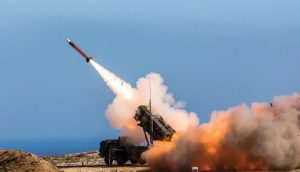

Defense News US: Inside the Pentagon’s Trillion-Dollar Technological Overhaul

For global military analysts and policymakers, tracking defense news in the US is no longer just about counting aircraft carriers or fighter jets. The Department of Defense (DoD) is currently executing a once-in-a-generation modernization strategy designed to pivot the U.S. military away from the counter-insurgency wars of the past two decades and prepare it for highly contested, high-tech conflicts with near-peer adversaries like China and Russia.
Recent budget proposals, DARPA initiatives, and Congressional hearings have revealed a clear roadmap for the Pentagon’s future. The focus has decisively shifted toward three critical domains: autonomous drone swarms, directed energy weapons, and a massive overhaul of the nuclear triad.
Here is your comprehensive brief on the technologies currently reshaping the United States military.

1. The AI and Autonomous Swarm Revolution
The era of relying solely on a few multi-million-dollar, human-piloted platforms is ending. The Pentagon’s new doctrine heavily emphasizes affordable, mass-produced autonomous systems.
Driven by the lessons learned from recent global conflicts, the DoD is looking to fundamentally alter the battlefield math. Current DARPA (Defense Advanced Research Projects Agency) initiatives, such as the DICE (Decentralized Artificial Intelligence through Controlled Emergence) program, aim to create self-organizing drone swarms. The goal is to allow a single human operator to manage hundreds of autonomous robots that can dynamically form teams and execute complex missions using peer-to-peer coordination.
Furthermore, to counter enemy drones, the Pentagon’s Defense Innovation Unit (DIU) is actively pursuing AI-enhanced targeting systems (AiTR) for infantry units. This technology will allow standard ground troops to automatically track and destroy small, high-speed drones, essentially turning standard-issue rifles into smart-defense platforms. Reflecting this massive shift, the proposed budget for the Defense Autonomous Working Group is poised to skyrocket from millions into the tens of billions over the coming years.
2. The Push for Directed Energy (Laser Weapons)
For decades, laser weapons have been a staple of science fiction and perpetual “next five years” military R&D. However, recent US defense news indicates that the tipping point has finally been reached.
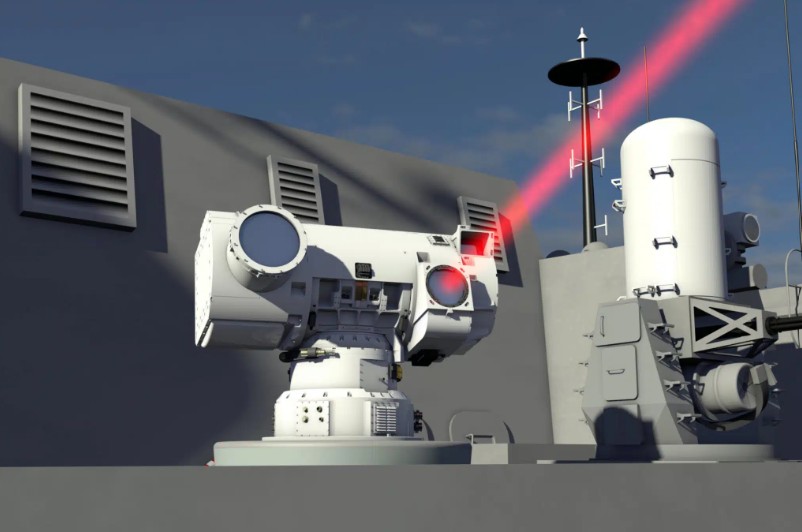
During recent Congressional posture hearings, the Secretary of Defense confirmed plans to procure “tens to hundreds” of directed energy weapons. The urgency is clear: firing a $2 million interceptor missile to shoot down a $20,000 kamikaze drone is an unsustainable economic strategy.
The U.S. Army recently deployed its 50-kilowatt Stryker-mounted laser system (DE M-SHORAD) to the Middle East for real-world operational testing. Meanwhile, the Navy and Marine Corps are rapidly advancing programs like the E-HEL (Expeditionary High-Energy Laser), with major defense contractors like Huntington Ingalls Industries opening dedicated integration facilities. The goal is to begin fielding functional, scaled laser defense networks by the end of fiscal year 2027 to protect critical assets from drone and cruise missile saturation attacks.
3. The High-Stakes Nuclear Triad Recapitalization
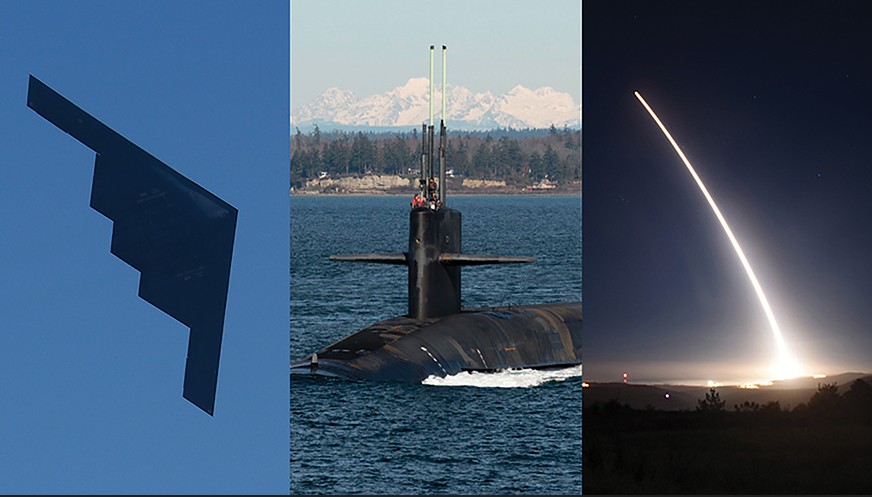
While AI and lasers dominate the headlines, the most expensive and arguably most critical component of the Pentagon’s overhaul is the modernization of its nuclear deterrent. The U.S. is currently replacing all three legs of its nuclear triad—land-based silos, strategic bombers, and ballistic missile submarines.
The Sentinel ICBM: Designed to replace the aging Minuteman III missiles, the Sentinel program is the bedrock of the land-based deterrent. Despite facing severe budget overruns—ballooning from an initial $78 billion to over $141 billion—the program remains a top national security priority, with the first full missile pad launch scheduled for 2027.
Sea and Air Modernization: Alongside the Sentinel, the Navy is advancing the construction of the new Columbia-class ballistic missile submarines, while the Air Force is ramping up production of the B-21 Raider stealth bomber.
Underpinning all of this is a $154 billion modernization of the Nuclear Command, Control, and Communications (NC3) architecture, ensuring that the technology connecting the President to the nation’s ultimate weapons is fully digitized and secure against modern cyber threats.
The Strategic Takeaway
The current wave of defense news out of the US paints a picture of a military in aggressive transition. By investing heavily in the electromagnetic spectrum, artificial intelligence, and modernized strategic deterrence, the Pentagon is sending a clear message: the future of warfare will be won by the force that can process information the fastest and strike with the most cost-effective precision.