
F-47 vs FCAS: Why Europe’s Rival Fighter Collapsed and What Comes Next
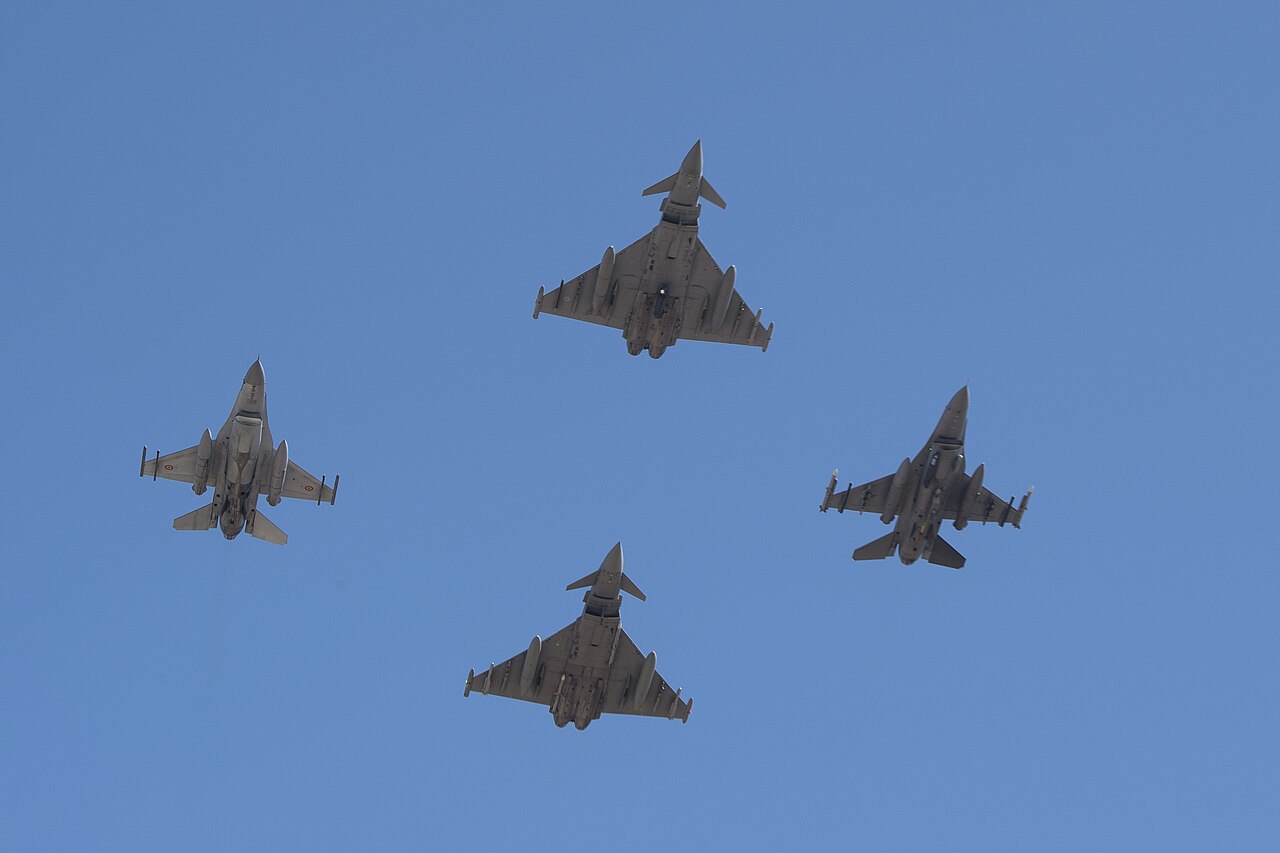
The comparison between the F-47 and Europe’s Future Combat Air System (FCAS) was settled in June 2026, when France and Germany agreed to end their joint fighter after years of dispute between Dassault Aviation and Airbus. The American programme, whose development contract came eight years after FCAS was launched, now has an aircraft in build and a first flight planned for 2028.
This article explains what FCAS was meant to be, why it failed where the F-47 went ahead, and what France, Germany and Spain are likely to do instead.
The short answer
FCAS is no longer a rival to the F-47. On 8 June 2026 the Élysée Palace announced that France and Germany had agreed to stop work on the common New Generation Fighter. Chancellor Friedrich Merz and President Emmanuel Macron had concluded that the companies would not settle their argument over who led the design.
Parts of the wider project may survive, notably the drones and the data network meant to link aircraft together. The fighter at its centre will not be built as a joint aircraft.
What FCAS was meant to be
FCAS, known in French as SCAF, was announced by Macron and Angela Merkel in July 2017. Spain joined in 2019. Like the American Next Generation Air Dominance programme, it was a system of systems: a crewed fighter, uncrewed remote carriers and a combat cloud connecting them.
| Date | Event |
|---|---|
| July 2017 | France and Germany announce the programme |
| 2019 | Spain joins as third partner |
| Dec 2022 | Phase 1B demonstrator contract signed, worth about €3.2bn |
| 2025 | Dispute over leadership and work share escalates; year-end deadline missed |
| 8 June 2026 | France and Germany agree to end the joint fighter |
Dassault Aviation led the fighter, with Airbus representing Germany and Spain. A demonstrator was to fly late in this decade and the aircraft was to enter service around 2040, replacing the Rafale and the Eurofighter Typhoon.
Why it collapsed
The dispute was about authority. Dassault argued that a fighter needs a single architect with the power to make design decisions and choose suppliers, and that it was the only partner to have designed a complete combat aircraft by itself. Airbus and the German government insisted on equal shares of work and control.
Requirements pulled in different directions too. France needs an aircraft that can fly from an aircraft carrier and carry its nuclear missile. Germany and Spain need neither. A fighter that satisfied Paris would be compromised for Berlin, and both sides knew it.
After a deadline set by Germany’s defence minister passed at the end of 2025 without agreement, the two leaders ended the effort. The programme had been valued at more than €100 billion over its life.
F-47 and FCAS side by side
| F-47 | FCAS fighter | |
|---|---|---|
| Nations | United States | France, Germany, Spain |
| Prime contractor | Boeing, sole authority | Dassault, with Airbus |
| Launched | Contract March 2025 | 2017 |
| Demonstrators | Secret X-planes flew from 2019 | None flown |
| First flight | 2028 (planned) | Was planned for about 2029 |
| Service entry | About 2030 (goal) | Was planned for about 2040 |
| Status | In build | Joint fighter ended June 2026 |
The contrast is instructive. The United States chose one company, gave it a contract and paid for demonstrators years in advance. Europe tried to design an aircraft and an industrial bargain at the same time. For the American programme’s own history, see what the F-47 is and who builds the F-47.
What Europe does next
France is expected to go ahead alone or with new partners. Dassault has said it can build a successor to the Rafale, and the Rafale F5 standard, due around 2030 with a stealthy combat drone as its wingman, gives it a bridge; see our report on the first Rafale F5 contracts.
Germany has three options that its officials and analysts have discussed: join the British, Italian and Japanese programme compared in F-47 vs GCAP, work with Sweden, or develop a national aircraft with Airbus. It is also an F-35 customer. Spain is in the weakest position, having ruled out the F-35 in 2025.
None of them is likely to buy the F-47. The United States has not offered it, its price would be very high, and the reasons that led Europe to FCAS, chiefly independence from American control, have not gone away.
What the comparison shows
The F-47 is not proof that the American way always works. Its engine is late and its cost is unknown, as we set out in F-47 engine and how much the F-47 will cost. But it shows that a sixth-generation fighter needs clear authority, steady money and early flying hardware. FCAS had none of the three.
Frequently asked questions
What is FCAS?
The Future Combat Air System was a French, German and Spanish programme, launched in 2017, to build a sixth-generation fighter and accompanying drones for service around 2040.
Has FCAS been cancelled?
France and Germany agreed in June 2026 to end the joint fighter at its centre. Work on some other elements, such as drones and networking, may continue.
Why did FCAS fail?
Dassault and Airbus could not agree on who should lead the fighter’s design and how work should be shared, and the partners’ requirements differed.
Will Germany or France buy the F-47?
There is no indication of it. The F-47 has not been offered for export, and both countries want control over their own combat aircraft.
What will replace the Rafale and Typhoon now?
That is undecided. France is expected to pursue its own successor to the Rafale; Germany is weighing GCAP, cooperation with Sweden or a national design.
Is GCAP the same as FCAS?
No. GCAP is a separate programme of the United Kingdom, Italy and Japan, and it is continuing.
- The Aviationist – France and Germany Set to End Future Combat Air System Program: theaviationist.com
- Defense Mirror – Germany, France Suspend Work on FCAS Sixth-Gen Fighter Project: defensemirror.com
- The War Zone – First F-47 6th Generation Fighter Now Being Built: twz.com