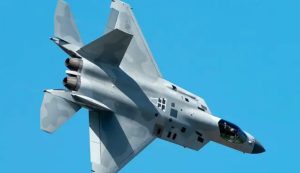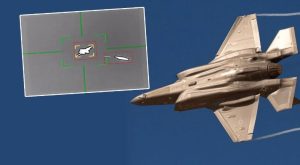

F-47 vs J-36: America’s Sixth-Generation Fighter Against China’s
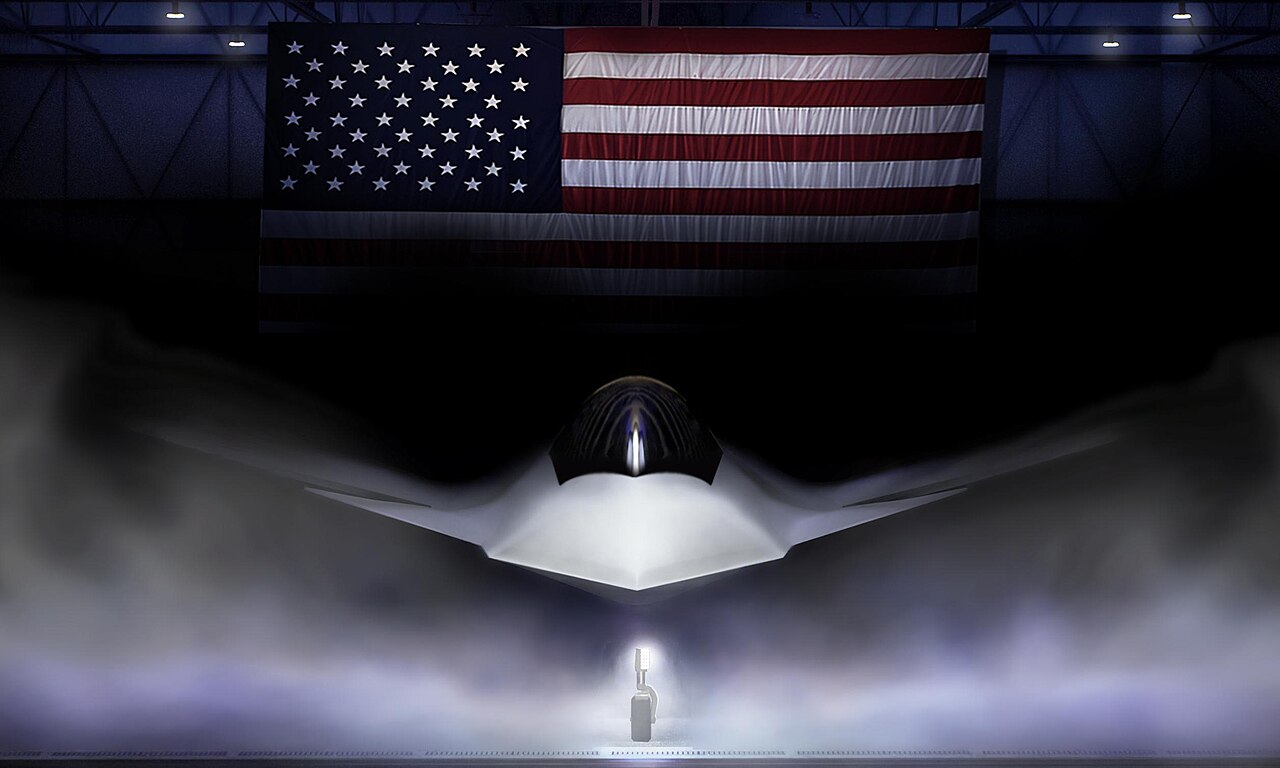
The F-47 and the Chengdu J-36 are the leading sixth-generation fighters of the United States and China, and almost nothing about either has been officially published. The difference is that the J-36 can be seen. Three prototypes have been photographed in flight since December 2024, while the first F-47 is still being built and is due to fly in 2028.
This comparison sets out what can be observed about the Chinese aircraft, what Washington has said about its own, and why being seen first is not the same as being ahead.
The short answer
No one outside the two programmes can say which is the better aircraft. What can be said is that they look like answers to different questions. The J-36 is very large, with three engines and room for big weapons, and appears designed to carry heavy loads a long way from the Chinese coast. The F-47 is described as an air-superiority fighter with a combat radius of more than 1,000 nautical miles, built to work with drones.
China has shown more hardware. The United States says it has been flying secret demonstrators since 2019. Neither claim settles who will field a working squadron first.
F-47 and J-36 side by side
| F-47 | J-36 | |
|---|---|---|
| Maker | Boeing | Chengdu Aircraft Corporation |
| Official status | Announced March 2025 | Not officially acknowledged |
| First seen flying | Not yet; planned for 2028 | 26 December 2024 |
| Prototypes seen | None in public | Three |
| Engines | Two assumed; adaptive NGAP | Three |
| Layout | No vertical tails; canards shown in renderings | Tailless double-delta |
| Crew | Not disclosed | Two, side by side, suspected |
| Combat radius | 1,000+ nm stated | Not known |
| Service entry | About 2030 (goal) | By 2035 (Pentagon estimate) |
For the American aircraft’s published data, see what the F-47 is. Our wider survey of sixth-generation fighter programmes covers the other contenders.
What has been seen of the J-36
The first J-36 appeared over Chengdu on 26 December 2024, the same day a second, smaller Chinese design was seen at Shenyang. A second prototype followed on 28 October 2025 with changed air intakes, a different undercarriage and flat, two-dimensional exhaust nozzles that suggest thrust vectoring. A third was photographed on 25 December 2025.
Three features stand out. It has three engines, fed by two side intakes and one on top of the fuselage, which is almost unheard of in a fighter. It has no tail surfaces at all. And it is big: estimates from imagery put it well above the size of the J-20, in the weight class of a small bomber.
Analysts are divided on its role. Some see a heavy interceptor armed with very long-range missiles such as the PL-17, intended to kill tankers and radar aircraft. Others see a stealthy regional strike aircraft. It may be both.
Two different design answers
Three engines give the J-36 power and electrical capacity at the cost of weight and complexity. That may reflect the limits of Chinese engines: where the United States is developing a new adaptive engine to get range and cooling from two powerplants, China may be getting there with a third.
Both designs dispense with vertical tails to reduce their radar signature across more frequencies, as we explain in F-47 stealth explained. The F-47 renderings add canard foreplanes, which may or may not be real. The J-36 relies on split control surfaces at the wingtips and, on later prototypes, vectoring nozzles.
The second Chinese aircraft, usually called the J-50 or J-XDS, is closer to the F-47 in size and may be the more direct equivalent.
Who is ahead?
On visible evidence, China. Three prototypes of one type and at least two of another, flying openly within a year, is a fast pace, and Chinese industry has shown with the J-20 that it can move quickly from prototype to mass production.
On claimed evidence, the picture is closer. The Air Force says its demonstrators have flown hundreds of hours since 2019, and the F-47 is a production-representative aircraft, not a prototype. Its first flight is planned for 2028. The Pentagon’s 2025 report on Chinese military power expects China’s sixth-generation fighters to be operational by 2035, later than the F-47’s goal of around 2030.
Both dates deserve caution. American schedules slip, and Pentagon estimates of Chinese timelines have been too slow before.
What we do not know
For the J-36: its engines, sensors, weapons, real dimensions and whether it is a fighter in the Western sense at all. For the F-47: its shape, size, weapons and whether it will fly on time. A comparison of combat capability is not yet possible, and claims that one would beat the other should be treated as speculation. The numbers each side can build may matter more, a point we take up in how many F-47s will be built.
Frequently asked questions
What is the J-36?
It is the unofficial name for a large, tailless, three-engine Chinese combat aircraft built by Chengdu and first seen flying in December 2024. China has not officially acknowledged it.
Is the J-36 better than the F-47?
That cannot be judged. Neither aircraft’s performance has been published, and the F-47 has not yet flown.
Has China flown a sixth-generation fighter before the US?
China’s J-36 was seen flying in December 2024. The US says it has flown classified sixth-generation demonstrators since 2019, but the F-47 itself is not due to fly until 2028.
Why does the J-36 have three engines?
It has not been explained. Likely reasons are the need for thrust and electrical power in a very large airframe, and the limits of current Chinese engines.
When will the J-36 enter service?
A Pentagon report published in December 2025 expects China’s sixth-generation fighters to be operational by 2035.
Is the J-36 bigger than the F-47?
Probably. Imagery suggests the J-36 is much larger than existing fighters. The F-47’s dimensions have not been disclosed.
- The Aviationist – Third prototype of the J-36 has flown: theaviationist.com
- The War Zone – New Views Of China’s Next Generation Fighters: twz.com
- Air Data News – Pentagon report on China’s sixth-generation fighters: airdatanews.com
- The War Zone – First F-47 6th Generation Fighter Now Being Built: twz.com