F-35 Block 4 and TR-3 Explained: What Is Delayed and Why
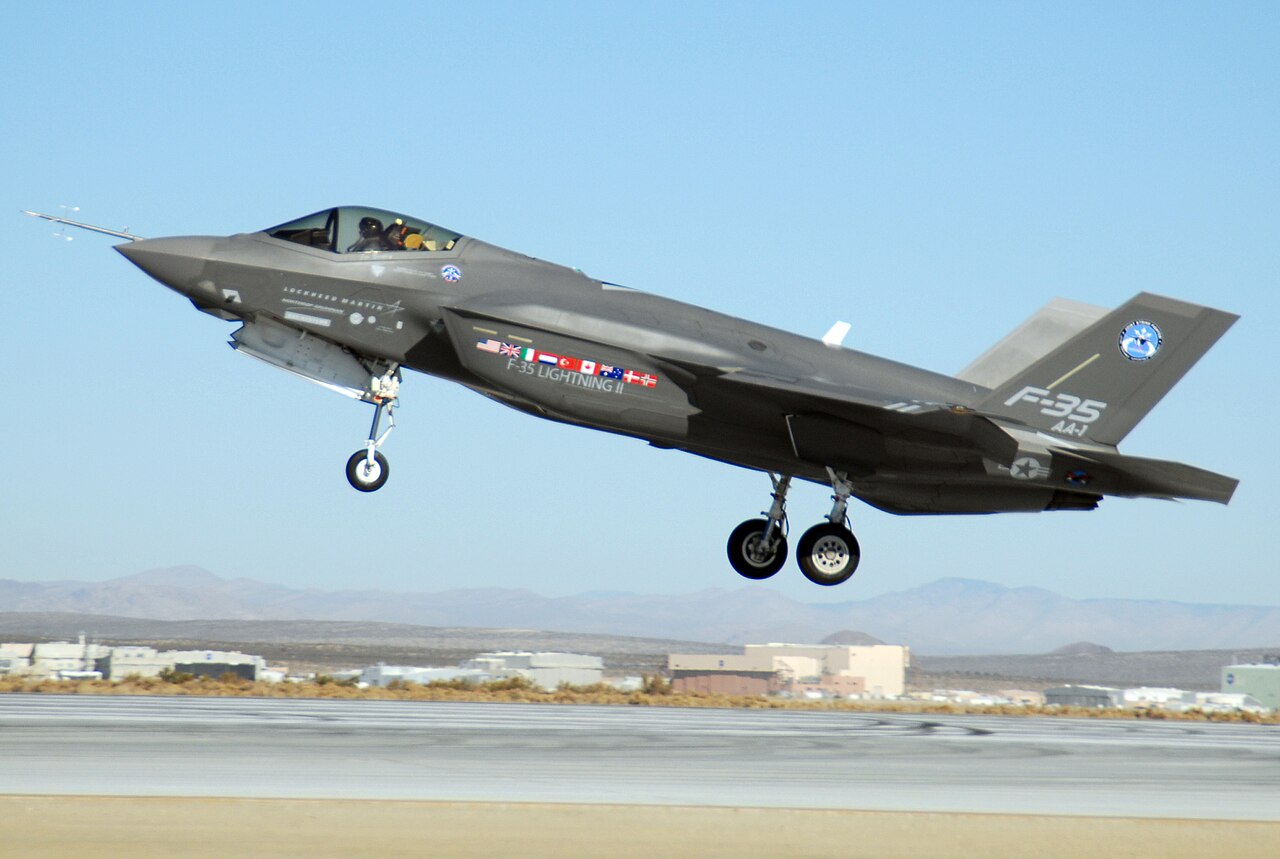
F-35 Block 4 is the package of new weapons, sensors and electronic warfare functions planned for the aircraft, and TR-3 is the new computer hardware and software needed to run it. Both are years behind schedule, and their delay is the main reason new F-35s have been arriving unable to fight.
The Pentagon’s testing office reported in early 2026 that none of the 158 TR-3 jets delivered by the previous September was combat-capable. Block 4 itself has been cut back, with the first capabilities now expected around 2031. This guide explains what F-35 Block 4 and TR-3 are, what went wrong and what the current schedule says.
What is TR-3?
Technology Refresh 3 replaces the aircraft’s central computing hardware. It brings a new core processor with about 25 times the computing power of the old one, a larger memory unit and a new cockpit display. The processor comes from L3Harris. Aircraft from production Lot 15 onward are built with it.
The hardware is only useful with software written for it, and that is where the trouble lay. The first TR-3 jet flew in January 2023. By July the software was still unstable, and the Pentagon stopped accepting new aircraft. Finished jets were parked for a year. Deliveries resumed in July 2024 with a cut-down software version good enough for training flights, on the understanding that full capability would follow. The effect on output is described in how many F-35s have been built.
What is F-35 Block 4?
Block 4 is the follow-on to Block 3F, the software the jet completed its original development with in 2018. It was planned as about 66 improvements to be delivered in increments by 2026 at a cost of $10.6 billion.
| Area | Planned additions |
|---|---|
| Weapons | AARGM-ER, LRASM, Joint Strike Missile, StormBreaker, Meteor, SPEAR 3, six internal missiles |
| Radar | AN/APG-85 replacing the APG-81 |
| Sensors | Next Generation Distributed Aperture System, improved targeting system, infrared tracking across several aircraft |
| Electronic warfare | Reworked ASQ-239 with new receivers, from production Lot 19 |
| Data links | Upgrades to the data link between F-35s; two-way link for AIM-120D |
| Supporting changes | Engine Core Upgrade and a new power and cooling system |
These items are covered in more detail in our guides to F-35 missiles, F-35 radar, F-35 sensors and the F-35 engine.
Why are Block 4 and TR-3 late?
Three causes run through the official reports. The first is software. The aircraft carries more than eight million lines of code, and each new release has tended to break things that worked before. The testing office said the latest TR-3 release it assessed was unsuitable for operational testing, and that the newest software for older jets had been predominantly unusable for much of fiscal 2025 because of stability problems.
The second is testing capacity. There are too few instrumented test aircraft, and the testing office says the fleet set aside for operational trials needs to grow to 12 so that eight are available on a given day.
The third is that Block 4 outgrew the aircraft. The new radar and other systems need more electrical power and cooling than the current engine and thermal system provide. In 2023 the Government Accountability Office put the cost at $16.5 billion and the finish date at 2029. In 2025 the programme was restructured: Block 4 was reduced to a smaller set of capabilities, with the first due in 2031 at the earliest and those that depend on the engine upgrade pushed to the mid-2030s.
What is the schedule now?
The clearest public timetable is in the programme’s acquisition report for the fiscal 2027 budget, cleared for release in August 2026. It groups capabilities into four packages.
| Target date | Capabilities |
|---|---|
| September 2027 | AARGM-ER, LRASM, Joint Strike Missile, StormBreaker, AIM-9X Block II upgrade, Next Generation DAS, multi-aircraft infrared tracking |
| September 2030 | Six missiles in the weapons bays, two-way data link for AIM-120D, data link upgrades |
| September 2032 | Meteor, SPEAR 3, low-observable pylon for JASSM and LRASM |
| September 2033 | Low-observable pylon for AARGM-ER, long-range radar identification, wide-area sea search |
Every date assumes that TR-3 software reaches a stable, combat-ready state first. Operational testing of TR-3 aircraft was due to begin in 2026, two years after the jets started arriving at squadrons.
What does the delay mean for operators?
For the United States it means a growing number of new jets that can be flown for training but not sent to war, alongside about 650 older aircraft that are unaffected. The Pentagon has withheld part of the payment for each TR-3 jet until it is combat-capable. From autumn 2026 some aircraft are also expected to be delivered with ballast in place of the late APG-85 radar.
For export customers the effect depends on timing. Countries receiving their first aircraft now, among them Poland, Belgium, Finland and Germany, are getting TR-3 jets. Britain and Italy must wait until 2032 for Meteor. Members of the US Congress have used the delays to press Lockheed Martin, as covered in our report on the F-35 funding warning. The cost side is in how much an F-35 costs.
Frequently asked questions
What is the difference between TR-3 and Block 4?
TR-3 is the new computer hardware and its base software. Block 4 is the set of new weapons, sensors and functions that needs TR-3 to run.
Are TR-3 F-35s combat-capable?
The Pentagon’s testing office said none of the 158 delivered by 30 September 2025 was. We had seen no report of a formal combat-capable declaration by early October 2026.
When will Block 4 be finished?
The first capabilities are expected in 2031 at the earliest, with engine-dependent items in the mid-2030s.
How much does Block 4 cost?
The Government Accountability Office put it at $16.5 billion in 2023, up from an original $10.6 billion.
Why did F-35 deliveries stop in 2023?
The Pentagon refused to accept TR-3 aircraft until their software was stable. Deliveries resumed in July 2024.
Can older F-35s be upgraded to TR-3?
Yes. Earlier aircraft can be retrofitted with the new processor and displays, and that is planned for part of the fleet.
- The Aviationist – DOT&E says no combat-capable TR-3 F-35s were delivered in FY2025: theaviationist.com
- Defence Industry Europe – US plans major F-35 weapons expansion with AARGM-ER, LRASM, JSM and StormBreaker in 2027, Meteor and SPEAR 3 in 2032: defence-industry.eu
- Defence Industry Europe – Government Accountability Office warns F-35 Block 4 upgrades face delays and uncertain costs: defence-industry.eu
- Wikipedia – Lockheed Martin F-35 Lightning II: en.wikipedia.org