
Seven Ethiopian Rebel Groups Unite to Oust Abiy Government


Seven Ethiopian armed groups that spent the last several years fighting each other as often as they fought the federal government announced on September 21, 2026 that they have formed a joint coalition, the “Alliance for Survival,” aimed at removing Prime Minister Abiy Ahmed from power. The grouping unites the Tigray People’s Liberation Front (TPLF), the Oromo Liberation Army (OLA) and Amhara’s Fano militias — three forces that fought on opposing or unrelated fronts during the 2020-2022 Tigray war and the Fano insurgency that followed it — alongside four smaller armed factions based in the Ogaden, Afar, Benishangul-Gumuz and Somali regions. Together, the seven groups claim influence across roughly half of Ethiopia’s twelve regional states.
What Happened
Representatives of the coalition said the alliance reflects a shared judgment that Abiy’s government has presided over “war, genocide, mass destruction, and utter poverty,” and that Ethiopia risks disintegration if the current administration remains in power. TPLF Vice President Amanuel Assefa said the stated goal is to remove the government and install a transitional administration, and coalition representatives described their cooperation as extending beyond political messaging into tactical military coordination, though no joint operation has yet been documented.
Federal authorities had not issued an official response to the announcement at the time of reporting. Abiy has previously voiced confidence in the state’s ability to defend itself, saying “we do not have an iota of fear regarding Ethiopia’s sovereignty.” Government spokesperson Billene Seyoum has separately accused the alliance of receiving financial backing from neighboring Eritrea — a claim Asmara denies, but one consistent with monthslong reporting of a tactical understanding between Eritrea and elements of the TPLF, driven less by renewed friendship than by shared alarm over Abiy’s stated ambitions to secure Red Sea port access through Eritrean territory.
A Coalition of Former Enemies
The alliance is notable chiefly for who is in it. The TPLF and Fano-aligned Amhara forces were effectively on opposite sides during the 2020-2022 war in Tigray, when federal and allied Amhara forces pushed Tigrayan forces back from positions within roughly 200 kilometers of Addis Ababa. The OLA, fighting a separate insurgency in Oromia since 2018, has had no formal alignment with either camp. Kjetil Tronvoll, a Horn of Africa specialist at the Norwegian institution Nye Høyskole, was skeptical that ideologically disparate factions — spanning ethno-nationalist, federalist and secessionist agendas — could sustain unified command over time, calling the venture potentially “a sacrificial war for the rebels.” He nonetheless acknowledged that simultaneous pressure on “four to five fronts” would pose a materially harder problem for Ethiopia’s federal forces than any single insurgency has to date.
The Government’s Military Edge — And Its Limits
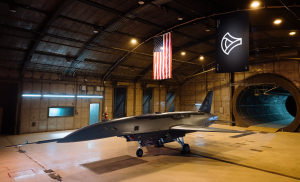
Ethiopia’s federal military remains larger and better equipped than any single faction in the new coalition, and it retains an air-power advantage that none of the seven groups is currently known to match. Turkish-made Bayraktar TB2 and Akıncı drones were decisive for federal forces during the 2020-2022 Tigray war, and Addis Ababa has since diversified its unmanned fleet with Chinese Wing Loong drones and Iranian Mohajer-6 aircraft, while standing up domestic drone manufacturers SkyWin Aeronautics and Aeroabay to reduce reliance on imports (as Defense & Tech reported in detail on September 13). To date, only the federal military is confirmed to operate military drones inside Ethiopia; none of the coalition’s constituent groups has demonstrated a comparable strike or reconnaissance capability. That asymmetry has allowed the Ethiopian National Defence Force (ENDF) to conduct sustained drone operations against Fano positions in Amhara — ACLED has documented more than 100 such strikes since the insurgency began in 2023 — without a matching aerial response from the opposition.
Whether a unified rebel command changes that calculus is the open question. Coordinated pressure across multiple regions could stretch ENDF logistics and force it to disperse the same drone and ground assets that have so far let it fight each insurgency in relative isolation. But the coalition’s ability to translate a political declaration into synchronized military operations — across groups with a recent history of mutual hostility and no shared command structure — remains unproven.
Why It Matters
Ethiopia is Africa’s second-most-populous country and hosts the African Union’s headquarters; sustained instability there carries regional weight well beyond its borders, particularly for a Horn of Africa already destabilized by the war in Sudan and Somalia’s al-Shabaab insurgency. A credible multi-front challenge to Addis Ababa would also test whether foreign drone suppliers — Turkey, China and Iran chief among them — are drawn further into an internal Ethiopian conflict, echoing the pattern already visible in Sudan’s civil war, where external drone and air-defense transfers have prolonged and intensified the fighting.
What Happens Next
The coalition has announced a political objective, not a battle plan, and Tronvoll’s assessment that its members may not agree on what comes after Abiy suggests the alliance’s durability is untested. Federal Ethiopia has not yet responded militarily or diplomatically beyond Abiy’s general assurances of sovereignty, and Eritrea’s alleged financial role remains unconfirmed by independent evidence. Any sign of coordinated, simultaneous operations across the Amhara, Oromia, Tigray and peripheral fronts named in the alliance’s founding statement — rather than continued parallel, localized fighting — would be the clearest indicator that the coalition has moved from declaration to practice.
FAQ
Who is in Ethiopia’s “Alliance for Survival”?
The coalition announced September 21, 2026 includes the Tigray People’s Liberation Front (TPLF), the Oromo Liberation Army (OLA), Amhara’s Fano militias, and four smaller armed groups based in Ethiopia’s Ogaden, Afar, Benishangul-Gumuz and Somali regions.
Did the TPLF and Fano fight on the same side before?
No. Fano-aligned Amhara forces fought alongside the federal government against the TPLF during the 2020-2022 Tigray war. Their alliance now marks a significant reversal driven by shared opposition to Abiy Ahmed’s government.
Does Ethiopia’s government have a drone advantage over the rebels?
Yes, based on current open-source reporting. The ENDF operates Turkish Bayraktar TB2 and Akıncı drones, Chinese Wing Loong aircraft, Iranian Mohajer-6s, and domestically produced systems from SkyWin and Aeroabay. No group in the new coalition has a confirmed comparable drone capability.
Is Eritrea backing the alliance?
Ethiopian government spokesperson Billene Seyoum has accused the alliance of receiving Eritrean financial support. Eritrea denies this. The claim is consistent with monthslong reporting of informal Eritrea-TPLF coordination but has not been independently verified.
Could this alliance actually remove Ethiopia’s government?
Analysts are skeptical of near-term success given the coalition’s ideological diversity and lack of a unified command structure, though sustained pressure across multiple fronts simultaneously would pose a more serious challenge to federal forces than any single insurgency has so far.
Sources
- Al Jazeera, “Ethiopian armed groups forge alliance against government,” September 21, 2026 — https://www.aljazeera.com/news/2026/9/21/ethiopian-armed-groups-forge-alliance-against-government — reporting on the alliance announcement and its stated objectives.
- Arab News (AFP), “Ethiopia’s main armed groups announce alliance against government,” September 21, 2026 — https://www.arabnews.com/world/ethiopias-main-armed-groups-announce-alliance-against-government-3002456 — TPLF Vice President quote and Tronvoll analysis.
- The Star (Kenya, via BBC), “Seven Ethiopian rebel groups form new alliance,” September 21, 2026 — https://www.the-star.co.ke/news/africa/2026-09-21-seven-ethiopian-rebel-groups-form-new-alliance — regional coverage list and Abiy’s sovereignty statement.
- IOL, “When Enemies Become Allies: Ethiopia’s Fragile Coalition Against Abiy,” September 22, 2026 — https://iol.co.za/news/brics/2026-09-22-when-enemies-become-allies-ethiopias-fragile-coalition-against-abiy/ — Eritrea financial-backing allegation and regional breakdown of the four smaller factions.
- Turkish Minute, “Ethiopia builds domestic drone fleet following decisive use of Turkish UAVs in civil war,” September 8, 2026 — https://turkishminute.com/2026/09/08/ethiopia-builds-domestic-drone-fleet-following-decisive-use-of-turkish-uavs-in-civil-war/ — federal drone fleet composition and 2020-2022 war context.
- Defense & Tech, “Ethiopia Expands Domestic Drone Production Amid Fano War,” September 13, 2026 — https://defenseandtech.com/ethiopia-skywin-drone-production-fano-insurgency/ — prior reporting on SkyWin/Aeroabay and ACLED drone-strike data.