
IHI Corporation, the Engine Maker Behind Japan’s Air Power
IHI Corporation builds the engines inside virtually every Japanese military aircraft, from the P-1’s four F7 turbofans to the XF9 demonstrator that fed Japan’s sixth-generation fighter bid, on revenue of roughly ¥1.6 trillion a year. The company that began as an 1853 shipyard is now Tokyo’s propulsion house, and one leg of the three-nation GCAP fighter engine team.
IHI Corporation at a glance
| Item | Detail |
|---|---|
| Full name | IHI Corporation, formerly Ishikawajima-Harima Heavy Industries |
| Headquarters | Tokyo, Japan |
| Founded | 1853 as the Ishikawajima shipyard; 1960 merger created Ishikawajima-Harima; renamed IHI in 2007 |
| Employees | Around 28,000–29,000 group-wide |
| Revenue | Roughly ¥1.6 trillion (about $11 billion) in recent fiscal years |
| Ownership | Publicly listed on the Tokyo Stock Exchange (7013) |
| Main fields | Aero engines, space and defense systems, turbochargers, energy and industrial plants |
IHI’s aero engine, space and defense segment has become the group’s profit engine as Japan’s military buildup and the civil aviation recovery arrived together. The company holds shares in major civil programs, the V2500, GEnx and PW1100G among them, work that keeps its turbine factories at scale between defense orders.
What does IHI make
Beyond engines, IHI builds solid rocket motors and launch vehicles through IHI Aerospace, turbochargers for the world’s carmakers, and energy and infrastructure plants. The defense portfolio also includes torpedo and missile propulsion work and naval machinery. But propulsion is the identity, in Japan’s aerospace division of labor, Mitsubishi Heavy Industries integrates the airframes and IHI supplies the thrust.
IHI military jet engines
| Engine | Application | Notes |
|---|---|---|
| F3 | T-4 trainer | First mass-produced indigenous turbofan, about 640 built with spares |
| F7-10 | Kawasaki P-1, four per aircraft | High-bypass turbofan designed for low-altitude maritime patrol |
| F100 and F110 | F-15J and F-2 fighters | License production of Pratt & Whitney and GE designs |
| XF5-1 | X-2 Shinshin technology demonstrator | Compact afterburning turbofan that proved domestic fighter-engine skills |
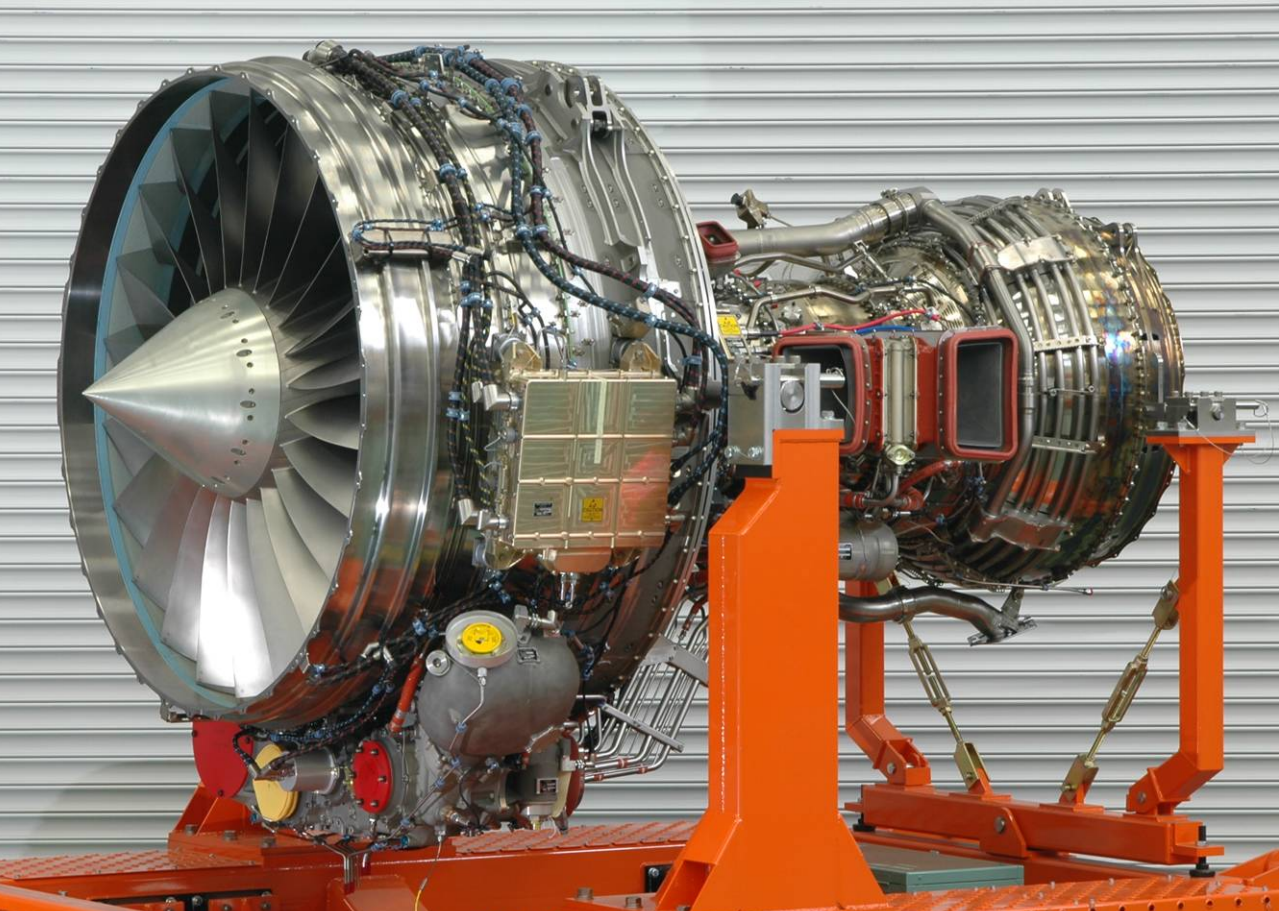
| XF9-1 | Fighter engine prototype | Demonstrated 15-ton-class thrust with slim core; groundwork for GCAP |
The XF9 deserves the attention it gets. Delivered in 2018, the prototype demonstrated thrust in the 15-ton class with afterburner from a deliberately slender core, per official statements, proof that Japan could design a modern low-observable-friendly fighter engine after decades of license building. It was never meant for production, it was meant as a bargaining chip, and it worked.
IHI and the GCAP fighter engine
When Japan merged its F-X fighter program with the UK-Italian Tempest effort to form the Global Combat Air Programme, IHI became one third of the joint engine team alongside Rolls-Royce and Italy’s Avio Aero. The three firms are developing the combat engine for the 2035-target fighter, with IHI contributing the XF9 lineage, hot-section materials and Japan’s ceramic matrix composite work. For a company that spent seventy years license-building American fighter engines, co-designing a first-rank combat powerplant with Rolls-Royce is the largest step up in its history, mirroring the airframe partnership described in our look at Asia’s new fighters.
IHI Aerospace, rockets and defense growth
IHI Aerospace, the group’s Gunma-based space arm, builds the Epsilon small launcher and the solid rocket boosters for Japan’s H3, and its solid-motor expertise flows directly into the missile programs at the center of Tokyo’s standoff defense buildup. The company has publicly flagged a surge in defense orders since 2023, including propulsion work tied to Japan’s extended-range missile programs, and has announced capacity expansion at its engine and rocket plants. Like the rest of Japanese industry it must now deliver against a weak yen, tight engineering labor and export rules that are loosening only gradually.
IHI Corporation frequently asked questions
What does IHI stand for?
Ishikawajima-Harima Heavy Industries, the name carried from the 1960 merger until the company formally became IHI Corporation in 2007.
What engines does IHI make for Japan’s military?
The F3 for the T-4 trainer, the F7-10 for the P-1 patrol aircraft, license-built F100 and F110 fighter engines, and the XF5 and XF9 demonstrator engines.
Is IHI part of the GCAP fighter program?
Yes. IHI develops the GCAP combat engine jointly with Rolls-Royce and Avio Aero for the Japan-UK-Italy fighter targeted at 2035.
Does IHI build rockets?
Yes, through IHI Aerospace, which produces the Epsilon launcher, H3 solid boosters and solid rocket motors that support Japan’s missile programs.
How big is IHI?
Roughly ¥1.6 trillion in annual revenue, about $11 billion, with around 28,000 employees, and aero engines, space and defense as the leading profit segment.
- IHI Corporation public disclosures and segment reporting
- Wikipedia – IHI Corporation (accessed October 2026)
- Japan Ministry of Defense and GCAP program statements
- Defence & Tech reporting on Japan’s defense industry