Mitsubishi Heavy Industries Company Profile, Products, Employees and Revenue
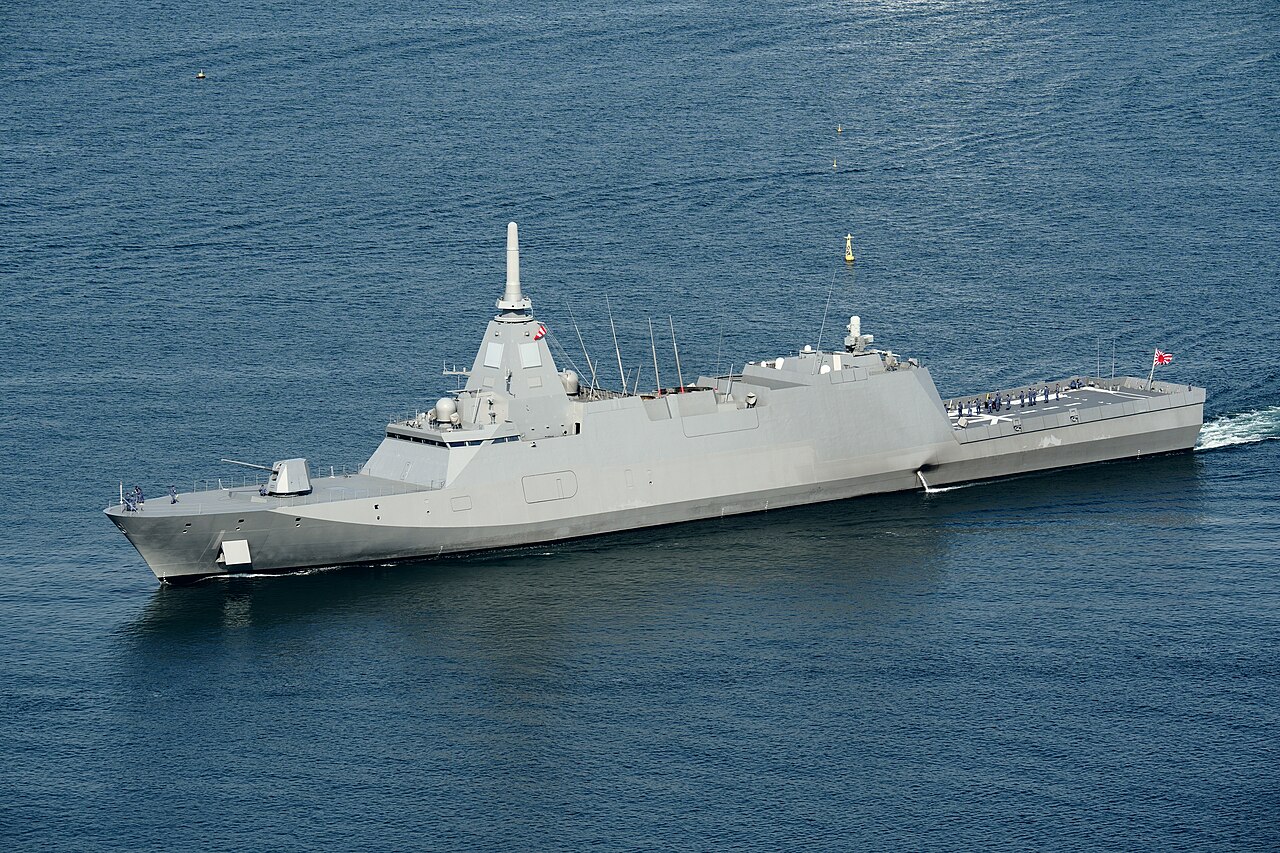
Mitsubishi Heavy Industries (MHI) is a Tokyo-based industrial group and one of Japan’s largest defence contractors, building Type 10 tanks, Mogami-class frigates, missiles, fighter aircraft and space launch vehicles alongside gas turbines, nuclear plants and ships. It had 78,793 consolidated employees on 31 March 2026, according to its corporate profile.
For fiscal 2025 (April 2025 to March 2026) MHI reported revenue of ¥4,974.1 billion and a record business profit of ¥432.2 billion, with an order backlog of ¥13.2 trillion. Its Defense & Space business is now one of the fastest-growing parts of the group. This profile covers what MHI does, its size, defence programmes, results and recent developments.
What Does Mitsubishi Heavy Industries Do?
MHI runs businesses in energy, plants and infrastructure, logistics and thermal systems, and aircraft, defence and space. Its reporting segment for defence, Aircraft, Defense & Space, covers commercial aviation, defence aircraft, missile systems, naval ships, torpedoes, tanks and space systems, according to the company’s FY2025 financial statements.
| Item | Detail |
|---|---|
| Headquarters | 2-3 Marunouchi 3-chome, Chiyoda-ku, Tokyo |
| Founded | 7 July 1884 (Nagasaki shipyard); established in its current form 11 January 1950 |
| President and CEO | Eisaku Ito |
| Employees | 78,793 consolidated; 23,373 non-consolidated (31 March 2026) |
| Capital | ¥265.6 billion (31 March 2026) |
| Revenue | ¥4,974.1 billion (FY2025) |
| Business profit | ¥432.2 billion (FY2025) |
| Net income | ¥332.1 billion (FY2025) |
| Defence segment | Aircraft, Defense & Space |
How Many Employees Does MHI Have?
MHI reports 78,793 employees on a consolidated basis and 23,373 at the parent company alone, both as of 31 March 2026. The gap reflects the group’s many subsidiaries, including its power, shipbuilding and aircraft units.
What Defence Products Does MHI Make?
MHI is a prime contractor for much of the Japanese armed forces’ heavy equipment. Its work spans land, sea, air and space.
| Programme | Type | Detail |
|---|---|---|
| Type 10 tank | Main battle tank | Fourth-generation tank for the Ground Self-Defense Force; in service since 2012, with 117 built between FY2010 and FY2022 (Wikipedia) |
| Mogami-class frigate | Multirole frigate | Built by MHI at Nagasaki; 12 original ships planned, followed by 12 upgraded ships; about 90 crew (Wikipedia) |
| ASEV | Ballistic missile defence ship | Two ships; MHI Nagasaki builds the first, Japan Marine United the second |
| Type 12 missile family | Anti-ship and standoff missile | Developed by MHI; upgraded versions extend range well beyond the original 200 km |
| F-35A | Fighter final assembly | MHI is the key contractor for Japanese final assembly at Nagoya |
| GCAP | Sixth-generation fighter | Japan-UK-Italy programme with MHI, BAE Systems and Leonardo as primary contractors |
The Type 10 has a 120 mm smoothbore gun, a three-person crew and a 1,200 hp diesel engine, per Wikipedia, and is operated only by Japan.
MHI Revenue and Financial Results
Revenue rose 14% to ¥4,974.1 billion in FY2025, and business profit increased 22% to ¥432.2 billion, according to MHI’s May 2026 results presentation. Net income was ¥332.1 billion, order intake reached ¥7,653.6 billion (up 20%), free cash flow was ¥893.4 billion and the dividend was ¥25 per share. The company said growth came mainly from gas turbine combined cycle, nuclear power and defence.
| Metric | FY2025 | FY2026 forecast |
|---|---|---|
| Revenue | ¥4,974.1B | ¥5,400.0B |
| Business profit | ¥432.2B | ¥540.0B |
| Net income | ¥332.1B | ¥380.0B |
| Order intake | ¥7,653.6B | — |
| Dividend per share | ¥25 | ¥29 |
| Metric | FY2024 | FY2025 | FY2026 forecast |
|---|---|---|---|
| Order intake | ¥1,876.8B | ¥1,682.6B | ¥1,400.0B |
| Revenue | ¥827.6B | ¥1,144.5B | ¥1,250.0B |
MHI said Defense & Space revenue rose 38% on strong orders since FY2023, and that it is expanding production facilities and workforce to work through more than ¥4 trillion of defence backlog. The wider Aircraft, Defense & Space segment earned ¥151.5 billion of business profit on ¥1,393.8 billion of revenue.
Which Countries Buy From MHI?
Japan’s Ministry of Defense is by far the main defence customer. MHI’s largest export win is Australia’s general purpose frigate programme: on 5 August 2025 the upgraded Mogami design was selected, with the first three ships to be built in Japan and eight more at Henderson, Western Australia, according to Wikipedia. MHI told investors in May 2026 that it had signed the construction contract after about eight months of negotiation.
The upgraded Mogami is also one of three foreign frigate designs the US Navy is evaluating to replace the Constellation class, as we reported in September. The evaluation was ordered in August 2026 with results expected in November.
MHI History Timeline
| Year | Event |
|---|---|
| 1857 | Dutch engineers set up a foundry and shipyard near Nagasaki |
| 1884 | Iwasaki Yataro of Mitsubishi leases the Nagasaki yard, later buying it |
| 1934 | Mitsubishi Heavy Industries formed as Japan’s largest private manufacturer |
| 1950 | Dissolved into three companies after the Second World War |
| 1964 | The three companies merge again |
| 1970 | Automotive division spun off as Mitsubishi Motors |
| 2017 | First Japanese-assembled F-35A rolled out |
| 2025 | Upgraded Mogami design selected for Australia (5 August) |
Recent MHI Contracts and Developments
MHI’s naval work is central to several stories on this site. Two Aegis System Equipped Vessels are under construction for Japan: MHI Nagasaki laid the keel of ASEV #1 on 18 July 2025 with delivery planned for March 2028, and Lockheed Martin’s combat system work is covered in our report on the $724 million Aegis order for the ASEV ships.
On missiles, the Type 12 standoff missile explainer covers the range extension to beyond 1,000 km. Wikipedia reports that the ground-launched version was designated Type 25 and deployed at Kengun Base on 31 March 2026.
In the air, MHI assembles Japan’s F-35As, an aircraft detailed in our F-35 specs guide and made by Lockheed Martin. It is also a primary contractor in GCAP alongside BAE Systems and Leonardo, with a joint venture named Edgewing based in the UK and a 2035 service target.
MHI FAQ
What does Mitsubishi Heavy Industries do?
It makes power plants, gas turbines, ships, aircraft, missiles, tanks, space launch vehicles and industrial machinery.
Where is Mitsubishi Heavy Industries headquartered?
In Marunouchi, Chiyoda-ku, Tokyo.
How many employees does MHI have?
78,793 on a consolidated basis at 31 March 2026, according to the company.
What is MHI’s annual revenue?
¥4,974.1 billion in fiscal 2025, which ended 31 March 2026.
Who is the CEO of MHI?
Eisaku Ito is President and CEO, according to the company’s corporate profile.
Does MHI make the Type 10 tank?
Yes. MHI builds the Type 10 for the Japan Ground Self-Defense Force.
Who builds the Mogami-class frigate?
MHI at Nagasaki is the primary builder, with Mitsui Engineering and Shipbuilding as a subcontractor, according to Wikipedia.
Is MHI part of GCAP?
Yes. MHI, BAE Systems and Leonardo are the primary contractors for the Japan-UK-Italy fighter programme.
- MHI – Corporate profile (employees, capital, CEO as of 31 March 2026)
- MHI – FY2025 financial results, 12 May 2026: announcement; financial results (PDF); presentation summary (PDF)
- FilingReader – MHI posts record profit on defence surge; Janes – Mitsubishi, Kawasaki report defence-led gains
- Wikipedia – Mitsubishi Heavy Industries; Mogami-class frigate; Type 10 tank; Type 12 missile
- AIN – First Japanese-assembled F-35A is rolled out (6 June 2017)
- Defence and Tech – Mogami evaluation, ASEV, Type 12, GCAP