
Precision Strike Missile PrSM Guide, Range, Increments and Buyers
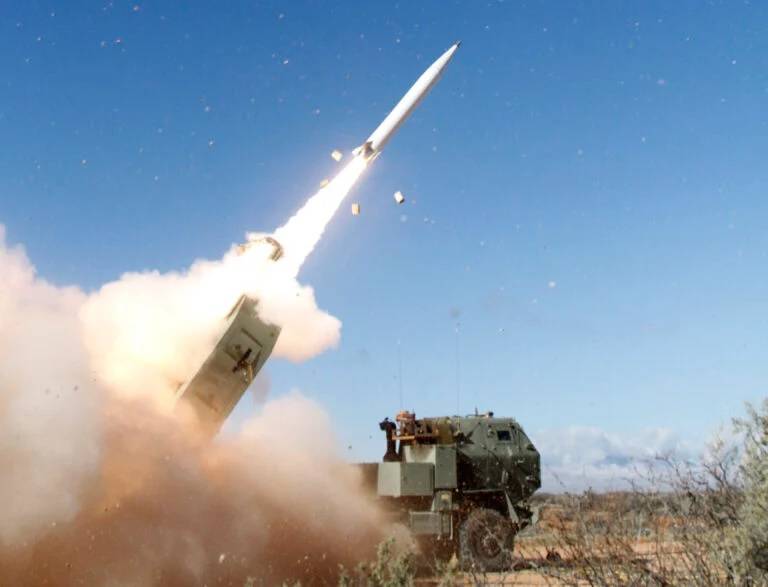
The Precision Strike Missile, or PrSM, is the US Army’s replacement for ATACMS, a Lockheed Martin ballistic missile that doubles the loadout to two rounds per launch pod and reaches beyond 400 kilometers. First fielded in December 2023, it is the centerpiece of the Army’s long-range precision fires portfolio and the weapon around which its Pacific strike plans are being built.
What is the Precision Strike Missile
PrSM grew out of the Army’s Long-Range Precision Fires program, the service’s top modernization priority for most of the past decade. Lockheed Martin won the development contest after Raytheon withdrew its DeepStrike entry, flying the first prototype in December 2019 at White Sands. The missile fires from the same launchers as its predecessor, the tracked M270A2 and the wheeled M142 HIMARS, which means every existing rocket-artillery battalion becomes a PrSM battalion with nothing more than new pods.
The design brief was shaped by the end of the INF Treaty in 2019. Freed from the treaty’s 500-kilometer floor on ground-launched missile development concerns, the Army asked for a weapon that could be pushed well past the original requirement, and early flight tests have reportedly demonstrated exactly that.
PrSM missile range and specifications
| Item | Detail |
|---|---|
| Designation | Precision Strike Missile (PrSM), M57-series successor |
| Manufacturer | Lockheed Martin Missiles and Fire Control |
| Type | Surface-to-surface short-range ballistic missile |
| Range | 60 to 400+ km officially; test flights reported past 500 km |
| Guidance | GPS-aided inertial navigation, hardened against jamming |
| Warhead | Single unitary blast-fragmentation payload |
| Propulsion | Single-stage solid rocket motor |
| Launchers | M142 HIMARS (one pod, 2 missiles), M270A2 (two pods, 4 missiles) |
| First delivery | December 2023, Early Operational Capability rounds |
The Army has deliberately said little about the missile’s precise performance. What is public is the shape of the improvement, a slimmer airframe than ATACMS that fits two to a pod, an insensitive-munitions motor, and an open architecture intended to accept new seekers and payloads without redesigning the missile.
PrSM increments explained
| Increment | Capability | Status |
|---|---|---|
| Increment 1 | Baseline missile, GPS/INS guidance, 400+ km | Fielded from December 2023 |
| Increment 2 | Land-Based Anti-Ship Missile with multi-mode seeker for moving ships | In testing; maritime strike demonstrated in Pacific exercises |
| Increment 3 | Enhanced lethality payloads | In development |
| Increment 4 | Extended range, reported goal of roughly 1,000 km | Competitive development |
Increment 2 is the one that changes the map. A seeker that can find and hit moving ships turns every HIMARS on a Pacific island into an anti-ship battery, which is why Army multi-domain task forces have been exercising the combination, including a reported first strike on a moving maritime target using an autonomous launcher during 2025 Pacific drills. Increment 4 would roughly match the reach that Russia’s Iskander-M family only claims in its cruise-missile variants.
PrSM vs ATACMS, what changes
Against the missile it replaces, PrSM offers roughly twice the magazine depth per launcher, substantially more range, a modern anti-jam guidance package and a production line designed for volume. ATACMS fires one missile per pod and tops out at about 300 kilometers; PrSM doubles the first figure and comfortably exceeds the second. The Army plans to buy thousands of rounds across the program, with annual production rates climbing through the late 2020s as ATACMS inventory is drawn down.
Who will operate PrSM
The US Army is the launch customer, arming HIMARS and M270A2 battalions and its multi-domain task forces. Australia became the first export customer, signing in 2025 to buy PrSM for its own HIMARS fleet and joining the program’s co-development arrangements, and the United Kingdom has selected the missile for its upgraded M270s. Other HIMARS operators in Europe and the Pacific are widely expected to follow as production scales, since the missile drops into launchers many of them already own.
PrSM frequently asked questions
What is the range of the PrSM missile?
Officially 60 to beyond 400 kilometers for Increment 1; flight tests have reportedly exceeded 500 kilometers, and Increment 4 targets roughly 1,000 kilometers.
Does PrSM replace ATACMS?
Yes. PrSM is the direct successor to the MGM-140 ATACMS, with two missiles per pod instead of one and greater range.
What launchers fire PrSM?
The M142 HIMARS carries two missiles in one pod, and the tracked M270A2 carries four in two pods, with no launcher modification beyond software.
Can PrSM hit ships?
Increment 2 adds a multi-mode seeker for moving maritime targets and has been demonstrated against a ship target in Pacific exercises.
Which countries are buying PrSM?
The US Army fields it now; Australia signed as the first export customer in 2025, and the United Kingdom has selected it for its M270 fleet.
- US Army budget justification documents and public statements
- Lockheed Martin product literature (manufacturer claims noted)
- Wikipedia – Precision Strike Missile (accessed October 2026)
- Defence & Tech reporting on long-range fires programs