
How Donald Trump’s Lies Manipulate Trillion-Dollar Markets
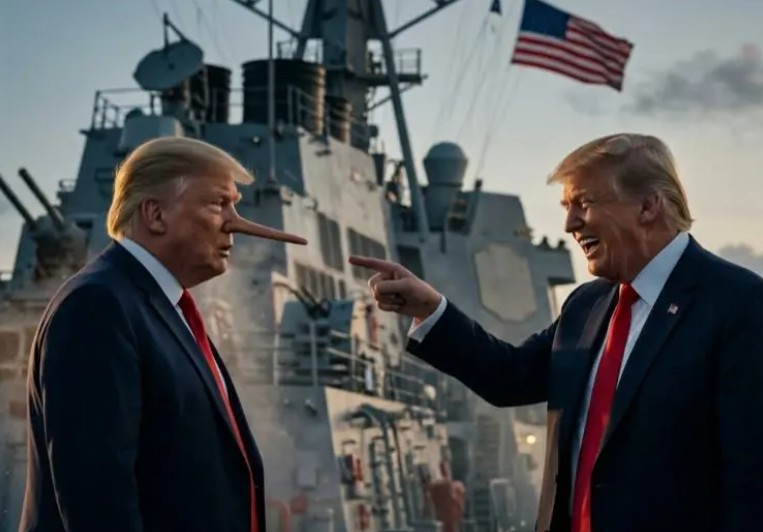
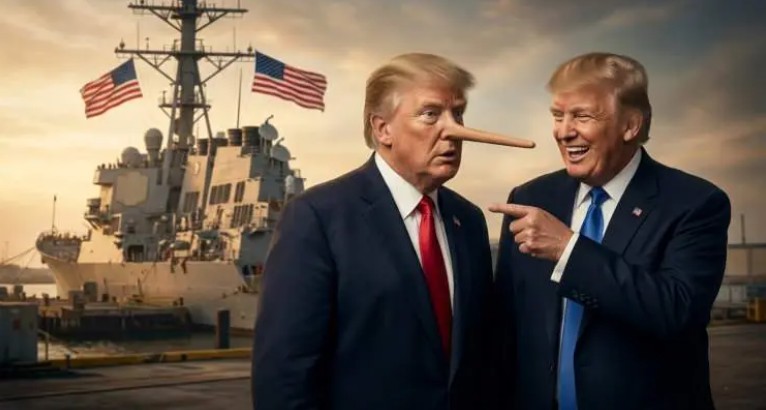
During Donald Trump’s first four years in office, The Washington Post’s fact-checking database documented an astonishing 30,573 false or misleading claims. Averaging 21 falsehoods a day, this unprecedented statistic is frequently analyzed by mainstream media as a catastrophic moral failure or a breakdown in political communication.
However, for modern financial analysts and geopolitical strategists, this data tells a vastly different story. We are not witnessing a communication crisis; we are witnessing the weaponization of information. This is the apex of the “Post-Truth” era, where a leader’s apparent detachment from reality is utilized as a highly calculated, asymmetric weapon.
Why would a global leader continuously make claims that can be debunked in seconds? The answer lies not in politics, but in algorithmic finance, diplomatic fog, and absolute loyalty.
1. Algorithmic Finance and Flash Volatility
In the 21st century, the vast majority of trades on global stock exchanges are not executed by human brokers, but by High-Frequency Trading (HFT) algorithms. These AI-driven bots scrape news wires and presidential social media accounts, executing multi-million dollar trades in fractions of a millisecond based on keyword sentiment.
Trump inadvertently—and then deliberately—mastered this mechanism. When a midnight post declares, “We are preparing to strike all Iranian oil facilities,” or “I am implementing the largest tariffs in history on China,” the algorithms do not pause to fact-check. They instantly register “severe geopolitical risk.” Within seconds, crude oil futures spike, specific equities crash, and safe-haven assets surge.
It is entirely irrelevant if the White House retracts the statement the following morning or if it is exposed as a pure bluff. The speculative panic has already occurred, and massive, unearned profits have already been extracted during that window of artificial volatility. In this ecosystem, a lie is the most efficient tool for market manipulation.
2. The Geopolitical Fog and the “Madman Theory”
During the Cold War, Richard Nixon famously employed the “Madman Theory”—a diplomatic strategy designed to convince hostile nations that he was irrational, volatile, and crazy enough to press the nuclear button over minor infractions.
Trump has updated the Madman Theory for the digital age using a relentless barrage of disinformation. By making contradictory, exaggerated, and entirely false statements on a daily basis, he generates an impenetrable “fog of information.” Adversaries like Iran, China, and Russia—as well as traditional NATO allies—are left paralyzed, unable to discern what constitutes a genuine military strategy and what is mere domestic political theater. When your opponent cannot predict your actions, they hesitate to act. Here, disinformation serves as a diplomatic shield.
3. The Ultimate Loyalty Test
Finally, there is the sociological architecture of authoritarian communication. Totalitarian theory suggests that forcing a population to agree with a widely accepted truth demonstrates no real power. True power is forcing a constituency to publicly defend a blatant falsehood. When a political base is willing to dismiss objective reality to support a leader’s narrative, they cross a psychological Rubicon, transforming from rational voters into an unshakeable, fiercely loyal faction immune to external critique.
Conclusion: The Erosion of Trust
Constantly bending the truth provides immense short-term tactical advantages: it generates immense wealth via market volatility, keeps adversaries constantly off-balance, and solidifies absolute domestic loyalty.
However, the long-term strategic cost is catastrophic. The entire foundation of international diplomacy, nuclear treaties, and the global economic system rests on a single, fragile pillar: Trust. When the word of a superpower’s commander-in-chief holds no weight, deterrence fails. And in a world devoid of trust, conflicts are no longer resolved at the negotiating table—they are resolved on the battlefield.