What Artillery Does the British Army Have? Archer, RCH 155 and M270

The British Army’s artillery is in the middle of a rebuild. In 2023 it sent a large share of its AS90 self-propelled guns to Ukraine and bought 14 Swedish Archer howitzers as a stopgap. In May 2026 it ordered 72 RCH 155 wheeled howitzers for close to £1 billion, and it is upgrading its M270 rocket launchers so they can fire twice as far. The Ministry of Defence counted 219 artillery vehicles on 1 April 2026.
This guide explains each system, what is on order and why Britain is putting so much weight on long-range fires.
What artillery does the British Army have?
British artillery is run by the Royal Artillery, which also operates the Army’s air defence and much of its drone surveillance. Its guns fall into three groups: self-propelled howitzers for armoured brigades, rocket launchers for long-range strike, and light towed guns for airborne and commando troops.
| System | Type | Calibre | Range | Status |
|---|---|---|---|---|
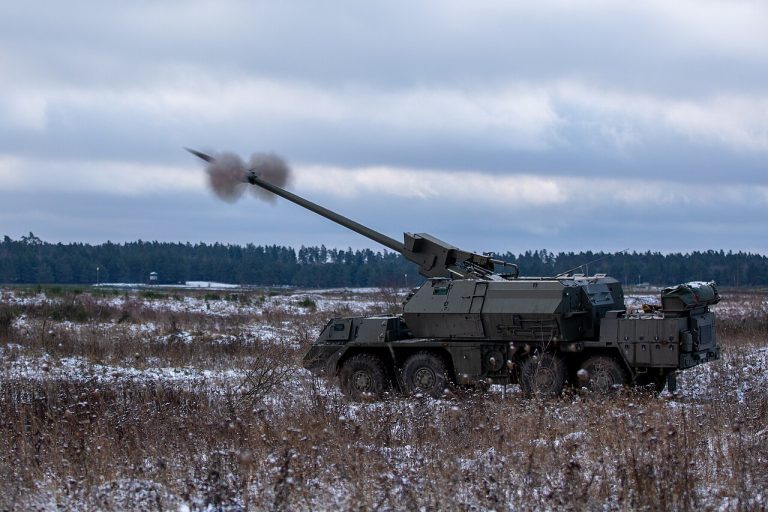
| Archer | Wheeled self-propelled howitzer | 155mm | Up to about 50 km | 14 in service since 2023; interim |
| RCH 155 | Wheeled self-propelled howitzer on Boxer | 155mm | Up to 70 km | 72 ordered; deliveries from 2028 |
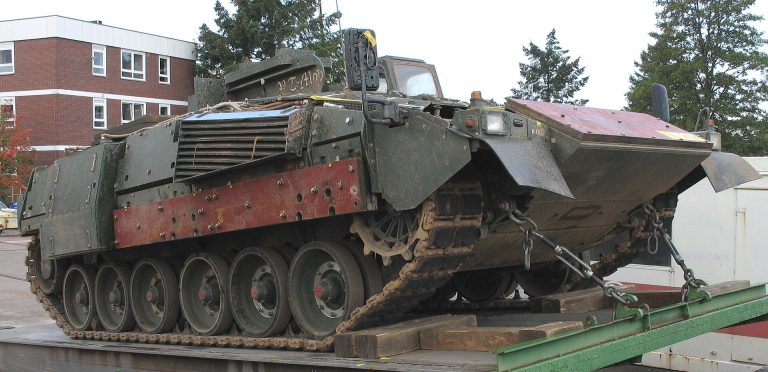
| AS90 | Tracked self-propelled howitzer | 155mm | About 25-30 km | About 30 given to Ukraine; being phased out |
| M270 MLRS (B1/A2) | Tracked rocket launcher | 227mm rockets | 80 km; 150 km with ER GMLRS | 44 B1 in service; 61 being upgraded to A2 |
| L118 Light Gun | Towed howitzer | 105mm | About 17 km | Airborne and commando artillery |
From AS90 to Archer
For three decades the AS90 tracked howitzer was the Army’s main gun. In 2023 Britain sent around 30 AS90s, a large share of the fleet, to Ukraine, where they have been in action ever since. To keep its gunners firing, the Army bought 14 Archer howitzers from Sweden’s own stock. Archer is a 155mm gun mounted on a six-wheel truck. It can fire several rounds in under a minute and drive away before the enemy can reply, a tactic Ukraine has shown to be essential. Our profile of the Archer artillery system covers its specifications and other operators.
RCH 155: the new main gun
The long-term answer is RCH 155, a remote-controlled 155mm howitzer built by KNDS and Rheinmetall and mounted on the same Boxer vehicle the Army uses for its infantry. Britain is buying 72 in a contract worth close to £1 billion, placed through the European procurement agency OCCAR alongside the German army. The gun turret is operated from inside the armoured cab, needs a crew of only two and fires up to eight rounds a minute at targets as far as 70 kilometres away. It is also designed to fire on the move. The barrels and breeches will be made by Rheinmetall at Telford using British steel. First deliveries are due in 2028.
M270: the long-range rocket launcher
The M270 multiple launch rocket system is the Army’s longest-range weapon. It fires GMLRS guided rockets and, in the upgraded A2 version, extended-range rockets that reach 150 kilometres, almost twice the earlier limit. Britain has 44 M270B1 launchers in service and is upgrading 61 to the A2 standard in four tranches, partly using second-hand launchers bought from allies and museums. The first two were delivered in early 2026 and the last are due in 2029. The A2 can also fire the Precision Strike Missile, which reaches about 500 kilometres. More detail is in our guides to the M270 MLRS and GMLRS rockets, and Britain’s other long-range weapons are in our guide to British missiles.
How does it compare?
The British Army’s artillery is small. The United States fields hundreds of HIMARS and M270 launchers and more than a thousand howitzers, as our guide to American artillery shows. Britain’s choice is to buy fewer, longer-range and highly mobile systems, and to combine them with drones that find targets. The guns support the armoured brigades described in our guide to British tanks.
Frequently asked questions
What artillery does the British Army use?
The Archer wheeled howitzer, the M270 rocket launcher and the L118 light gun. The RCH 155 howitzer will become the main gun from 2028.
How many howitzers does the British Army have?
It has 14 Archer howitzers, bought as a stopgap in 2023, and has ordered 72 RCH 155s. The Ministry of Defence counted 219 artillery vehicles of all types in April 2026.
What is RCH 155?
A remote-controlled 155mm howitzer mounted on the Boxer vehicle, built by KNDS and Rheinmetall. It has a crew of two and a range of up to 70 km.
What happened to the AS90?
Britain sent around 30 AS90 howitzers to Ukraine in 2023 and is replacing them with Archer and RCH 155.
How far can the British M270 fire?
The upgraded M270A2 can fire extended-range GMLRS rockets to 150 km and is compatible with the Precision Strike Missile, which reaches about 500 km.
Does the UK have HIMARS?
No. The British Army uses the tracked M270 instead, which fires the same rockets.
- Breaking Defense – The UK sets up $1.35 billion RCH 155 artillery order (May 2026): breakingdefense.com
- The Defense Post – UK receives first upgraded M270 launchers (March 2026): thedefensepost.com
- UK Ministry of Defence – UK armed forces equipment and formations 2026: gov.uk
- Defence Online – British Army to receive 72 remote-controlled howitzers (May 2026): defenceonline.co.uk