How Many Tanks Does the UK Have? Challenger 2 and Challenger 3
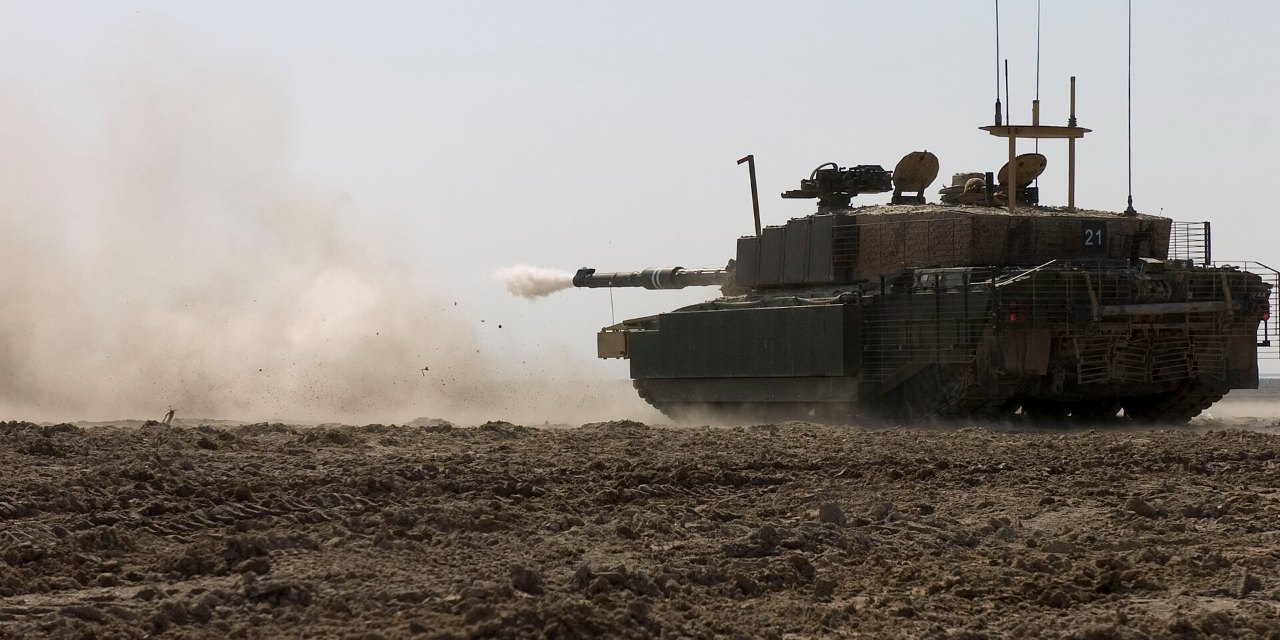
The British Army holds 285 Challenger 2 tanks, according to the Ministry of Defence’s count for April 2026. Fewer than half of them are in front-line regiments; the rest are in training, in storage or awaiting parts. The army has chosen not to buy a new tank. Instead it is rebuilding 148 Challenger 2s as the Challenger 3, with a new turret, a new gun and active protection, for delivery from 2027.
This guide counts the fleet, explains what changes with Challenger 3 and looks at how a country that once had more than 1,000 tanks came to have so few.
How many tanks does the UK have?
The Ministry of Defence’s annual statistics count every tank it owns, including those that cannot be driven. On 1 April 2026 that was 285 Challenger 2s. The usable figure is far lower: each of the armoured regiments has 56 tanks, and the number available to fight at short notice is usually put at a little over 150.
| Tank | Number | Gun | Status |
|---|---|---|---|
| Challenger 2 | 285 held | 120 mm rifled | In service since 1998; being withdrawn |
| Challenger 3 | 148 on order | 120 mm smoothbore | Rebuilt Challenger 2 hulls; deliveries from 2027 |
| Challenger 2 given to Ukraine | 14 | 120 mm rifled | Delivered in 2023 |
Britain does not have a separate light or medium tank. The tracked reconnaissance vehicle Ajax and the Boxer carrier, which will fight alongside Challenger 3, are covered later in this series.
Challenger 2: the current tank
Challenger 2 was developed by Vickers in the late 1980s and entered service in 1998. It weighs about 62 tonnes before extra armour is fitted, has a crew of four and is protected by Dorchester composite armour, the British development of Chobham. Its main gun is a rifled 120 mm weapon, unusual in NATO, which means it cannot fire the standard ammunition used by the Leopard 2 and the M1 Abrams. Ammunition production for it has effectively ended.
Its record in battle has been good. It fought in Iraq in 2003, where the only Challenger 2 destroyed was hit by another British tank. In 2023 Britain gave 14 to Ukraine, and one was lost to a mine and artillery near Robotyne that September, the first known loss to enemy action. A comparison with the American tank is in our guide to US tanks.
Challenger 3: what changes
Challenger 3 keeps the Challenger 2 hull and replaces almost everything above it. The contract, worth £800 million, went in May 2021 to RBSL, a joint company of Rheinmetall and BAE Systems based at Telford in Shropshire.
| Item | Challenger 2 | Challenger 3 |
|---|---|---|
| Gun | 120 mm L30A1 rifled | 120 mm L55A1 smoothbore |
| Ammunition | British only | NATO standard, including new German rounds |
| Turret | Original Vickers design | New turret built by Pearson Engineering |
| Active protection | None | Trophy, which can also engage drones |
| Armour | Dorchester | New modular armour package |
| Sights | Day and thermal sights for gunner and commander | New digital sights for both |
| Service | 1998 to late 2020s | 2027 to at least 2040 |
The most important change is the gun. The L55A1 is the long smoothbore weapon of the latest Leopard 2s, so Challenger 3 can share ammunition with Germany and other allies. The Trophy system, made by Israel’s Rafael, uses radar to detect an incoming missile and fires a charge to destroy it, and has been modified to deal with drones attacking from above. Rheinmetall has opened a factory in Telford to make the barrels.
When will Challenger 3 arrive?
Eight prototypes were built by April 2024 and have been in trials since. A qualification review was planned for 2026, with the first production tanks delivered in 2027 and all 148 by 2030. They are planned to serve until at least 2040. Our dedicated profile of Challenger 3 follows the programme in detail.
Why does the UK have so few tanks?
At the end of the Cold War the British Army in Germany had more than 1,000 main battle tanks. The numbers fell with each defence review: 386 Challenger 2s were built for the army, and since 2010 the plan has been cut to 227 and then to the 148 now being upgraded. Each cut reflected the belief that Britain’s wars would be fought against insurgents, in places where tanks mattered less.
The war in Ukraine has challenged that belief, and the 2025 Strategic Defence Review called for a more lethal army. It did not add tanks. The army’s answer so far is that 148 modern tanks, linked to drones, artillery and long-range rockets, will do more than a larger fleet of older ones. Critics point out that tanks are lost in war, and that 148 leaves very little in reserve.
Frequently asked questions
How many tanks does the British Army have?
The Ministry of Defence held 285 Challenger 2 tanks on 1 April 2026. Only around half are in front-line use.
What is the British Army’s main battle tank?
The Challenger 2, which entered service in 1998. It is being replaced by the Challenger 3, an upgraded version.
How many Challenger 3 tanks will the UK have?
148, all rebuilt from Challenger 2 hulls. Deliveries are due between 2027 and 2030.
What gun does Challenger 3 have?
A 120 mm L55A1 smoothbore gun, the same type as the latest Leopard 2, which can fire standard NATO ammunition.
Did the UK send tanks to Ukraine?
Yes. Britain sent 14 Challenger 2 tanks in 2023, the first Western main battle tanks pledged to Ukraine.
Who makes the Challenger 3?
RBSL, a joint company of Rheinmetall and BAE Systems, at its factory in Telford.
- UK Ministry of Defence – UK armed forces equipment and formations 2026: gov.uk
- Calibre Defence – Challenger 3: the heart of the Army’s warfighting capability (November 2025): calibredefence.co.uk
- UK Defence Journal – Britain’s most lethal tank rolls off the production line (April 2024): ukdefencejournal.org.uk
- Army Technology – Don’t get your hopes up: the British Army doesn’t have 288 tanks: army-technology.com