What Fighter Jets Does the UK Have? Typhoon, F-35B and Tempest
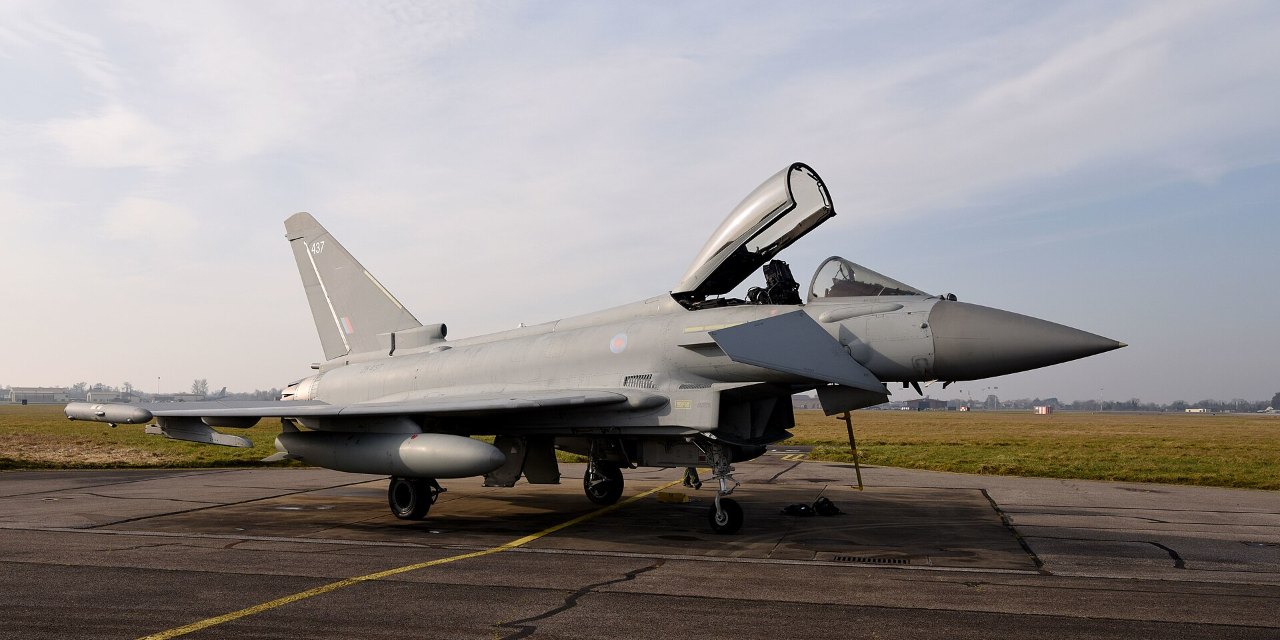
Britain flies two types of combat aircraft. The Eurofighter Typhoon, of which 107 are in the front-line fleet, defends British airspace and does most of the bombing. The F-35B Lightning, of which there are 47, is a stealth aircraft that can take off from the Royal Navy’s two carriers. That is about 150 jets, the smallest fast-jet force Britain has had in modern times. A third type, the Tempest, is being built with Italy and Japan for 2035.
This guide counts the aircraft, explains what each is for and sets out what has been ordered.
What fighter jets does the UK have?
The Ministry of Defence publishes its aircraft numbers once a year. The figures below are from the edition dated 1 April 2026 and from the Defence Investment Plan published on 30 June.
| Aircraft | Role | Number | Main bases | Notes |
|---|---|---|---|---|
| Typhoon FGR4 | Air defence and strike | 107 front-line; 124 held | Coningsby, Lossiemouth | Four older aircraft defend the Falklands |
| F-35B Lightning | Stealth strike, carrier-capable | 47 | Marham | Flown jointly by the RAF and Royal Navy |
| F-35B, second batch | Stealth strike | 15 on order | Marham | Part of an order for 27 |
| F-35A | Stealth strike, nuclear-capable | 12 on order | Marham | Due by 2030 |
| Tempest | Sixth-generation fighter | In development | Warton | Demonstrator to fly by end of 2027 |
| Hawk T2 | Advanced trainer | 28 | Valley | Not a combat aircraft |
Typhoon: the backbone
The Typhoon is a twin-engine fighter built by Britain, Germany, Italy and Spain, with final assembly of British aircraft by BAE Systems at Warton in Lancashire. It flies at twice the speed of sound and was designed in the 1980s to fight Soviet aircraft over Germany. The RAF has since turned it into a bomber as well. It carries the Meteor and ASRAAM air-to-air missiles, the Storm Shadow cruise missile, Brimstone and the Paveway IV guided bomb, all described in our guide to British missiles.
Seven front-line squadrons fly it from Coningsby in Lincolnshire and Lossiemouth in Scotland. Two aircraft at each base stand armed and fuelled around the clock to intercept unidentified aircraft, most often Russian bombers approaching from the north. Typhoons have bombed Islamic State in Iraq and Syria since 2015, struck Houthi targets in Yemen in 2024 and shot down Iranian drones heading for Israel in April of that year. A comparison with its French rival is in our article on the Rafale and the Typhoon.
How is the Typhoon being upgraded?
Britain retired its 26 oldest Typhoons, known as Tranche 1, by 2025, keeping four in the Falkland Islands. The remaining 107 are Tranche 2 and Tranche 3 aircraft. The Defence Investment Plan sets aside £5.4 billion over four years to maintain and upgrade all of them, where an earlier plan covered only 40.
The main change is the radar. The ECRS Mk2 replaces a dish that swings mechanically with an electronically scanned array that can track targets and jam enemy radars at the same time. A £453.5 million contract signed in January 2026 will deliver 40 of them by the end of the decade. The upgrade also brings new defensive equipment, a new helmet sight and new computers. Britain has ordered no new Typhoons, unlike Germany, Italy and Spain. Turkey’s order for 20, placed in 2025, will keep the Warton line open until Tempest work begins; it is covered in our guide to Turkey’s fighter jets.
F-35B Lightning: the stealth jet
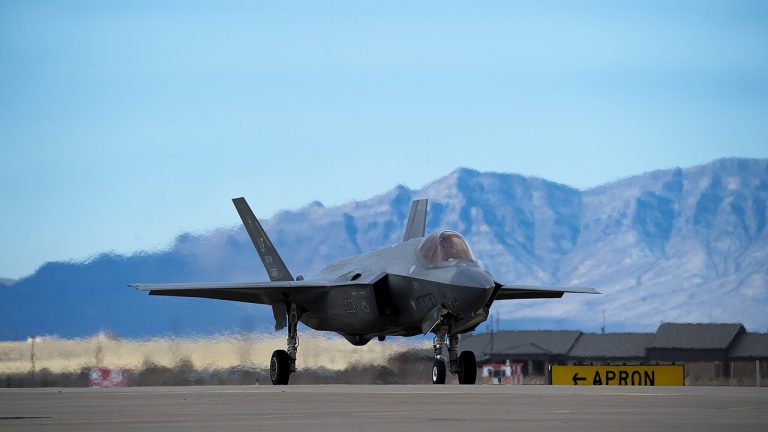
The F-35B is the version of the American stealth fighter that takes off in a short distance and lands vertically. Britain chose it because its carriers have a ski-jump and no catapults. The last aircraft of the first order of 48 was delivered in March 2026, and one was lost in an accident in 2021. They are based at Marham in Norfolk and flown by mixed RAF and Royal Navy squadrons. In 2025 a force of up to 24 British F-35Bs sailed to the Pacific and back aboard HMS Prince of Wales.
Britain is the only top-tier partner in the F-35 programme, and about 15% of every aircraft is made in the country, a subject covered in our guide to the F-35. Officially it still intends to buy 138 over the life of the programme. What is funded is a second batch of 27, to bring the fleet to 74 by 2033.
F-35A: the return of the air-dropped bomb
In June 2025 the government said that 12 of the next 27 aircraft would be F-35As, the conventional version used by the US Air Force. The reason is nuclear. The F-35A is certified to carry the American B61-12 bomb and the F-35B is not. With these aircraft the RAF will rejoin NATO’s nuclear mission, which it left when its own WE.177 bombs were retired in 1998. The bombs will remain American property under American control, as they are in Germany, Italy, Belgium and the Netherlands. The aircraft are due at Marham by 2030.
Tempest: what comes next
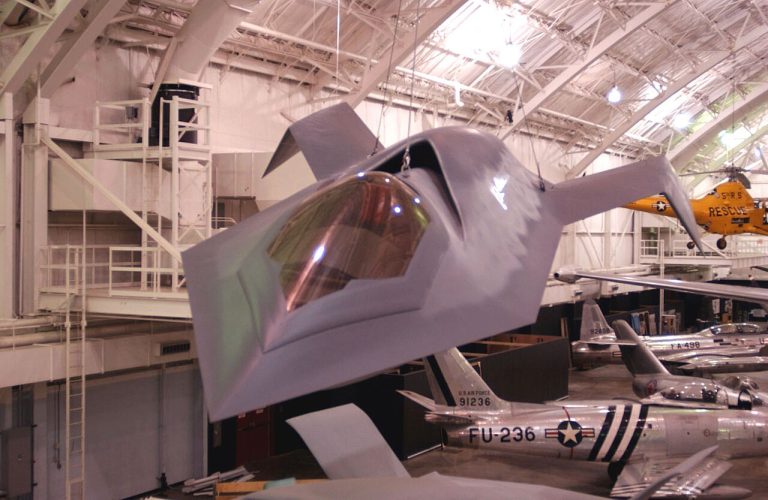
The Typhoon’s successor is being developed under the Global Combat Air Programme with Italy and Japan. The aircraft, called Tempest in Britain, is a large stealth fighter intended to fly with unmanned companions. A demonstrator is being built at Warton and is due to fly by the end of 2027. The Defence Investment Plan commits £8.6 billion to the programme over four years, and on 1 July 2026 the three governments signed a £4.6 billion development contract with Edgewing, the joint company owned by BAE Systems, Leonardo and Japanese industry. The target for service is 2035. Its American counterpart is discussed in our comparison of the F-47 and Tempest.
Is the force big enough?
By its own history, no. The RAF had more than 800 combat aircraft at the end of the Cold War and has about 150 now. Each of today’s aircraft does far more than its predecessors, but an aircraft cannot be in two places, and the force has to cover home defence, NATO’s eastern flank, the Falklands, the Middle East and the carriers at once. The American fleet, by comparison, is described in our guide to US fighter jets. The 2025 defence review accepted the problem, and the government’s answer so far is more F-35s after 2030 and cheap unmanned aircraft to fly beside the crewed ones, for which £300 million has been set aside.
Frequently asked questions
How many fighter jets does the UK have?
About 150 in front-line use: 107 Typhoons and 47 F-35Bs. The Ministry of Defence held 124 Typhoons in total on 1 April 2026.
How many F-35s does the UK have?
47 F-35Bs. Another 27 are on order, 15 F-35Bs and 12 F-35As, to bring the fleet to 74 by 2033.
Does the UK still fly the Tornado or Harrier?
No. The Harrier was retired in 2010 and the Tornado in 2019.
What is the UK’s main fighter jet?
The Eurofighter Typhoon. It handles air defence of the United Kingdom and most strike missions.
Why is the UK buying the F-35A?
Because it can carry the American B61-12 nuclear bomb. Twelve are on order so that the RAF can take part in NATO’s nuclear mission.
When will Tempest enter service?
The target is 2035. A demonstrator aircraft is due to fly by the end of 2027.
- UK Ministry of Defence – UK armed forces equipment and formations 2026: gov.uk
- MercoPress – RAF will upgrade 107 Typhoons; four Tranche 1 remain in the Falklands (July 2026): en.mercopress.com
- Calibre Defence – GCAP takes £8.6 billion in the Defence Investment Plan (July 2026): calibredefence.co.uk
- Wikipedia – Future of the Royal Air Force: en.wikipedia.org
- Defence Industry Europe – UK armed forces hold 47 F-35Bs (August 2026): defence-industry.eu