Stark and MBDA Pair Sea Venom Missiles With Vanta-12 Uncrewed Boat
Stark and MBDA are pairing the missile maker’s Sea Venom anti-ship weapon with Stark’s new Vanta-12 uncrewed surface vessel, a combination aimed at NATO navies that want armed autonomous boats. The companies revealed the concept on September 28 at REPMUS 2026, the Portuguese Navy and NATO experimentation exercise held around the Tróia peninsula, according to Naval News.
The Vanta-12 is a 12-meter, AI-enabled vessel for patrol, sensing, targeting and strike. Stark says the design is built for fast production and easy capability upgrades. It sits above the smaller Vanta-4 and Vanta-6 in the company’s modular boat family.
Four Missiles and a Drone Magazine
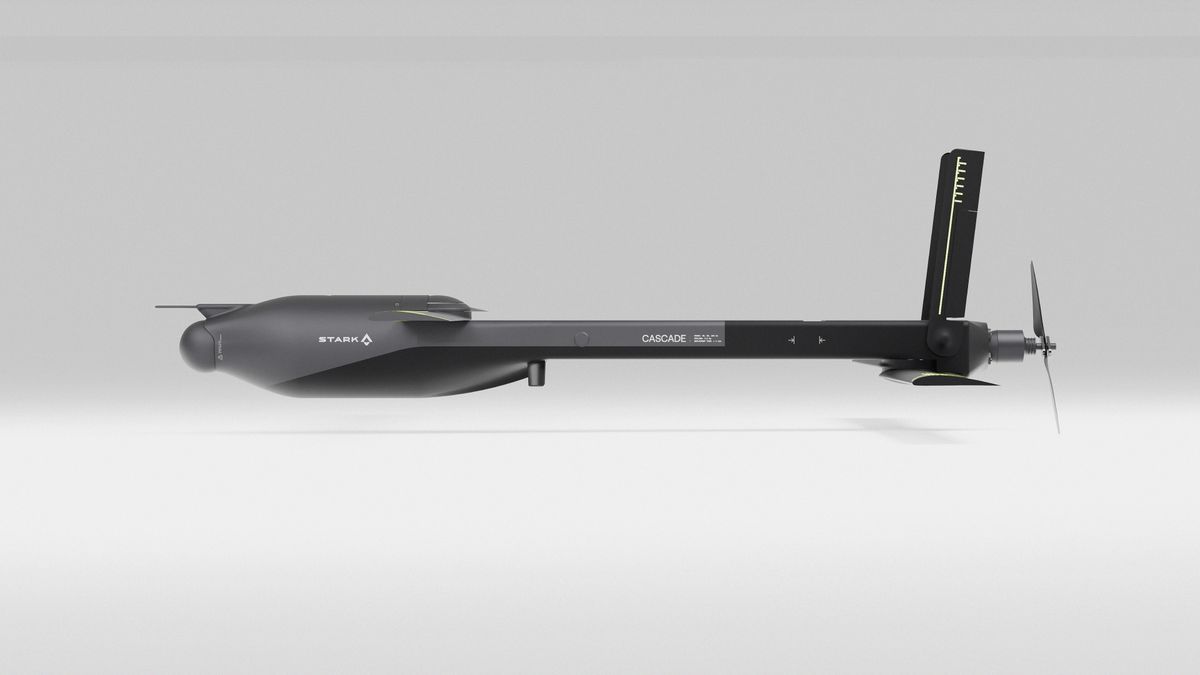
In the configuration shown, the boat carries four Sea Venom missiles in box launchers at the stern. A 10-cell launcher forward holds Stark’s Cascade loitering munitions, which the company describes as having a 5 kg warhead and a range of 100 km. Everything is tied together through Stark’s Minerva command-and-control software, which uses a modular, open architecture.
Sea Venom is a 2.5-meter, roughly 120 kg missile with a 30 kg semi-armor-piercing warhead and a range of up to 30 km. It has been in service on French Navy and Royal Navy helicopters, reaching initial operating capability in October 2025. MBDA is now adapting it from air launch to surface launch, a step that is central to the Stark partnership.
Stephen Brian, Stark’s maritime director, said MBDA joined because “the direction of travel is going to need to deliver the ability to launch missiles.” Andrew Blackburn, MBDA’s naval systems executive, said the aim is “a ‘system-of-systems’ solution that can plug into a digital targeting web.”
From Concept to Sea Trials in Under a Year
Stark says the Vanta-12 was conceived in October 2025. The first vessel was built and launched by mid-2026 and has since begun sea trials. That pace is unusual for a naval vessel, though the boat is small and the company has not said how many trial hours it has logged.
Performance figures come from Stark. It claims a range of 1,200 nautical miles at patrol speed, a sprint speed above 40 knots and endurance of weeks at sea. The boat is said to operate effectively in Sea State 4 and to stay on station in Sea State 6. No independent testing data has been published, and neither company gave a price.
Stark UK managing director Mike Armstrong said “industrial deterrence is what modern warfare increasingly demands.” Naval News reported that Stark is building production lines in the UK and has partnering agreements with Danish and German shipyards. Germany has already bought the smaller Vanta-6.
A Berlin Startup Moves Into Naval Strike
Stark was founded in 2024 and is headquartered in Berlin, with a UK operation. It first became known for the Virtus loitering munition and the Minerva mission-control software, and the Vanta boats extend that software-first approach to the sea.
Naval News noted that Denmark, Germany, the Netherlands, Norway and the UK are at different stages of building mixed crewed and uncrewed forces, and those are the navies Stark is pointing to. Stark plans to show the boat at Nordic exercises in late 2026 and 2027.
The reveal came at an exercise where other firms were also testing networked naval concepts. Indra, for one, tested its Nimbus combat cloud at sea during REPMUS 2026. Across the Atlantic, the US Navy has ordered 30 medium unmanned surface vessels from three builders, a sign of how quickly armed unmanned boats are moving from demonstrations to procurement.