The Secret X-Planes Behind the F-47: What We Know
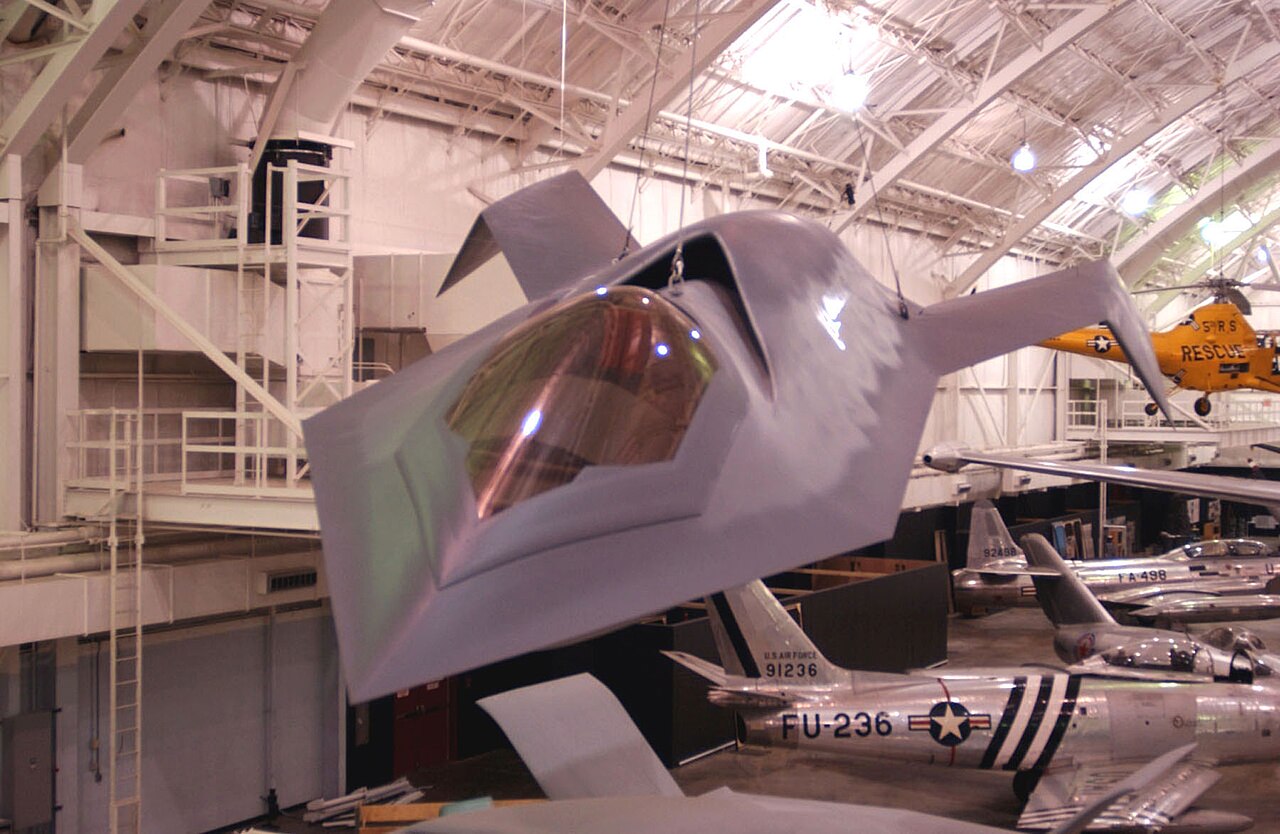
Before there was an F-47, there were two secret aircraft: one built by Boeing, one by Lockheed Martin, both flown for years without any public acknowledgement. Their existence was confirmed on 21 March 2025, the day the F-47 contract was announced. DARPA said the two demonstrators first flew in 2019 and 2022 and that each logged several hundred flight hours.
That is nearly all that is officially known. No photograph, designation or performance figure has been released. This article sets out the confirmed facts, the limits of what they tell us, and why the demonstrators matter for the F-47’s schedule.
What has been confirmed
The demonstrators came out of a DARPA study in 2014, the Air Dominance Initiative, and the programme that followed it in 2015, the Aerospace Innovation Initiative. DARPA ran the work with the Air Force. Our NGAD timeline gives the full sequence.
On the day of the award, DARPA’s acting director, Rob McHenry, described a “10-year DARPA research arc that has culminated in the F-47 program”. The agency said Boeing and Lockheed Martin had each designed and built one X-plane.
Gen. David Allvin, then Air Force chief of staff, added the operational summary: “For the past five years, the X-planes for this aircraft have been quietly laying the foundation for the F-47 — flying hundreds of hours, testing cutting-edge concepts, and proving that we can push the envelope of technology with confidence.”
The public had one earlier hint. In September 2020 the Air Force’s acquisition chief, Will Roper, said a full-scale flight demonstrator had already flown. He gave no other detail, and nothing more was said for more than four years.
What the X-planes were for
An X-plane is an experiment. It exists to answer questions about a technology, and it is not an early copy of a production aircraft. Frank Kendall, who started the effort and later became Air Force secretary, has described the NGAD demonstrators as purely experimental aircraft that were not production prototypes.
The purpose was to reduce risk. Flying the hardest technologies early shows whether they work before billions are committed to a production design. The Air Force has not said which technologies were tested. Tailless flight control, new stealth shaping and materials, and engine integration are reasonable guesses, and they are only guesses.
Boeing has pointed to the benefit. Its defence chief, Steve Parker, has spoken of “the maturity of our design and pedigree coming off the prototype” as a reason the company can move quickly.
What is still secret
The list of unknowns is long. It includes the aircraft’s appearance and size, their designations, where they were based and flown, what engines they used, and which company’s aircraft flew first. The Air Force declined to give designations, citing classification.
It is also unknown how closely the Boeing demonstrator resembles the F-47. The official renderings of the F-47 deliberately hide much of the aircraft, and the Air Force has indicated that the images were altered to protect details. We discuss what they show in our overview of what the F-47 is.
Whether the demonstrators still fly, are in storage, or have been retired has not been disclosed. Nor has the Air Force said whether Northrop Grumman, which left the competition in 2023, built a demonstrator of its own.
Boeing’s record with secret demonstrators
Secret demonstrators are a familiar path for the St. Louis design teams Boeing inherited from McDonnell Douglas. The Bird of Prey, a company-funded stealth testbed, flew 38 times between 1996 and 1999 and was only revealed in 2002. It cost about $67 million and tested shaping and rapid-prototyping methods.
The X-36, a subscale research aircraft with no tail surfaces, made 31 flights with NASA in 1997 to explore tailless fighter agility. The X-32 lost the Joint Strike Fighter contest to Lockheed Martin in 2001, and the X-45A flew in 2002 as an early uncrewed combat aircraft.
None of these became a production fighter. Taken together, though, they show three decades of work on the same problems the F-47 has to solve, which is part of the background to why Boeing won.
Why the demonstrators matter for the schedule
The Air Force wants the F-47 to fly in 2028, about three years after the development contract. That is quick by the standard of recent American fighters.
| Aircraft | Development contract | First flight | Gap |
|---|---|---|---|
| F-22 | August 1991 | September 1997 | About 6 years |
| F-35 | October 2001 | December 2006 | About 5 years |
| F-47 | March 2025 | 2028 (target) | About 3 years |
Officials credit the X-planes for the difference. The argument is that the most difficult questions were answered in flight before the contract, so the development phase starts further along. The first F-47 has been in build since 2025.
There is a caution. The F-22 and F-35 also followed flying prototypes, the YF-22 and X-35, and both still ran late. A demonstrator proves that an aircraft can fly. It does not prove that the software, sensors and engine of the final design will be ready on time. Our article on when the F-47 will fly looks at that risk.
Frequently asked questions
Did the F-47 have a prototype?
Not in the usual sense. Boeing and Lockheed Martin each flew an experimental X-plane before the contract, but officials describe these as demonstrators, not production prototypes.
When did the NGAD X-planes fly?
DARPA says one first flew in 2019 and the other in 2022.
How many hours did they fly?
Several hundred hours each, according to DARPA.
Are there photos of the X-planes?
No. No image has been officially released.
Who built them?
Boeing and Lockheed Martin built one each, under a DARPA and Air Force programme that began in 2015.
Is the F-47 the same as Boeing’s X-plane?
That has not been disclosed. The F-47 draws on what the demonstrator proved, but the Air Force has not said how similar the two aircraft are.
- The War Zone – F-47 Was Born Out Of Secret X-Planes Built By Both Boeing And Lockheed: twz.com
- The War Zone – F-47 Program’s Accelerated Pace Made Possible By NGAD X-Plane Efforts: twz.com
- The Aviationist – NGAD’s Images Might Not Show Any Real Feature of the F-47: theaviationist.com
- Air & Space Forces Magazine – Air Force Picked Boeing for NGAD Based on ‘Best Overall Value’: airandspaceforces.com
- The War Zone – First F-47 6th Generation Fighter Now Being Built: twz.com