Somalia Nears JF-17 Thunder Deal With Pakistan, Still Unconfirmed
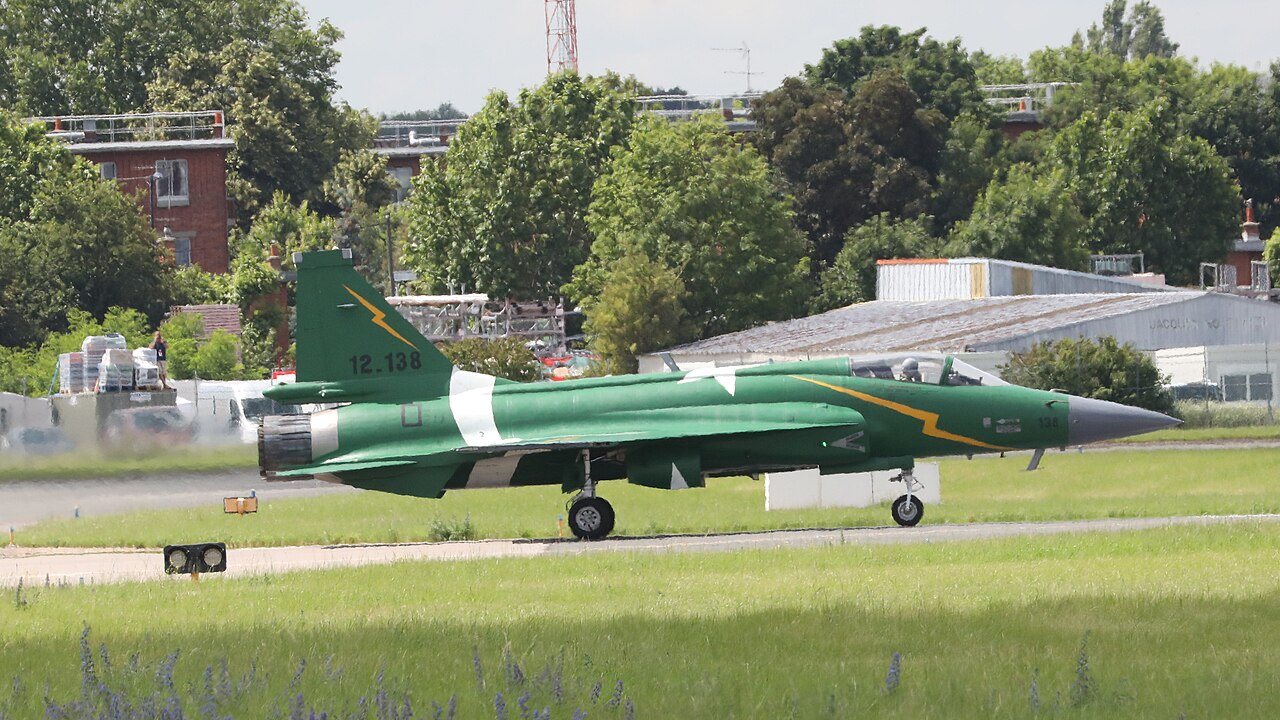
Somalia has reportedly agreed in principle to acquire JF-17 Thunder fighter jets from Pakistan, according to Turkish outlet TRHaber and a cluster of Somali media that followed its report on October 12. Neither Mogadishu nor Islamabad has confirmed a signed contract, and no government has released figures on aircraft numbers, price or delivery dates. If finalized, the deal would give Somalia’s air force its first fixed-wing fighter capability in decades, and it would hand Pakistan’s co-produced fighter its first customer in continental East Africa.
What Happened
TRHaber’s report, picked up by Hiiraan Online, Garowe Online and Dawan Africa, says Somalia and Pakistan have progressed talks on a JF-17 purchase but stopped short of a final agreement. Earlier reporting from February and April 2026 had already floated a package of up to 24 JF-17 Block III aircraft valued at roughly $900 million, including training, weapons integration and long-term maintenance support — but those figures trace back to unnamed sources and have never been confirmed by either side.
The talks follow a visible build-up in Pakistan-Somalia military diplomacy. In August 2026, Somali Defence Minister Ahmed Moallim Fiqi traveled to Islamabad and signed a defense and security cooperation memorandum with Pakistani counterpart Khawaja Muhammad Asif, covering counterterrorism, training and capacity building. The following month, a Pakistani Air Force delegation led by Air Marshal Muhammad Sarfraz visited Mogadishu for talks that Somali media described as covering air defense cooperation and the rebuilding of Somalia’s air capabilities. Sarfraz met President Hassan Sheikh Mohamud, Prime Minister Hamza Abdi Barre and Fiqi, and presented Somali Air Force commander Brig. Gen. Abdirisaaq Mahmoud Haji with a JF-17 model — a symbolic gesture, not a contract signing.
The Product: JF-17 Thunder
The JF-17 Thunder is a single-engine, fourth-generation multirole fighter co-developed by China’s Chengdu Aircraft Corporation and Pakistan’s Pakistan Aeronautical Complex, with assembly lines in both countries. It is powered by a Russian-origin Klimov RD-93 turbofan, reaches roughly Mach 1.6, and carries a 23mm cannon alongside air-to-air and air-to-surface missiles and guided and unguided bombs. The current production standard, Block III, adds the Chinese-made KLJ-7A active electronically scanned array radar and an expanded weapons envelope, putting it closer to a budget alternative to Western fourth-generation fighters than earlier Block I and II variants.
Pakistan markets the JF-17 specifically as a low-cost option for air forces that cannot afford Western or Russian fighters and the political strings frequently attached to them. Unit costs are commonly cited in the $25-40 million range, well below comparable Western aircraft.
Who Uses It
Pakistan’s air force is the primary operator. Export customers, by confidence level:
- Confirmed and delivered: Myanmar (the first export customer) and Nigeria, which operates three Block I/II aircraft from NAF Base Makurdi.
- Confirmed, in delivery: Azerbaijan, which has taken delivery of an initial batch of Block III jets under a deal that grew from an original order of roughly 16-40 aircraft within an agreement reported at $4.6 billion — Baku is now described by some industry trackers as the type’s largest export customer.
- Reported, unconfirmed: Somalia. No contract has been announced, and the Somali Air Force currently fields no fixed-wing combat jets at all — its inventory is built around Bell 412 and TAI T129 ATAK helicopters and Bayraktar TB2 and Akıncı drones, most supplied by Turkey and Italy.
Export and Procurement History
Somalia’s rapprochement with Pakistan has followed a clear sequence rather than emerging from nowhere: a five-year defense cooperation framework approved by Mogadishu in 2025, a formal bilateral memorandum signed in Islamabad in August 2026, and an air force-to-air force visit in September 2026 that both sides characterized as focused on training and air defense rather than a specific acquisition. The JF-17 figures now circulating — 24 aircraft, about $900 million — first surfaced in Pakistani and Somali media in early 2026 and have been repeated, largely unchanged and unconfirmed, through the TRHaber report in October. That repetition without new sourcing is itself worth noting: it suggests a plan under discussion rather than a deal moving toward signature.
India’s foreign ministry has said it is “closely” monitoring the Pakistan-Somalia defense relationship, a sign the talks are being read in New Delhi as part of Islamabad’s broader push for defense-export footholds in the Indian Ocean littoral and Horn of Africa.
Global Competitors
Any Somali fighter purchase would arrive into an already crowded field of outside military patrons. Turkey operates Camp TURKSOM, its largest overseas base, in Mogadishu, and has supplied the bulk of Somalia’s current air assets, including TB2 and Akıncı drones and T129 attack helicopters, largely financed as grants or concessional arrangements. The United States remains Somalia’s most active military partner by sortie count, running a sustained campaign of airstrikes against al-Shabaab through AFRICOM. A Pakistani fighter sale would not displace either relationship, but it would add a third, more transactional military supplier to a security landscape in which Gulf states, Turkey, the US, and now potentially Pakistan and China (indirectly, through the JF-17’s Chinese-built radar and airframe components) all have a stake.
Why It Matters
Somalia’s federal government has no fixed-wing strike aircraft of its own despite more than fifteen years of continuous counterinsurgency against al-Shabaab, which still controls significant rural territory in central and southern Somalia. A JF-17 purchase, even a modest one, would mark a genuine capability shift rather than a symbolic gesture — assuming Mogadishu can fund it, staff it with trained pilots and maintainers, and sustain it, which are the three points on which similarly announced African fighter deals have most often stalled. For Pakistan, a confirmed Somali order would be a foothold export into a region where Islamabad has limited defense-industrial presence, reinforcing a sales pitch built on cost and the absence of Western-style end-use conditions.
What Happens Next
Watch for an official statement from either government’s defense ministry, since both have so far let the reporting stand uncorrected without confirming it. A contract announcement, if one comes, would likely specify financing — Somalia’s defense budget is heavily donor-dependent, and a $900 million order would almost certainly require external financing or a barter/offset arrangement similar to those Pakistan has used with other buyers. Any delivery timeline would also need to address pilot and ground-crew training, which Pakistan has offered to other first-time JF-17 operators as part of the package.
FAQ
Has Somalia signed a contract to buy JF-17 jets?
No. As of mid-October 2026, the reporting comes from Turkish outlet TRHaber and Somali media citing unnamed sources. Neither Somalia’s nor Pakistan’s government has confirmed a signed agreement, aircraft count, price or delivery date.
How many JF-17 jets would Somalia reportedly buy?
Earlier 2026 reporting cited a figure of up to 24 JF-17 Block III aircraft in a package worth about $900 million, including training and weapons integration. These numbers are unconfirmed and have not changed since they first appeared.
Does Somalia currently have any fighter jets?
No. The Somali Air Force’s inventory consists of helicopters (Bell 412, TAI T129 ATAK) and drones (Bayraktar TB2, Akıncı), mostly supplied by Turkey and Italy. It has no fixed-wing combat jets in service.
Which other countries operate the JF-17 Thunder?
Pakistan is the primary operator. Confirmed export customers are Myanmar, Nigeria and Azerbaijan, with Azerbaijan taking delivery of the newer Block III variant.
Why would Pakistan want to sell fighter jets to Somalia?
A confirmed sale would give Pakistan’s JF-17 program its first customer in continental East Africa, expanding its export footprint in a market where it faces less competition from Western suppliers constrained by human-rights or end-use conditions.
Sources
- Rojoef Manuel, “Somalia Nears JF-17 Jet Purchase From Pakistan,” The Defense Post, October 12, 2026 — primary account of the TRHaber report and defense-talks context.
- Garowe Online, “Somalia Eyes Pakistan’s JF-17 Fighter Jets in Major Push to Rebuild and Modernise Its Air Force,” October 2026 — details on scope being unconfirmed.
- Horseed Media, “Somalia Reportedly Agrees to Acquire Pakistan’s JF-17 Fighter Jets,” October 2026 — background on the August memorandum and September air force delegation.
- Dawan Africa, “Somalia-Pakistan Sign Defence Cooperation Memorandum,” August 2026 — confirms the Islamabad signing between Fiqi and Asif.
- Army Recognition, “Somalia Seeks 24 JF-17 Block III Fighter Jets From Pakistan in $900 Million Deal,” 2026 — earliest circulation of the aircraft-count and price figures.
- Aviation Week / Aviacionline reporting on Azerbaijan’s JF-17 Block III deliveries and Nigeria’s JF-17 fleet at NAF Base Makurdi — used for export-customer comparison.