L3Harris Advances Morocco’s C-130H Fleet Modernization
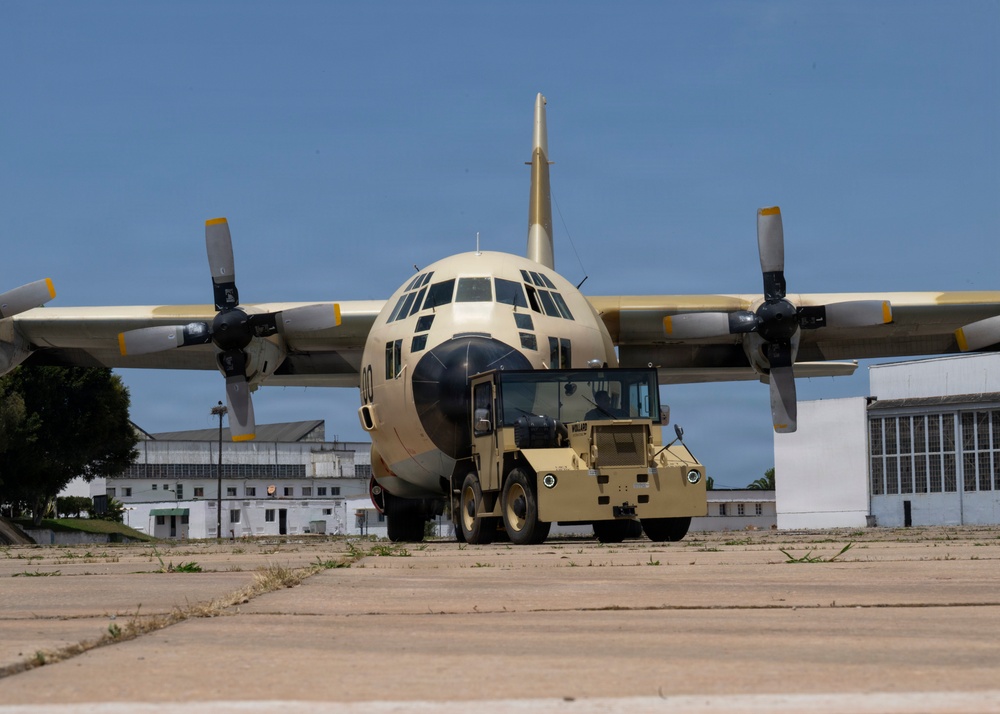
L3Harris Technologies has moved into the execution phase of a multi-year contract to modernize the Royal Moroccan Air Force’s C-130 Hercules fleet, completing inspections on the first aircraft and setting a fall 2026 induction date for a second airframe. The program, awarded in July 2025 and running through 2029, will re-engine, re-avionic and structurally overhaul a fleet of transport aircraft that has anchored Moroccan military airlift since the mid-1970s.
What Happened
L3Harris confirmed on August 28-29, 2026, that it had completed inspections on the first Royal Moroccan Air Force (RMAF) C-130H, which arrived at the company’s aircraft maintenance and modification facility in Waco, Texas, in November 2025. The aircraft is now undergoing depot-level maintenance, including installation of a new standby instrument system and an upgraded digital engine display, according to L3Harris and reporting by DefenceWeb on September 15, 2026.
A second RMAF C-130 is scheduled for induction into the program in the third quarter of 2026, with a third aircraft expected to follow later in the year. L3Harris said the third aircraft will receive a full avionics package, including a complete digital cockpit, while the scope for the first two centers on targeted instrument and engine-display upgrades alongside standard depot maintenance and engine overhaul.
The company has not disclosed the contract’s dollar value or the exact number of aircraft covered by the full program. L3Harris’ Integrated Mission Systems segment is executing the work under what Jason Lambert, the company’s president of Intelligence, Surveillance and Reconnaissance, called “the beginning of a strategic, long-term partnership with the Royal Moroccan Air Force to ensure their fleet is ready for any mission.”
The Product/System
The C-130H is the analog-cockpit generation of Lockheed Martin’s Hercules tactical airlifter, first delivered to Morocco in 1974 after an order for six aircraft placed in 1973. Morocco added two KC-130H tankers in 1982 to extend the range of its fighter-bomber fleet during the Western Sahara conflict, a mission set the type still performs today alongside troop and cargo transport, aeromedical evacuation and humanitarian relief.
L3Harris’ modernization package targets the aircraft’s most maintenance-intensive legacy systems. Program depot maintenance and engine overhaul address structural fatigue and powerplant wear that typically limit C-130H service life, while the avionics work — ranging from a new standby instrument and digital engine display on early aircraft to a full digital cockpit on later ones — is intended to reduce unscheduled maintenance and bring the fleet closer to the flight-deck standard of newer C-130J variants without the cost of new-build aircraft. L3Harris says the approach can extend service life by decades at a fraction of replacement cost, drawing on more than 40 years of company experience modifying C-130 airframes for military customers.
Who Uses It
According to fleet figures reported by DefenceWeb, the Royal Moroccan Air Force currently operates 12 C-130H transports and 2 KC-130H tankers, supplemented by 4 C-27J Spartans, 7 CN-235 medium transports and a small number of Do 28 light utility aircraft. The C-130H fleet is Morocco’s primary heavy tactical airlift asset, used in domestic operations, UN peacekeeping contributions and multinational exercises such as African Lion, the annual U.S. Africa Command-led exercise hosted partly in Morocco, where RMAF C-130Hs have flown alongside U.S. Air Force crews out of the 3rd Royal Moroccan Air Base in Kenitra.
Export/Procurement History
Morocco’s original C-130H order dates to 1973, making the fleet more than five decades old by the time the current modernization concludes in 2029. The July 2025 contract with L3Harris was first reported by outlets including The Defense Post, Morocco World News and Africa-focused defense press; it has not been the subject of a Pentagon Foreign Military Sale notification, indicating the deal was arranged as a direct commercial contract between Rabat and L3Harris rather than a government-to-government FMS case. Neither L3Harris nor Moroccan defense officials have disclosed the contract’s total value.
Global Competitors
C-130H modernization is a recurring line of business for several Western contractors beyond L3Harris, including Lockheed Martin itself, which offers structural and avionics upgrade packages, and various national depot programs that have refurbished legacy Hercules fleets for operators from Colombia to Indonesia. Morocco could in principle have opted to replace aging C-130Hs outright with new C-130Js or competing types such as the Airbus A400M or Embraer C-390 Millennium, both of which are in service or on order elsewhere in Africa and the Middle East. Choosing a service-life-extension contract instead reflects a common calculus for mid-sized air forces: modernization can cost a fraction of new-aircraft acquisition while still meaningfully cutting unscheduled maintenance.
Why It Matters
Morocco is one of Africa’s most active military modernizers and, per regional tracking, has recently overtaken Algeria as the continent’s leading arms importer, driven mainly by combat aircraft and air-defense purchases. Airlift is a less visible but operationally essential complement to that build-up: Morocco has deployed forces and equipment domestically, in UN missions and alongside partners in Sahel-adjacent security cooperation, all of which depend on reliable heavy transport. Extending the C-130H fleet’s service life through the L3Harris program lets Rabat sustain that airlift capacity without competing for scarce new-production C-130J slots, which currently carry multi-year backlogs across dozens of operators worldwide.
What Happens Next
L3Harris’ publicly disclosed schedule has the second RMAF C-130 entering the Waco facility in the third quarter of 2026 and a third aircraft — the first to receive the full digital-cockpit package — following later in the year. Neither L3Harris nor Moroccan authorities have specified how many of the fleet’s roughly 14 C-130H/KC-130H airframes will ultimately be modernized under the contract, which is scheduled to run through 2029.
FAQ
How many C-130 aircraft does Morocco operate?
Reported fleet figures put the Royal Moroccan Air Force at 12 C-130H transports and 2 KC-130H tankers, alongside smaller numbers of C-27J Spartan and CN-235 aircraft.
What company is upgrading Morocco’s C-130 fleet?
L3Harris Technologies, under a contract awarded in July 2025, is performing the work at its aircraft maintenance and modification facility in Waco, Texas.
What upgrades are included in the modernization program?
The program covers avionics modifications — including new standby instruments, digital engine displays and, for later aircraft, a full digital cockpit — plus program depot maintenance, engine overhaul and related logistics support.
How much is the contract worth?
L3Harris has not publicly disclosed the contract’s dollar value or the total number of aircraft it covers.
When will the program be completed?
L3Harris has stated the program runs through 2029, with the second aircraft scheduled for induction in the third quarter of 2026 and a third later in the year.
Sources
- DefenceWeb, “L3Harris making progress on Moroccan C-130 modernisation programme,” September 15, 2026 — fleet composition figures and program timeline. Link
- Morocco World News, “L3Harris Advances Royal Moroccan Air Force C-130 Modernization Program,” August 29, 2026 — first-aircraft inspection milestone and induction schedule. Link
- L3Harris Technologies, press release, July 2025 — original contract announcement, scope of work and executive quote. Link
- DVIDS / U.S. Air Force, Staff Sgt. Nash Truitt, “Fast, precise, ready: US, Moroccan airmen strengthen airlift capability,” May 2026 — background on RMAF C-130H operations during Exercise African Lion 26. Link