France Orders Two IRIS Military Satellites From Airbus and Thales Alenia Space in €1.5 Billion Deal
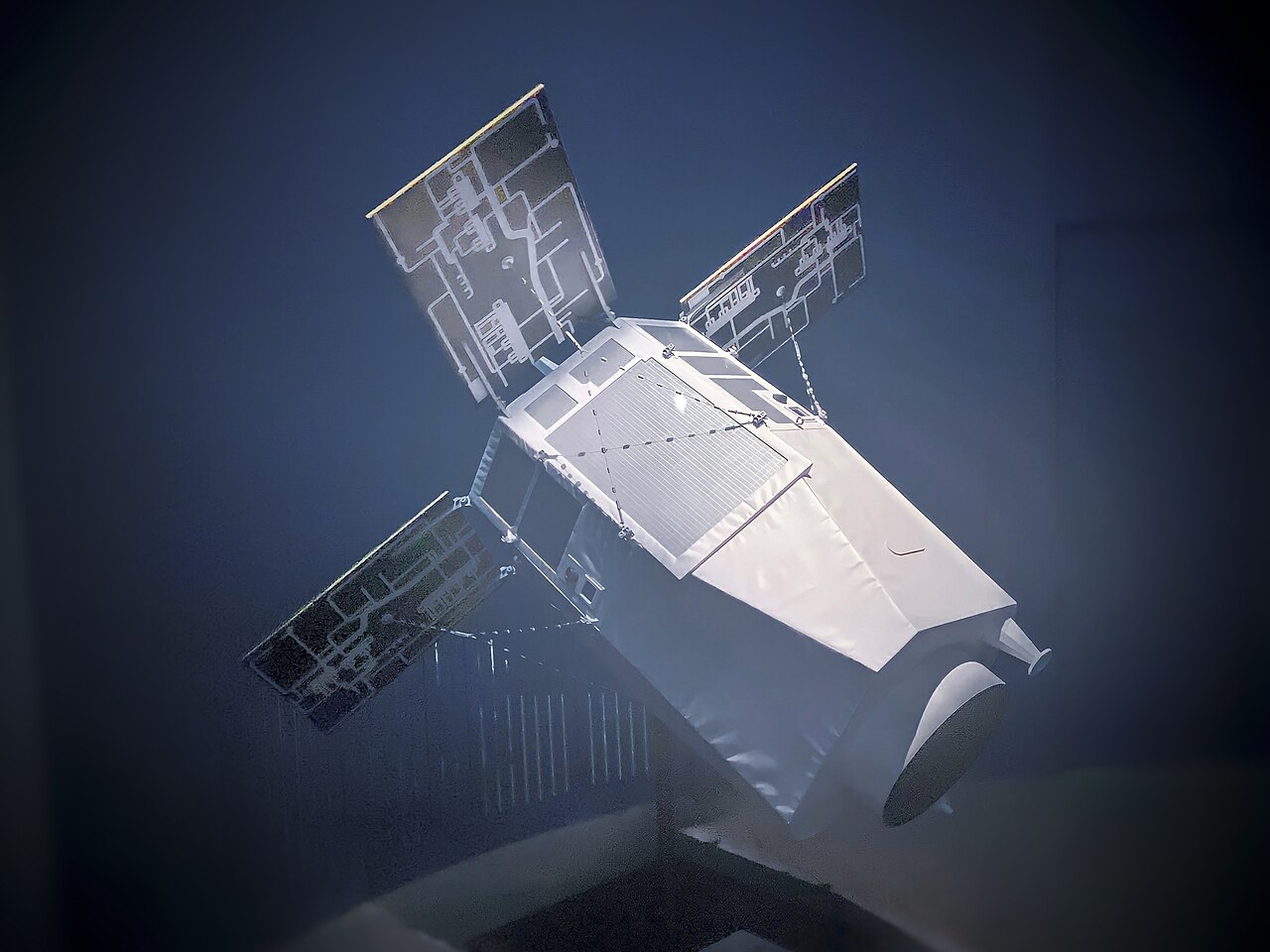
France has ordered two IRIS military Earth-observation satellites from Airbus Defence and Space and Thales Alenia Space in a contract worth more than €1.5 billion (about $1.7 billion). The French defence procurement agency, the Direction générale de l’armement (DGA), notified the contract on November 5 and announced it on November 9, 2026.
IRIS, short for Instruments de renseignement et d’imagerie spatiale, will replace the three satellites of France’s Composante spatiale optique (CSO). Airbus Defence and Space leads the industrial team, with Thales Alenia Space as co-contractor, and the system will be operated by the Space Command of the French Air and Space Force.
France Orders Two IRIS Military Observation Satellites
The order moves IRIS into its realisation phase, the DGA said. It covers both satellites together with the user, control and image-quality ground segments. Airbus said the work also covers design, manufacture, testing and in-orbit support until the end of the 2030s.
| Item | Detail |
|---|---|
| Customer | Direction générale de l’armement (DGA), France |
| Lead contractor | Airbus Defence and Space |
| Co-contractor | Thales Alenia Space |
| Value | More than €1.5 billion for the consortium (about $1.7 billion) |
| Scope | Two optical satellites, user, control and image-quality ground segments, in-orbit operations and maintenance |
| Duration | Until the end of the 2030s |
| Operator | Space Command (CDE), French Air and Space Force |
| Notified / announced | November 5, 2026 / November 9, 2026 |
“With this contract, Airbus Defence and Space is contributing to France’s sovereignty and strategic autonomy,” said Alain Fauré, head of Space Systems at Airbus Defence and Space.
How Airbus and Thales Alenia Space Split the Work
According to Airbus, it will build both satellite platforms, a significant share of the first satellite’s payload and the ground segment. Thales Alenia Space will develop the next-generation payload for the second satellite, supply critical elements of the first payload and contribute to the ground segment. Thales Alenia Space is owned 67% by Thales and 33% by Italy’s Leonardo.
The DGA named Lynred, Pyxalis, Sodern, Safran Reosc and Air Liquide Advanced Technologies as subcontractors. The same two companies built CSO, with Airbus as satellite prime and Thales Alenia Space supplying the optical instrument.
What the IRIS Satellites Will Be Able to Do
The DGA said IRIS will take day and night images, in both visible and infrared bands, of any point on the globe at extremely high resolution. It will also image objects in space to support space surveillance and the characterisation of space threats. The DGA wants better image quality and faster delivery to users, but has not published a resolution figure.
Thales Alenia Space chief executive Hervé Derrey said the company aims to develop “the most advanced optical instrument ever built in Europe.” The company describes a hyper-stable telescope with active optics, highly sensitive digital sensors and AI-based image processing.
CSO vs IRIS Compared
| Feature | CSO | IRIS |
|---|---|---|
| Satellites | Three (CSO-1, CSO-2, CSO-3) | Two |
| In orbit | Launched 2018, 2020 and 2025 | First in service around 2033, both in orbit around 2035 |
| Industry | Airbus Defence and Space (satellite), Thales Alenia Space (optical instrument) | Airbus lead (platforms, ground segment), Thales Alenia Space co-contractor (second payload) |
| Imaging | Visible and infrared; around 35 cm (CSO-1) and around 20 cm (CSO-2) per public references | Day and night, visible and infrared, “extremely high resolution”; figure not published |
| Launchers | Soyuz (CSO-1, CSO-2), Ariane 62 (CSO-3) | Not announced |
| Cost | About €1.3 billion programme cost, per public references | More than €1.5 billion contract |
| Cooperation | MUSIS system with eight European partners | Open to partner countries, per the DGA |
From CSO to IRIS, Timeline and Partners
Under the updated 2024-2030 military programming law, the first IRIS satellite is due to enter service around 2033 and both should be in orbit around 2035, the DGA said. The first will replace CSO-1 and CSO-2. The second follows once CSO-3, launched in March 2025, reaches the end of its operational life.
CSO sits within the Multinational Space-based Imaging System, or MUSIS, which has eight European partners. The DGA described IRIS as “resolutely open to cooperation” so that partner countries can access the French system. No partner has been named yet. See also our overview of which European countries operate military satellites.
Airbus Defence and Space Company Profile
| Item | Detail |
|---|---|
| Parent | Airbus SE |
| Headquarters | Taufkirchen, near Munich, Germany |
| Founded | 2014, from Airbus Military, Astrium and Cassidian |
| Employees | 36,244 (December 31, 2025) |
| Revenue | €13.4 billion (2025) |
| CEO | Michael Schoellhorn |
| Segments | Air Power, Space Systems, Connected Intelligence |
| Known programmes | CSO, Eurofighter, A400M, A330 MRTT, Eurodrone, Orion European Service Module |
The division posted adjusted EBIT of €798 million in 2025, after a 2024 loss driven by space programme charges, and record order intake of €17.7 billion, Airbus reported. For Thales Alenia Space’s majority owner, see our Thales Group company profile.
What IRIS Means for French Space Intelligence
The DGA calls space imagery essential to France’s independent assessment and sovereign decision-making. It is also a diplomatic asset. President Emmanuel Macron said in January that France was providing two-thirds of the intelligence capabilities supplied to Ukraine, Defense News reported.
Ordering now leaves about seven years before the first satellite enters service, a lead time typical of very high-resolution military optics. Keeping the CSO team lowers the risk of a gap in coverage but leaves little competition in French military optical imaging. That reading is analysis, not a company or government claim.
IRIS Military Satellite FAQ
What is IRIS?
France’s next military optical Earth-observation system, made up of two satellites and their ground segments.
How much is the IRIS contract worth?
More than €1.5 billion (about $1.7 billion) for the Airbus Defence and Space and Thales Alenia Space consortium, according to Airbus.
What will IRIS replace?
The three CSO satellites. The first IRIS satellite replaces CSO-1 and CSO-2, the second follows CSO-3.
When will IRIS be operational?
The DGA plans the first in service around 2033 and both in orbit around 2035.
Is IRIS the same as the EU’s IRIS² constellation?
No. IRIS² is a separate European Union secure-communications constellation. IRIS is a French military imaging programme.
- DGA – “La DGA lance en réalisation le programme de satellites d’observation militaire Iris” (November 9, 2026): defense.gouv.fr
- Airbus – “Airbus to deliver IRIS, France’s next generation military Earth observation satellites” (press release, November 9, 2026): airbus.com
- Defense News – “France orders military Earth-observation satellites for more than €1.5 billion” (November 10, 2026)
- Breaking Defense – “France awards $1.7 billion contract to Airbus-Thales team for new military satellites” (November 2026)
- Airbus – Financial Statements 2025 and full-year 2025 results
- Wikipedia – Composante Spatiale Optique; Airbus Defence and Space