
The Artillery Shell Race: How Russia, the US and Europe Are Ramping Up 155 mm Production
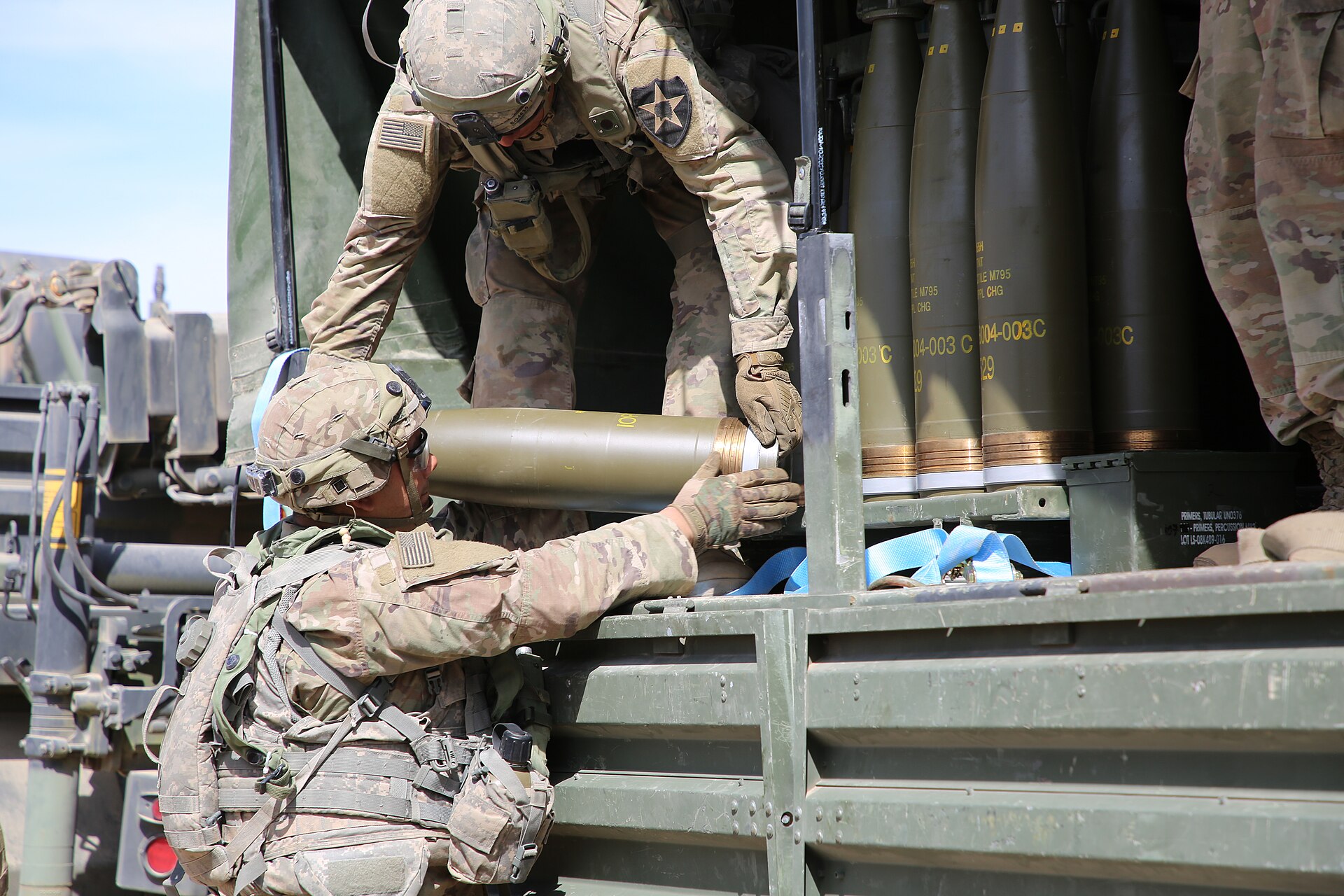
Drones grab headlines, but artillery shells are still the backbone of land warfare. The war in Ukraine showed that a modern army can fire more shells in a week than some Western countries produce in a year. Since 2022 a global race has begun to rebuild production lines. Here is where it stands.
- Artillery remains the biggest killer in the Ukraine war
- Russia produces millions of shells a year and imports more from North Korea
- US aims for 100,000 155 mm shells a month
- EU targets around 2 million shells a year
- Explosives and propellant are the main bottleneck
Why shells matter so much
At the height of the fighting in 2022 and 2023, Russia fired tens of thousands of shells a day, and Ukraine several thousand. Even with the rise of drones, artillery is still responsible for a large share of casualties and destroyed equipment. An army that runs out of shells quickly loses the ability to defend its front line, as Ukraine experienced in early 2024 when US aid was delayed.
Russia: mass over quality
Russia moved its defence industry to a war footing early, running plants around the clock and reactivating Soviet-era stocks. Western intelligence estimates suggest it produces millions of artillery rounds a year, and North Korea has supplied millions more. Quality is uneven, but volume has given Russia a long-term advantage on the battlefield.
The United States
Before 2022 the US produced only about 14,000 155 mm shells a month. The Army set a goal of 100,000 a month and has invested billions in new and modernised plants, including Scranton and Wilkes-Barre in Pennsylvania and a new facility in Mesquite, Texas. Output has risen several times over, though the target date has slipped because of supply chain problems.
Europe
The EU’s Act in Support of Ammunition Production and later programmes aimed to raise annual capacity to around 2 million shells. Rheinmetall has become Europe’s leading producer, opening a large new plant in Unterlüß, Germany, in 2025, while Nammo, Nexter (KNDS), BAE Systems, Czech, Polish and Spanish firms are expanding too. A Czech-led initiative also bought hundreds of thousands of shells from around the world for Ukraine.
The bottlenecks
Steel shell bodies are the easy part. The real limits are explosives such as TNT and RDX, nitrocellulose for propellant charges, and the skilled workers to handle them. Several key chemicals had only one or two suppliers in the West, some of them in Asia. Building new energetics plants takes years and faces strict environmental rules. As a result, the price of a 155 mm shell in Europe has risen several-fold since 2022.
Why it matters beyond Ukraine
NATO now treats ammunition stocks as a core part of deterrence. New capability targets require allies to hold far larger reserves, and factories are being built with surge capacity in mind. China, with the world’s largest industrial base, could out-produce everyone if it chose to.
Verdict
The shell race shows that industrial capacity is military power. The West has made real progress since 2022, but it is still catching up with Russia, and sustaining production after the current war will be the real test.
Featured image: Pfc. David Carvajal / Public domain, via Wikimedia Commons