Transport Aircraft
C-130J Super Hercules
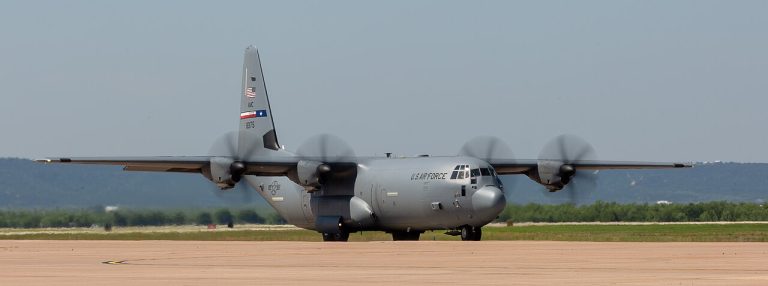
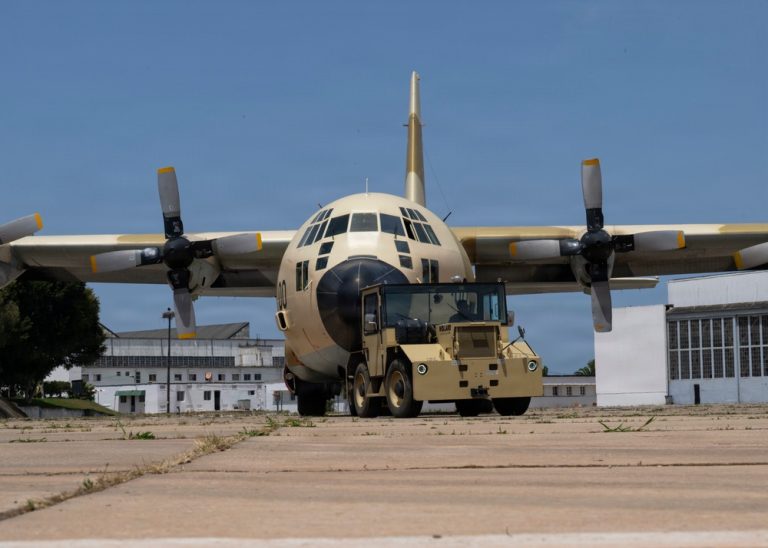
The C-130J Super Hercules is the latest version of Lockheed Martin’s four-engine turboprop tactical transport, built to operate from short and unprepared airstrips. More than 2,500 Hercules of all versions have been built since the 1950s, the longest continuous production run of any military aircraft.
 United States|Lockheed Martin
Overview
The C-130J first flew on 5 April 1996 and entered service in 1999, first with the Royal Air Force and then the US Air Force. Compared with the C-130E/H, it has Rolls-Royce AE 2100D3 engines with six-blade propellers and a two-pilot digital cockpit that removes the need for a flight engineer and navigator, giving about 40% more range and higher speed. It cruises at about 644 km/h, carries up to 19,050 kg and moves 92 troops, or 128 in the stretched C-130J-30.
Lockheed Martin had delivered more than 560 C-130Js by 2024, and production continues in Marietta, Georgia. Versions include the KC-130J tanker, MC-130J special operations aircraft, HC-130J rescue aircraft and AC-130J Ghostrider gunship. Operators range from the US, Canada and Australia to India, Israel, Qatar, Kuwait and Iraq, while the UK retired its fleet in 2023. In October 2025 Türkiye agreed to buy 12 ex-RAF C-130Js. The aircraft has flown in Iraq and Afghanistan, the 2021 Kabul evacuation and relief airdrops over Gaza and Sudan.

Key Specifications
Variants
C-130J: the standard-length transport, carrying up to 92 troops or 64 paratroopers.
C-130J-30: the stretched version, 4.6 m longer, carrying 128 troops, 92 paratroopers or eight cargo pallets.
KC-130J: the aerial refuelling tanker version used by the US Marine Corps, Kuwait and other operators.
E-130J Phoenix II: a US Navy conversion of the C-130J-30 for the TACAMO nuclear command-and-control communications mission, replacing the E-6B Mercury in that role. The first airframe was delivered on 15 October 2026 and is now being fitted with mission systems by Northrop Grumman; it is not yet operational.
Operators
United States Canada
 Australia
 New Zealand
 India
 France
 Germany
 Italy
 Denmark
 Norway
 Israel
 South Korea
 Indonesia
 Iraq
 Qatar
 Kuwait
 Oman
 Tunisia
 Bangladesh
Frequently Asked Questions
How much does a C-130J cost?
A C-130J cost about US$62 million flyaway in 2008. Recent export contracts imply roughly US$75–100 million or more per aircraft, depending on the version, mission equipment and support package included in the deal.
How many troops can a C-130 carry?
A standard C-130J carries 92 troops or 64 paratroopers. The stretched C-130J-30 carries 128 troops, 92 paratroopers, eight cargo pallets or 97 litter patients, and the maximum payload is about 19,050 kg.
How fast is the C-130J?
The C-130J has a top speed of about 671 km/h (362 knots) and cruises at about 644 km/h. Its range is about 3,300 km with maximum payload, and it can operate from short, unprepared runways.
Does Türkiye have C-130J?
Not yet. The Turkish Air Force flies older C-130B/E Hercules, but in October 2025 Türkiye agreed to buy 12 ex-RAF C-130J aircraft, with refurbishment and support by Marshall Aerospace in the UK. The Ministry of National Defence said on 1 October 2026 that the first two are planned to arrive in December 2026, after maintenance in the UK.
C-130J vs A400M: which is better?
The A400M is larger and faster, carrying up to 37,000 kg against about 19,050 kg for the C-130J. The C-130J is cheaper and has a much larger global user base. The UK retired its C-130Js in 2023 in favour of the A400M, while many air forces stick with the Hercules.
Which countries use the C-130J?
The C-130J is used by about 20 countries, including the United States, Canada, Australia, New Zealand, India, France, Germany, Italy, Denmark, Norway, Israel, South Korea, Indonesia, Iraq, Qatar, Kuwait, Oman, Tunisia and Bangladesh. Several more have aircraft on order.