What Is the Oreshnik Missile? Range, Speed, Warheads and Combat Use
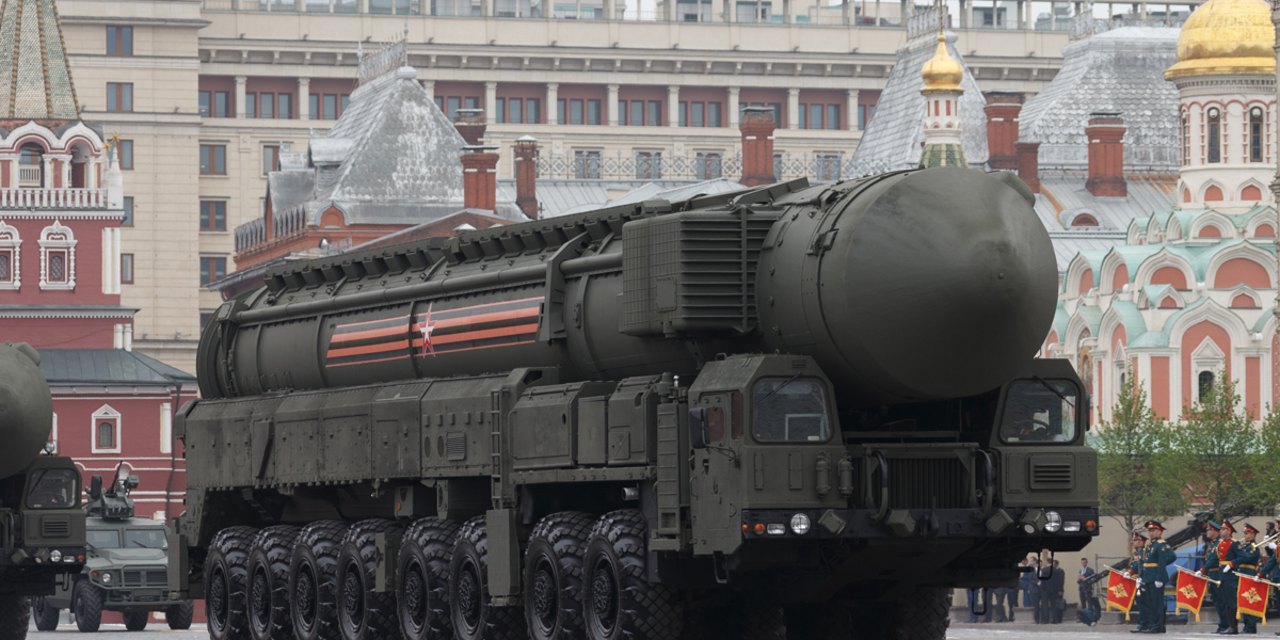
The Oreshnik is a Russian intermediate-range ballistic missile that carries six separating warheads and strikes at more than ten times the speed of sound. First fired at the Ukrainian city of Dnipro on 21 November 2024, it has since been used twice more, entered serial production and been placed on combat duty in Belarus, within reach of every capital in Europe.
This explainer sets out what is known about the missile in October 2026, what is still claimed rather than confirmed, and why a weapon used only a handful of times receives so much attention.
What the Oreshnik is and where it came from
Oreshnik means hazel tree in Russian. President Vladimir Putin revealed the name on the evening of the first strike, describing a new medium-range missile tested in combat conditions. Western governments quickly placed it in a known family: the Pentagon called it an experimental intermediate-range ballistic missile based on the RS-26 Rubezh, a solid-fuel design from the Moscow Institute of Thermal Technology that was itself derived from the Yars intercontinental missile and shelved around 2018.
Independent analysts such as Jeffrey Lewis conclude that it is most likely an RS-26 with one stage removed, launched from a road-mobile vehicle. The wider family is described in our guide to Russia’s ICBMs. Missiles of this range were banned by the Intermediate-Range Nuclear Forces Treaty until it collapsed in 2019, and Russia formally dropped its self-declared moratorium on deploying them in August 2025.
Range, speed and warheads
Russia has published almost no technical data, so the figures below combine official statements with Ukrainian and Western assessments. The distinctive feature is the payload: six independently targeted reentry vehicles, each of which released a cluster of smaller submunitions in the Dnipro strike, producing 36 impact points. How such payloads work is explained in our guide to MIRV and MaRV warheads.
| Characteristic | Reported value | Source |
|---|---|---|
| Type | Intermediate-range ballistic missile | Pentagon, Russian MoD |
| Basis | RS-26 Rubezh, likely two stages | US officials, independent analysts |
| Propulsion | Solid fuel, road-mobile launcher | Analyst assessments |
| Range | Up to about 5,500 km | Ukrainian military intelligence |
| Speed | More than Mach 10 in terminal phase | Putin; Ukrainian Air Force tracking |
| Payload | Six warheads, each with submunitions | Imagery of Dnipro strike |
| Warhead | Conventional or nuclear | Russian statements |
Calling the Oreshnik hypersonic is accurate but not unusual: every ballistic missile of this range reenters at such speeds. It does not maneuver like the glide vehicles described in our guide to Russia’s hypersonic missiles.
Combat use: Dnipro, Lviv and Bila Tserkva
All launches are understood to have come from the Kapustin Yar test range in Russia’s Astrakhan region. The first, against the Pivdenmash plant in Dnipro about 800 km away, took roughly 15 minutes and carried inert warheads without explosives, according to Ukrainian and Western officials; damage was limited.
| Date | Target | Notes |
|---|---|---|
| 21 November 2024 | Pivdenmash plant, Dnipro | First use; warheads reportedly inert |
| 8 January 2026 | Lviv State Aircraft Repair Plant, Lviv region | About 70 km from the Polish border |
| 24 May 2026 | Bila Tserkva, Kyiv region | Two missiles launched; one hit garages, the other fell in Russian-held Donetsk region |
The January 2026 strike was the first near NATO territory, and Moscow presented it as retaliation for an alleged Ukrainian drone attack. The May 2026 launch was less convincing: one of the two missiles came down on territory Russia itself controls, which suggests the system is not yet fully reliable.
Production and deployment in Belarus
Putin said in August 2025 that the first serial Oreshnik had been built and delivered to the armed forces. Belarusian President Alexander Lukashenko announced on 18 December 2025 that the system had arrived in his country, and Russia’s defense ministry said on 30 December that it had been placed on combat duty there.
Numbers are small. Analysts believe Russia holds only a limited stock, and each missile is estimated to cost tens of millions of dollars, far more than the cruise and short-range ballistic missiles listed in our overview of Russia’s missiles. That price explains why the weapon has been fired four times in almost two years.
Can the Oreshnik be intercepted?
Putin has said that no existing air defense can stop the missile. That is true for Ukraine today, but not in principle. Patriot batteries are designed for shorter-range threats and are poorly suited to a target arriving this fast and steeply, and Ukraine has no interceptors that work above the atmosphere.
Systems built for exactly this class of missile do exist: the US THAAD and ship- and shore-based SM-3, and Israel’s Arrow 3. Their task is complicated once the warheads and submunitions separate, so the interceptor must hit before release. The layered approach is described in our explainer on missile defense layers, and a comparison of the relevant systems is in THAAD vs S-500.
Why the Oreshnik matters
With conventional warheads the Oreshnik is an expensive way to deliver a modest amount of explosive, and its military effect in Ukraine has been small. Its value to Moscow is political. A missile that can carry nuclear warheads, reaches any European capital from Russian or Belarusian soil in under 20 minutes and is hard to tell apart from a nuclear launch while in flight is a tool of intimidation aimed at Ukraine’s backers.
It also marks the return of a class of weapon that Europe had not faced since the 1980s. NATO states are responding with their own long-range strike programs and with new orders for upper-tier missile defense, while the nuclear balance behind the threat is set out in our guide to Russia’s nuclear arsenal.
Frequently asked questions
What does Oreshnik mean?
Oreshnik is the Russian word for hazel tree. Russia often names missile systems after trees and plants, as with the Topol (poplar) and Yars families.
How fast is the Oreshnik missile?
Russia says it exceeds Mach 10, about 12,000 km/h, in its final phase, and Ukrainian tracking of the strikes is consistent with that. This speed is normal for ballistic missiles of intermediate range.
What is the range of the Oreshnik?
It is an intermediate-range missile, a class covering 3,000 to 5,500 km. Ukrainian military intelligence puts its maximum at about 5,500 km, which would cover all of Europe from western Russia or Belarus.
Is the Oreshnik a nuclear weapon?
It can carry nuclear warheads, according to Russian statements, but every use so far has been conventional, and the first strike reportedly used inert warheads.
How many times has Russia used the Oreshnik?
Three times as of October 2026: against Dnipro on 21 November 2024, the Lviv region on 8 January 2026 and Bila Tserkva on 24 May 2026, when two missiles were launched.
- Al Jazeera – Russia hits Ukraine with Oreshnik hypersonic missile: Why it matters: aljazeera.com
- The Moscow Times – Russian Army claims Oreshnik missile struck aircraft repair plant in Lviv region: themoscowtimes.com
- Mick Ryan, Futura Doctrina – The Russian Oreshnik strike on Lviv: mickryan.substack.com
- Militarnyi – Russia closes airspace over Kapustin Yar, launch site for Oreshnik missiles: militarnyi.com
- United24 Media – Oreshnik missile: capabilities and deployment: united24media.com