
Stealth is Dead: How a Chinese AI Startup is Tracking America’s $2 Billion B-2 Bombers from Space

WASHINGTON — For decades, the foundational doctrine of American strategic deterrence has relied on one extraordinarily expensive concept: absolute stealth. Platforms like the B-2 Spirit bomber—a flying wing with a staggering $2 billion unit cost—were engineered to bypass the world’s most advanced radar networks undetected. But a startling new intelligence revelation from a Chinese tech startup suggests that the era of stealth, and the operational security (OPSEC) it relies upon, may have abruptly ended.
MizarVision, a Hangzhou-based artificial intelligence firm, recently sparked severe panic within the Pentagon after publicly demonstrating its capability to track the movements of U.S. aircraft carriers, fighter squadrons, and highly classified stealth bombers across the globe.
The most alarming reality for defense analysts is not that China possesses advanced spy satellites; it is that MizarVision is achieving perfect tracking using commercially available Western imagery paired with proprietary machine learning algorithms.
The Death of the Intelligence Moat
Historically, tracking a superpower’s strategic bomber force required a state-level intelligence apparatus, billions of dollars in classified orbital assets, and days of painstaking human analysis. Today, MizarVision is doing it in near real-time.
The company is purchasing raw, unclassified satellite imagery from Western commercial providers—such as Airbus and Planet Labs—and feeding terabytes of that data through advanced AI object-recognition models. These algorithms are trained to instantly identify the unique geometric signatures of U.S. military hardware, automatically geolocating them regardless of traditional concealment efforts.
The B-2 Paradox: Invisible to Radar, Glowing to AI
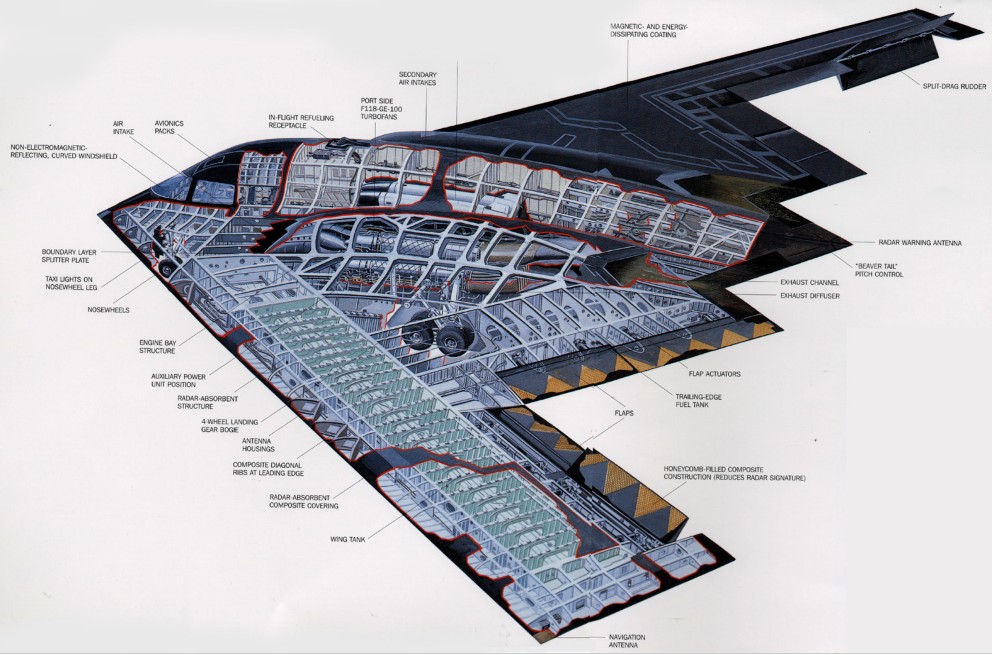
This capability exposes a glaring vulnerability in the U.S. military’s reliance on stealth technology. While radar-absorbent materials and its unique tailless design give the B-2 Spirit a radar cross-section roughly the size of a small bird in flight, it offers absolutely zero protection from a high-resolution optical lens in low-earth orbit.
When a B-2 bomber sits on a tarmac at a forward operating base—whether at Diego Garcia, Guam, or Whiteman Air Force Base—its distinct 172-foot-wide (52 meters) “flying wing” silhouette remains completely exposed from above. MizarVision’s AI models can scan millions of square miles of commercial imagery and flag the exact coordinates of these strategic bombers almost immediately after a commercial satellite passes overhead.
The implications for traditional OPSEC are devastating. Moving assets under the cover of night or relying on the sheer vastness of airbases is easily defeated by the high-revisit rates of modern commercial satellite constellations, coupled with an AI that never sleeps and never suffers from analyst fatigue.
A New Asymmetric Threat
This development has triggered deep alarm within the U.S. Defense Intelligence Agency (DIA). By publishing these tracking capabilities on open-source platforms like Weibo under the guise of “showcasing technological prowess,” MizarVision is effectively acting as an open-source geospatial intelligence (GEOINT) agency for U.S. adversaries.
If a civilian startup can pinpoint the exact tarmac locations of America’s most classified strategic deterrents, hostile state actors or regional proxy groups can utilize this same freely available data to program precise coordinates into long-range ballistic missiles or attack drone swarms.
As the Pentagon scrambles to assess the damage and update its OPSEC protocols, one strategic reality has become undeniably clear: in the age of commercial satellite constellations and weaponized machine learning, the concept of a “hidden” military asset no longer exists.