Lockheed Martin Wins $694 Million Contract as Air Force Moves ARRW Hypersonic Missile Into Production
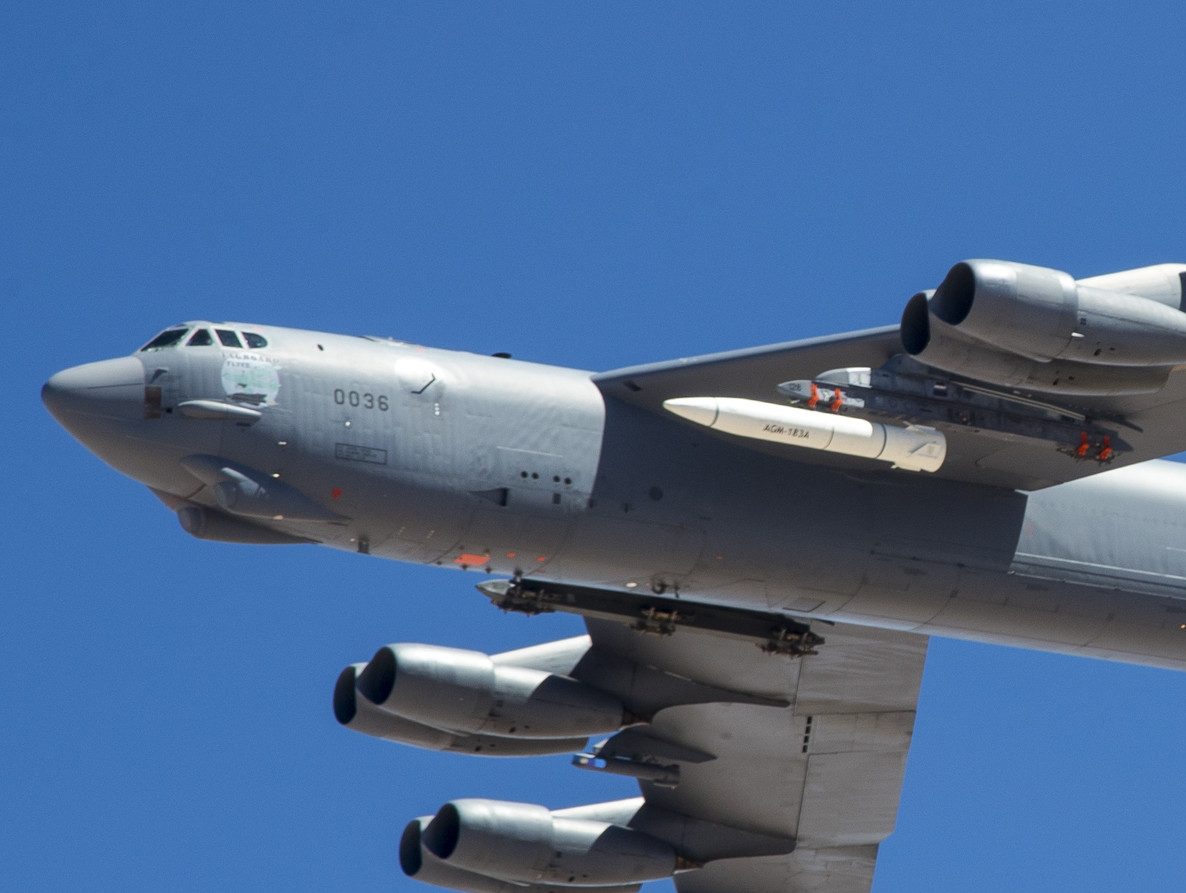
The US Air Force has moved the Lockheed Martin AGM-183A Air-Launched Rapid Response Weapon (ARRW) from prototyping and flight testing into production, backed by a $694 million contract. The Air Force announced the step on 26 October 2026; the award itself dates to 29 September 2026, according to TWZ and Defence Industry Europe.
The contract runs through the Department of War’s Enterprise-Wide Agile Acquisition Contract vehicle. The Air Force has not said how many missiles it is buying or when deliveries start.
What the Air Force announced on ARRW production
The Air Force described the decision as “the formal transition of the boost-glide hypersonic missile program from prototyping and flight testing into production,” according to TWZ’s reading of the service release. Air Force Secretary Troy Meink called it “a turning point in our advanced weapons roadmap.”
Chief of Staff Gen. Ken Wilsbach said the weapon “provides the Joint Force a flexible and rapid response option for highly contested environments,” per TWZ. Defence Industry Europe quotes him separately saying fielding ARRW “enhances our ability to hold targets at risk anywhere around the world.”
Quantities and delivery dates were withheld for operational security, Defence Industry Europe reported. That leaves the $694 million figure hard to translate into a unit price.
| Item | Detail |
|---|---|
| Customer | US Air Force |
| Contractor | Lockheed Martin |
| Contract value | $694 million |
| Contract awarded | 29 September 2026 |
| Announced | 26 October 2026 |
| Contract vehicle | Enterprise-Wide Agile Acquisition Contract (Department of War) |
| Quantity and delivery | Not disclosed |
From failed tests and a cancellation to a production line
ARRW’s path here was rough. Early booster tests in 2021 failed to launch or ignite, and a March 2023 test of an operational prototype was a failure according to then-Secretary Frank Kendall, as recorded on Wikipedia. Later that month, acquisition chief Andrew Hunter told a House panel the program would not proceed.
The Air Force wanted the money for the Hypersonic Attack Cruise Missile (HACM), an air-breathing design that TWZ says has now entered flight testing. The FY2025 request carried no ARRW procurement or development funding.
Then it reversed. In June 2025 Gen. David Allvin told Congress the service wanted ARRW funded for FY2026, and the budget documents sought $387.1 million to buy the first missiles, DefenseScoop reported. A 2024 shot of a live round with a live warhead from a B-52 out of Andersen Air Force Base, Guam, is cited by TWZ as part of the record behind the revival.
| Date | Event |
|---|---|
| August 2018 | Initial development contract, up to $480 million (Wikipedia) |
| May 2022 | First successful booster test from a B-52H, speeds above Mach 5 |
| March 2023 | Air Force says it will not pursue production |
| March 2024 | FY2025 request omits ARRW funding |
| June 2025 | FY2026 request seeks $387.1 million for procurement |
| 29 September 2026 | $694 million production contract awarded |
| 26 October 2026 | Production move announced |
ARRW Increment 2 and how it differs from HACM
The FY2027 request sought $296 million for ARRW Increment 2, which TWZ says covers a terminal seeker and data link. The goal is to hit moving targets, including warships. TWZ notes that could matter against Chinese carriers and amphibious ships in a Pacific conflict. That second point is TWZ’s assessment, not an Air Force statement.
ARRW and HACM are different answers to a similar problem. ARRW is launched by a rocket booster and then glides unpowered; HACM is a powered cruise missile. Why the service would want both is not spelled out in the sources, but one reading, which is analysis, is that a boost-glide round and a cruise missile give planners two different flight profiles to complicate defences.
| Feature | AGM-183A ARRW | HACM |
|---|---|---|
| Propulsion | Solid rocket booster, then unpowered glide | Air-breathing cruise missile |
| Speed | Above Mach 5 demonstrated | Not stated in sources |
| Status | Entering production | In flight testing (TWZ) |
| Carriers | B-52, B-1 planned | Not covered here |
Carriers, size and cost of the missile
The Air Force has disclosed plans to integrate ARRW on the B-52 and B-1, TWZ reports. Wikipedia lists the missile at about 6,600 lb and 22 ft, with a range of roughly 1,000 miles, though those are open-source figures rather than something announced this week.
On price, a 2023 Congressional Budget Office estimate put 300 missiles at $14.9 million each, with about $5.3 billion for the program over 20 years including integration and sustainment. Those numbers predate the contract and should not be read as what the Air Force is paying now.
Lockheed Martin Company Profile
| Item | Detail |
|---|---|
| Headquarters | North Bethesda, Maryland, USA |
| Founded | 1995 (merger of Lockheed Corporation and Martin Marietta) |
| CEO | James D. Taiclet (CEO since 2020) |
| Employees | About 123,000 (2025) |
| Revenue | US$75.05 billion (2025) |
| Segments | Aeronautics; Missiles and Fire Control; Rotary and Mission Systems; Space |
| Known programmes | F-35, F-16, F-22, C-130, PAC-3 MSE, THAAD, Trident II, AGM-183A ARRW |
Wikipedia says the first ARRW rounds were to be built at Palmdale before production moved to the Missiles and Fire Control unit in Alabama, but that detail comes from older reporting and the production site for this contract was not confirmed.
AGM-183A ARRW production FAQ
How much is the ARRW production contract worth?
$694 million, awarded to Lockheed Martin on 29 September 2026 and announced on 26 October 2026, per TWZ and Defence Industry Europe.
How many missiles will the Air Force buy?
Not disclosed. The Air Force withheld quantities and delivery dates for operational security.
Why was ARRW nearly cancelled?
After several failed flight tests, the Air Force said in 2023 it would not pursue production and wanted to shift resources to HACM, according to TWZ.
What is ARRW Increment 2?
A planned variant with a terminal seeker and data link, aimed at moving targets such as ships. The FY2027 request sought $296 million for it, per TWZ.
Which aircraft carry ARRW?
It was tested on the B-52. The Air Force has disclosed plans to integrate it on the B-52 and B-1.
- TWZ – “USAF Orders ARRW Hypersonic Missile Into Production, The Same Weapon It Nearly Cancelled” (26 October 2026): twz.com
- Defence Industry Europe – “U.S. Air Force says AGM-183A ARRW standoff hypersonic missile moves into production” (26 October 2026): defence-industry.eu
- DefenseScoop – “Air Force ARRW procurement funding, FY26 budget request” (26 June 2025): defensescoop.com
- Wikipedia – “AGM-183 ARRW”: en.wikipedia.org
- Wikipedia – “Lockheed Martin”: en.wikipedia.org