Raytheon Says $800 Million Investment Will Double SPY-6 Radar Output by 2028
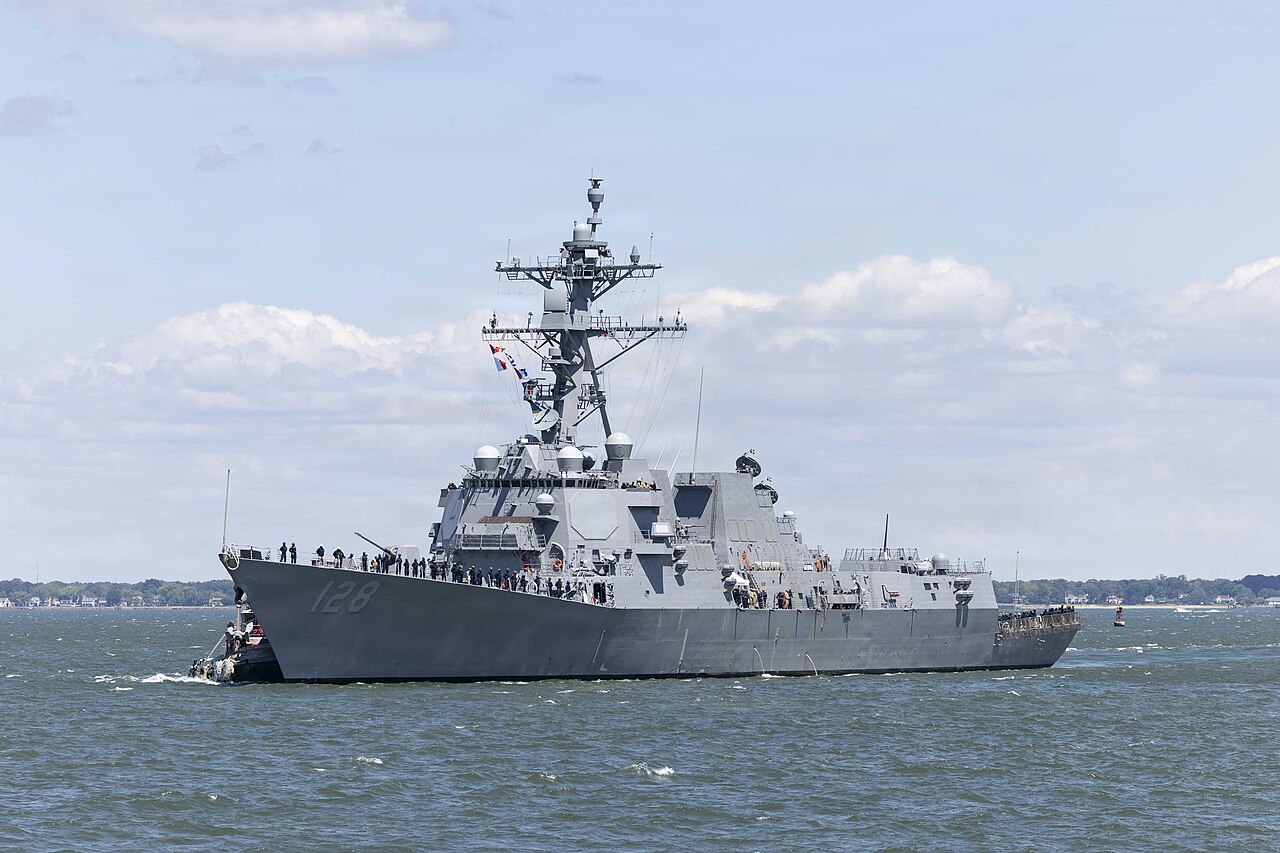
Raytheon says it has invested more than $800 million in its automated radar facility in Andover, Massachusetts, and that the spending supports doubling AN/SPY-6 output by 2028. The claim appears in an October 2026 feature on the RTX website, published as the destroyer USS Ted Stevens became the fourth commissioned US Navy ship to carry the radar.
The customer is the US Navy, which has made SPY-6 a program of record and expects it on more than 50 ships over the next decade. Raytheon, an RTX business, builds the radar in Andover, and the output target is the company’s own, not a Navy requirement.
What Raytheon says it has built in Andover
According to Raytheon, SPY-6 is now in full-rate production, and the company’s fully automated, vertically integrated facility in Andover is the reason it can raise the rate. Jason Rathbone, executive director of Naval Radars, said automation lets the company build at high rates while lowering cost and improving quality and reliability.
The $800 million figure is not new. It appeared in Raytheon’s June 2026 contract release and again in its July announcement of a $1.8 billion extension. What the October feature adds is the link to fleet performance and the live-fire schedule.
| Item | Detail |
|---|---|
| Company | Raytheon, an RTX business |
| Product | AN/SPY-6 family of naval radars |
| Investment | More than $800 million (company figure) |
| Site | Andover, Massachusetts |
| Target | Double output by 2028 |
| Status | Full-rate production |
| Customer | US Navy |
| Source | Raytheon/RTX feature, October 2026 |
From one array a month to a doubled line
Naval News reported in August that Raytheon was producing about one array per month, a figure attributed to Jen Gauthier, vice president of Naval Systems and Sustainment. The same report said the company had put almost $25 million of additional capital into Andover to push output higher, on top of the $800 million already spent on automation and capacity.
Contracts are following the plan. The July extension is worth $1.8 billion and could reach $3.3 billion with options, building on the March 2022 production and sustainment award. A separate $515 million sole-source award in June covers work including the SPY-6(V)4 variant for Flight IIA destroyers, with support for the Navy and Germany.
| Variant | Intended platform | Configuration |
|---|---|---|
| SPY-6(V)1 | DDG 51 Flight III destroyers | Four array faces, 37 RMAs each |
| SPY-6(V)2 | Amphibious assault ships, Nimitz-class carriers | One rotating face, 9 RMAs |
| SPY-6(V)3 | Ford-class carriers, frigates | Three fixed faces, 9 RMAs each |
| SPY-6(V)4 | DDG 51 Flight IIA destroyers | Four array faces, 24 RMAs each |
Ted Stevens, Jack H. Lucas and the 2027 firing campaign
USS Ted Stevens (DDG 128) is described as the fourth commissioned Navy ship with SPY-6. That is a jump from the company’s July release, which put the radar on two commissioned ships and 11 more in testing, so the count has moved quickly or the two releases use different definitions. The sources do not say which.
Raytheon also points to successful live-fire events aboard USS Jack H. Lucas (DDG 125) and says it is on track for 60 live firings in operational testing in 2027. John Tobin, director of Naval Radars, framed the design around saturation raids, saying enemies are sending hundreds of weapons to overwhelm ship systems.
Every variant is assembled from the same Radar Modular Assemblies, which Raytheon says lets one design scale to different hulls and fit both new builds and retrofits. Software updates, rather than hardware swaps, are meant to address new threats.
Foreign interest behind the capacity push
Naval News reported that Germany selected SPY-6 as the prime sensor for its F127 frigates, although the radar choice is under review as Berlin looks to cut cost and speed delivery. Raytheon is also pitching the radar to Japan for a Kongo-class replacement, where Lockheed Martin’s SPY-7 competes, and has opened early talks with Denmark.
None of those is a contract. Whether extra Andover capacity is aimed at them is analysis, not something the company has said, but a doubled line would give Raytheon room to take foreign orders without displacing Navy deliveries.
Raytheon Company Profile
| Item | Detail |
|---|---|
| Parent | RTX Corporation |
| Headquarters | Arlington, Virginia, US |
| RTX formed | April 3, 2020 (Raytheon dates to 1922) |
| CEO | Christopher T. Calio |
| Employees (RTX, 2025) | 180,000 |
| Revenue (RTX, 2025) | US$88.6 billion |
| Segments | Pratt & Whitney, Collins Aerospace, Raytheon |
| Naval radar programmes | SPY-6 family |
Raytheon SPY-6 FAQ
How much has Raytheon invested in SPY-6 production?
Raytheon says it has invested more than $800 million in its Andover, Massachusetts, facility. Naval News reported almost $25 million of additional capital on top of that.
When will SPY-6 output double?
The company says it plans to double output by 2028. That is a company target, not a Navy-mandated schedule.
Which ships carry SPY-6?
Raytheon describes USS Ted Stevens (DDG 128) as the fourth commissioned US Navy ship with the radar. The Navy expects it on more than 50 ships over the next decade.
What is a Radar Modular Assembly?
An RMA is a self-contained radar antenna in a roughly 2 ft by 2 ft by 2 ft box. Stacking more of them builds larger arrays, which is how one design fits different ships.
Are foreign navies buying SPY-6?
Germany selected it for the F127 frigate, though the choice is under review. Japan and Denmark are in early discussions, according to Naval News.
- RTX/Raytheon – “SPY-6 radar: Delivering proven performance at sea” (October 2026): rtx.com
- RTX – “RTX’s Raytheon awarded $1.8 billion hardware production and sustainment contract for SPY-6 family of radars” (July 21, 2026): rtx.com
- RTX – “RTX’s Raytheon awarded $515 million contract for SPY-6 family of radars” (June 3, 2026): rtx.com
- Naval News – “Raytheon Expands Global Push for AN/SPY-6 Radar” (August 22, 2026): navalnews.com
- Defence Industry Europe – “Raytheon says investment of over $800 million supports doubling SPY-6 radar output by 2028” (October 27, 2026): defence-industry.eu
- RTX – SPY-6 family of radars product page: rtx.com