KTRV Tactical Missiles Corporation Company Profile and Products
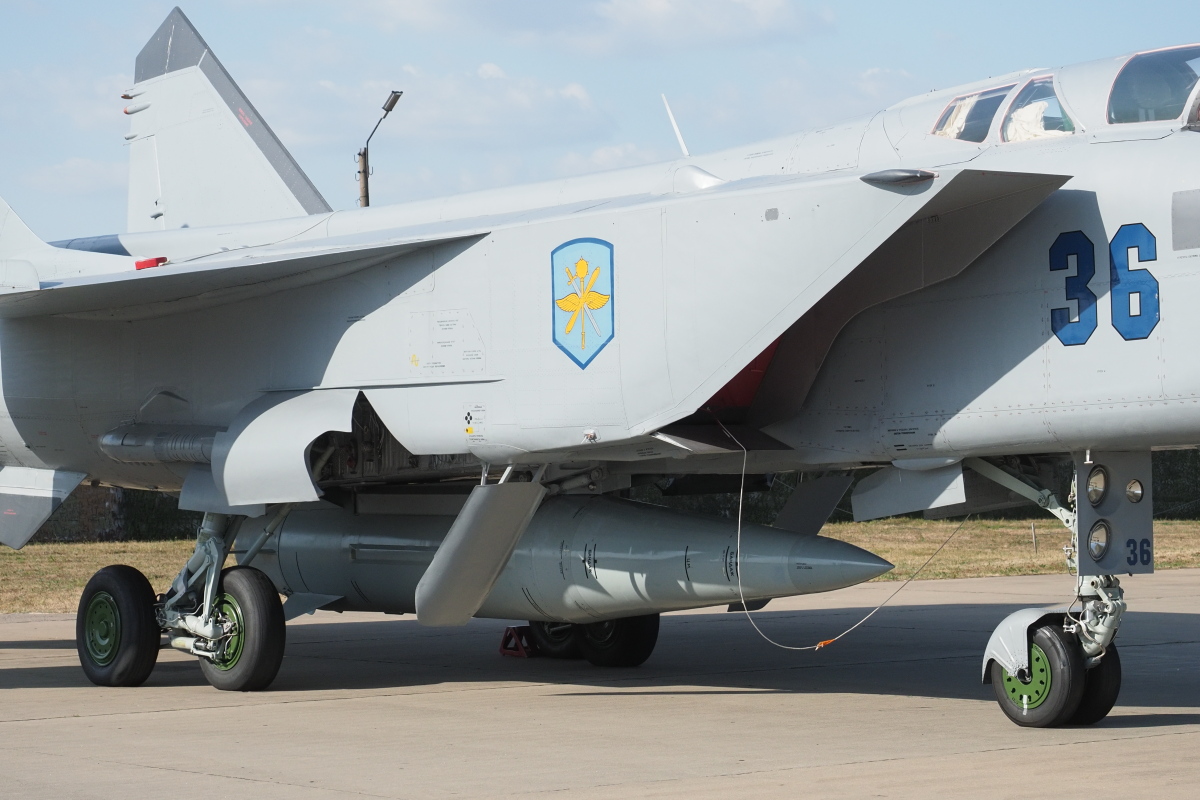
KTRV, the Tactical Missiles Corporation, is the Russian state-controlled group behind most of the country’s air-launched and naval missiles, bringing together roughly 30 enterprises under Rostec since its creation in 2002. Its catalog runs from the R-77 air-to-air missile to the Kh-101 cruise missile, and it has been under Western sanctions since 2014.
What is KTRV
| Item | Detail |
|---|---|
| Full name | Tactical Missiles Corporation JSC (Korporatsiya Takticheskoye Raketnoye Vooruzheniye) |
| Base | Korolyov, Moscow Oblast, Russia |
| Founded | 2002, consolidating Soviet-era missile design bureaus and plants |
| Parent | Rostec, the Russian state technology and defense corporation |
| Scale | Roughly 30 enterprises; workforce in the tens of thousands, per company descriptions |
| Core fields | Air-to-air, air-to-surface, anti-ship and cruise missiles; precision-guided bombs |
| Sanctions | Sanctioned by the United States and the European Union since 2014 |
KTRV was built to reverse the fragmentation that followed the Soviet collapse. Design bureaus that once competed for state orders, such as Raduga, Zvezda and Vympel, were folded into one holding so that Moscow could coordinate research, production and exports. The group has long been led by Boris Obnosov, who shaped its consolidation.
Who owns KTRV
The Russian state controls KTRV through Rostec, which also owns helicopter, electronics and aviation-engine businesses. That arrangement means KTRV is less a market competitor than an instrument of state procurement, with the Russian Aerospace Forces and Navy as its dominant customers.
Its sister companies in the air-defense field sit elsewhere in the Russian system. Almaz-Antey, for example, makes the S-400 Triumf, while KTRV concentrates on munitions carried by aircraft and ships.
KTRV missiles and products
| Weapon | Role | Notes |
|---|---|---|
| R-77 (RVV-SD) | Air-to-air missile | Active-radar guided; Vympel design, Russia’s AMRAAM-class weapon |
| R-37M | Very long-range air-to-air | Claimed range beyond 200 km, manufacturer claim; aimed at tankers and airborne radar aircraft |
| R-73 / R-74 | Short-range air-to-air | Infrared-guided dogfight missile family |
| Kh-101 / Kh-555 | Air-launched cruise missile | Raduga design; conventional range claimed around 2,500 km, manufacturer claim |
| Kh-59 / Kh-35 | Precision strike and anti-ship | Standoff weapons used from aircraft, ships and coastal launchers |
| Kh-47M2 Kinzhal | Air-launched ballistic missile | Raduga-linked program; speed and range figures are Russian claims |
| KAB guided bombs | Glide bombs | UMPK kits and KAB-series bombs used heavily in Ukraine |
The R-37M is the most strategically interesting product in the air-to-air catalog, because it is built to hit tankers and radar aircraft from far outside their own fighter escorts. The Kinzhal missile became the group’s most publicized weapon after 2018, marketed under the hypersonic label that our hypersonic explainer treats more carefully.
Design authority is spread across the group. Vympel handles air-to-air missiles, Raduga focuses on long-range cruise and anti-ship weapons, and Zvezda builds the Kh-31 and Kh-35 families. Each bureau keeps its own test facilities and heritage, which gives KTRV depth but also means integration between units can be uneven. Domestic demand is strong because every Russian fighter, bomber and helicopter needs a missile loadout to be useful.
KTRV missiles in the Ukraine war
The war turned KTRV from an export-minded supplier into a wartime producer. Kh-101 cruise missiles fired from Tu-95MS bombers have been a staple of strikes on Ukrainian cities and energy infrastructure. Ukrainian officials have reported interception rates that vary widely by month and missile type, and these are operator-reported figures that cannot be checked independently.
Glide bombs fitted with wings and satellite-guidance kits, dropped from outside the range of Ukrainian air defense, became another visible product of the corporation’s industrial base. Their cost is low compared with missiles, which is precisely why Russia uses them in such numbers.
Russian state media has promoted reduced lead times and new production lines, but independent confirmation is thin. What is observable is the tempo of launches, which suggests that cruise missile production has been sustained at a high level despite restrictions on imported electronics.
KTRV exports and sanctions
Before 2022, KTRV sold missiles with Russian fighters and helicopters to customers in Asia, the Middle East and Africa, and it marketed its products at shows such as MAKS and Army. Sanctions restrict its access to Western microelectronics and finance, and Russian officials have said production is being expanded to meet wartime demand. Output figures from Moscow are state claims.
The broader pattern is that the corporation now serves the Russian armed forces first and export customers second. Any buyer of a KTRV product also has to weigh secondary-sanctions exposure and uncertain spare-parts supply.
KTRV frequently asked questions
What does KTRV stand for?
Korporatsiya Takticheskoye Raketnoye Vooruzheniye, or Tactical Missiles Corporation in English.
Who owns KTRV?
KTRV is controlled by the Russian state through Rostec.
What missiles does KTRV make?
Air-to-air missiles such as the R-77 and R-37M, cruise missiles such as the Kh-101, anti-ship missiles and guided bombs.
Is KTRV under sanctions?
Yes. The United States and the European Union have sanctioned it since 2014.
Where is KTRV headquartered?
In Korolyov, in the Moscow region.
- Public company information from KTRV and Rostec
- Wikipedia – Tactical Missiles Corporation (accessed October 2026)
- SIPRI Arms Transfers Database
- Defence & Tech reporting on Russian missile programs