
F-47 Range: What a 1,000 nm Combat Radius Means in the Pacific
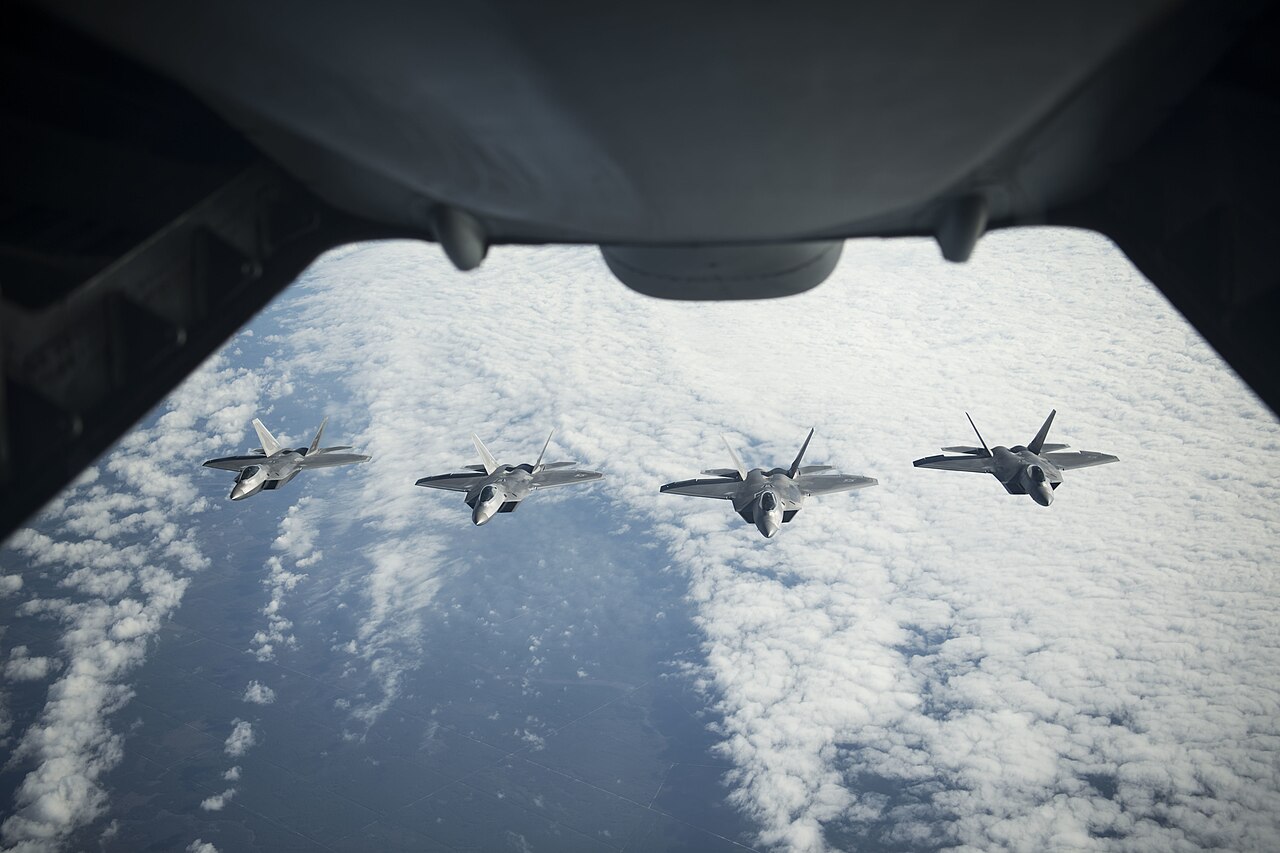
The US Air Force says the F-47 will have a combat radius of more than 1,000 nautical miles, or about 1,850 kilometres, on internal fuel. That is roughly 70 per cent further than the F-22 it replaces, and it is the single figure that best explains why the aircraft exists.
This article looks at what the number means, how it compares, why distance matters so much against China, and what the Air Force has not said.
The official figure
The radius was published in May 2025 in a graphic released by Gen. David Allvin, then Air Force chief of staff. It gave the F-47 a combat radius of 1,000+ nautical miles. No mission profile was attached, so it is not known how much of that distance is flown supersonically, at what altitude, or with what weapons load.
Combat radius is not the same as range. Radius is how far an aircraft can fly out, fight and return to base. Ferry range, flown one way with no combat, is typically more than double. For the other published data, see what the F-47 is.
How it compares
| Aircraft | Combat radius | In kilometres |
|---|---|---|
| F-47 | 1,000+ nm | 1,850+ km |
| F-35A | 670 nm | 1,240 km |
| F-22 | 590 nm | 1,090 km |
The F-22 can extend its reach with external tanks, but they add drag and have to be dropped before combat if the aircraft is to stay stealthy. A fighter that carries the same fuel inside gives up nothing. We compare the two aircraft in full in F-47 vs F-22.
Why range matters in the Pacific
The F-22 was designed for central Europe, where bases and targets were a few hundred kilometres apart. The western Pacific is a different scale.
| From | Distance | Within F-47 radius? |
|---|---|---|
| Kadena, Okinawa | About 650 km | Yes |
| Iwakuni, Japan | About 1,450 km | Yes |
| Andersen, Guam | About 2,750 km | With one refuelling |
The nearest bases are also the most exposed. Okinawa lies well inside the reach of Chinese short- and medium-range ballistic missiles, and Guam is within range of the DF-26. An aircraft with a 1,000 nm radius can use more distant, less threatened airfields and still reach the fight.
Tankers are the other half of the problem. An F-22 flying from Guam needs fuel on the way out and on the way back, and the tanker must come close enough to be hunted by long-range missiles built for that purpose. Every extra kilometre of fighter radius is a kilometre the tanker can stay further away.
How the F-47 gets its range
The Air Force has not published the aircraft’s size or fuel capacity, but two things are known. First, the renderings and the role point to a large airframe, and fuel volume is the simplest way to add range. Second, the F-47 is designed for an adaptive-cycle engine from the Next Generation Adaptive Propulsion programme.
Adaptive engines can shift air between a high-thrust and a high-efficiency mode. Engine makers have claimed fuel savings of about a quarter in cruise from the technology, which translates into roughly 30 per cent more range. As we note in when the F-47 will fly, those engines are not due until about 2030, so the earliest aircraft may fall short of the full figure.
Range was nearly traded away
The long-range design was not a foregone conclusion. When the programme was paused in 2024, one option studied was a smaller, cheaper fighter with less range, relying more on tankers and drones. The review that followed concluded that the original requirement was right, and the contract went ahead in March 2025 with the long-range aircraft.
That decision carries a price. Range requires a bigger aircraft, and bigger aircraft cost more, which is one reason outside estimates of the F-47’s unit cost are so high.
What we still do not know
The unknowns are the ferry range, the radius with a supersonic dash, the effect of a full weapons load, and whether the F-47 can refuel from a future stealthy tanker, a concept the Air Force has studied but not funded as a programme. It is also unclear how far the drone wingmen can keep up: the first Collaborative Combat Aircraft were listed with a radius of about 700 nautical miles, well short of the fighter’s.
Frequently asked questions
What is the range of the F-47?
The US Air Force has stated a combat radius of more than 1,000 nautical miles, about 1,850 km, on internal fuel. Total ferry range has not been published.
How much further can the F-47 fly than the F-22?
About 70 per cent further. The F-22’s combat radius is given as 590 nautical miles against more than 1,000 for the F-47.
Why does the F-47 need so much range?
Because US bases in the western Pacific are far from likely battle areas and within reach of Chinese missiles. Longer range lets the fighter use safer bases and rely less on vulnerable tankers.
Can the F-47 refuel in flight?
Yes, as with every modern US fighter, although the details have not been described. Aerial refuelling extends its reach beyond the stated radius.
What is the difference between range and combat radius?
Combat radius is the distance an aircraft can fly to a target area, fight and return. Range is the total distance it can fly one way.
Can the F-47 reach Taiwan from Guam?
Not on internal fuel alone; the distance is about 2,750 km each way. With one aerial refuelling it can, and the tanker can stay further from the threat than it must for an F-22.
- The War Zone – First F-47 6th Generation Fighter Now Being Built: twz.com
- Army Recognition – US Air Force’s first F-47 will take off in 2028, years before its next-gen engine is ready: armyrecognition.com
- US Air Force – F-22 Raptor fact sheet: af.mil